
Indonesia wants to build a more human-centred bureaucracy
Through policy reform, digitalisation, and collaboration, the Indonesian government is steering a transformation that puts citizens at the core of governance.
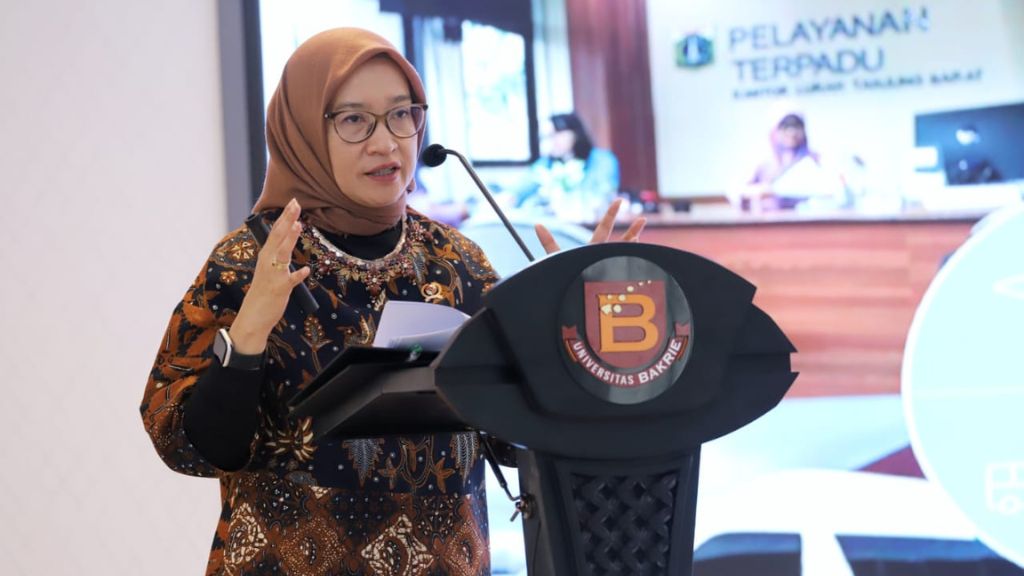
Minister for Administrative and Bureaucratic Reform Rini Widyantini spoke about the importance of creating a bureaucracy that is not only efficient but also centred on citizens’ needs. Image: Ministry of Administrative and Bureaucratic Reform
Indonesia’s public administration is undergoing a critical phase as the government redefines its bureaucracy.
The government’s new vision transforms bureaucracy from a mechanism of control and compliance into a citizen-focused framework, making it more responsive and human in meeting evolving public needs.
“Bureaucracy must be adaptive, open, and oriented towards citizens’ needs,” said Indonesia’s Minister for Administrative and Bureaucratic Reform (PANRB), Rini Widyantini, at a public lecture titled Building a Resilient and Innovative Indonesia at Bakrie University, Jakarta, on October 29.
According to Widyantini, developing a citizen-centred bureaucracy must begin with reframing how the government perceives the public, which is not as passive recipients of services but as active partners in shaping policies.
This shift must start with three key areas: policy reform, digitalisation of public services, and collaboration among civil servants, she said.
For policy reform, Widyantini laid out a clear process: every public policy should be based on data-driven analysis supported by a policy intelligence platform.
A clearing house function is also necessary to refine policies and avoid overlaps, she added.
To ensure that policies are relevant and inclusive, agencies should adopt co-design and co-creation approaches to boost public participation.
By adopting a data-driven and participatory bureaucracy, the Indonesian government could establish a public service system that is both efficient and meaningful.
“We want citizens not only to receive quality services but also to feel respected as individuals with the right to dignified public services,” she said.
Digitalisation as the foundation of public trust
Digitalisation is not only about implementing technology to current processes.
According to Widyantini, it involves a comprehensive transformation that includes improving organisational structures, strengthening human resources, creating new work cultures, and enhancing cybersecurity.
More importantly, bureaucratic digitalisation isn’t about “adding more applications”. Instead, it must focus on achieving integrated and transparent governance to build public trust.
“Digital government is not a technology project. It is an effort to unify systems so that citizens can access services that are truly relevant to their needs,” she added.
Through cross-agency collaboration, the government is also developing a Digital Public Infrastructure (DPI) that includes digital ID, data exchange, and digital payment systems as three core foundations for building integrated public services in the future.
Through DPI, cross-sectoral development issues, such as poverty alleviation through social protection programmes, national nutrition improvement, and rural economic empowerment, could be managed in an integrated manner and with clear, measurable roles.
This new approach reinforces the idea that public policy should not only arise from administrative procedures but also from a deep understanding of citizens’ needs.
By involving citizens in every stage of the process, the government hopes to build public services that are fast, trustworthy, and foster a sense of ownership among citizens, she noted.
To subscribe to the GovInsider bulletin, click here.
From "ego-system" to "eco-system"
For Widyantini, the key to transforming bureaucracy lies in collaboration, particularly in developing civil servants’ competencies.
Crucially, she believes that capacity building can no longer be limited to internal bureaucratic channels.
This requires replacing the current "ego-system" with an inclusive "eco-system," uniting government with business, academia, media, and communities in a shared learning ecosystem.
“Through collaboration, we broaden perspectives and prepare civil service talent ready to face future challenges,” she added.
This collaborative approach should also be embedded in the core of public service delivery, where “government performance must shift from individual or institutional orientation to shared outcomes”.
By using the Government Performance Accountability System (SAKP) to gauge policy effectiveness, success is now determined not by what individual institutions achieve, but by the collective synergy across ministries and agencies in realising national development goals.
“We want to ensure that every ministry moves in one direction, one rhythm, and one purpose,” she emphasised.
Overcoming barriers to transformation
Nevertheless, Widyantini acknowledged several challenges that must be addressed for bureaucratic transformation to take root.
First, regional capacity gaps. While central government policies have been strengthened, local level implementation still faces limitations in human resources, digital infrastructure, and rigid work cultures.
Second, changing the mindset of civil servants is important. Bureaucratic transformation requires a shift from “procedure-based service” to “citizen-based service.”
“These two challenges call for solutions such as continuous capacity building, development of monitoring systems, and appropriate incentive mechanisms,” Widyantini explained.
Third, inter-agency and cross-sectoral coordination. Public services often involve multiple institutions, making synergy between central and local governments, industry sectors, and civil society essential to ensure a truly citizen-centred bureaucracy.
By overcoming these challenges, Widyantini believes that the vision of a more humanistic bureaucracy can be realised across Indonesia.