
Indonesia’s new digital government plan aims to break bureaucratic silos
By taking a whole-of-government approach, the Digital Government Master Plan 2025-2045 aims to keep citizens’ needs at the heart of digital government.

By taking a whole-of-government approach, Indonesia aims to break down the bureaucratic silos within its public service delivery. Image: Canva
Digital government strategies often begin with bold ambitions to advance integrated public services, seamless data exchanges, and accessible digital platforms.
Indonesia’s Digital Government Master Plan 2025-2045, published by the Ministry of National Development Planning (Bappenas) with support from several ministries, moves in a similar direction.
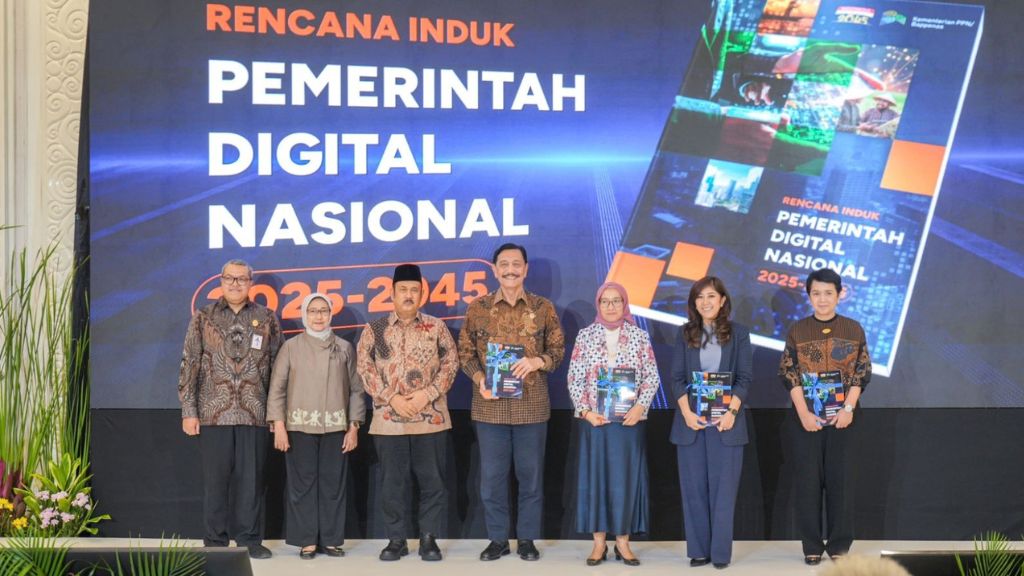
Launched in Jakarta on February 26, the document expects to serve as a shared reference for central and local government agencies in planning, budgeting, implementing, and evaluating digital government programmes.
The aim is to ensure that digital transformation aligns with Indonesia’s long-term development agenda, the Golden Indonesia 2045.
This document is an important starting point to guide the policy planning process.
However, the experience of many countries suggests that real challenges are often institutional.
Fragmented bureaucracies, weak cross-sector coordination, and uneven implementation capacity between agencies remain common challenges.
This raises a fundamental question: can the government change the way it works?
Ultimately, the success of the master plan will depend on the government’s ability to break down bureaucratic silos and foster collaboration across institutions in tackling increasingly complex challenges.
The promise of a whole-of-government approach
A message that stood out in the master plan is the shift from a sectoral approach towards a whole-of-government (WOG) model, placing citizens’ needs at the heart of digital government.
This commitment matters, particularly because it is now formalised in an official document.
For years, digital government initiatives in Indonesia have often developed in a sectoral manner.
Each government agency built its own applications, managed its own data systems, and designed its own service platforms.
However, despite noble intentions, this approach has frequently resulted in fragmented services, disconnected data systems, and applications that have been eventually abandoned by users because they were designed primarily to serve institutional needs rather than citizens.
Several countries have overcome this problem by taking a WOG approach.
By breaking bureaucratic silos, establishing strong government technology agencies, and developing integrated e-government strategies, these countries have succeeded in creating digital services that are not only innovative but also sustainable.
The United Kingdom, Singapore, Estonia, and South Korea are often cited as examples.
Yet their experiences also highlight an important lesson: breaking bureaucratic silos requires strong leadership, clear coordination across institutions, and well-defined roles that are understood by all stakeholders.
Indonesia has already begun experimenting with this approach. One example is the pilot programme for the digitalisation of social protection services based on the digital public infrastructure (DPI) in Banyuwangi, East Java.
The initiative is planned to expand to 41 districts and municipalities this year.
The key lies in strong commitment and a clear focus on outcomes.
As Presidential Advisor for Digitalisation and Government Technology, Luhut Pandjaitan, remarked in his opening speech at the launch event: “We already have a great plan. Now the question is how we execute it.”
Advancing data-driven policymaking
The master plan also positions data as the foundation of digital government policymaking.
The concept of data-driven policy is not new. For years, the phrase “data is the new oil” has been widely used.
Yet, like any resource, the value of data depends on how well it is governed.
Within this framework, data governance aims to ensure that government data is accurate, up-to-date, non-overlapping, interoperable, and accessible. The Satu Data Indonesia initiative led by Bappenas sits at the forefront of this effort.
Once again, however, the greatest challenge lies not in system design but in bureaucratic culture.
Data-driven governance will only work if government institutions are willing to share data, accept transparent evaluation, and adjust policies based on evidence.
Without cultural change, even the most advanced digital systems risk becoming little more than another layer of bureaucracy.
Differences in data governance capacity between central and local governments also pose an additional challenge. For this reason, the proposed Satu Data Indonesia Bill, currently under discussion between the government and parliament, is expected to provide a stronger legal foundation for data integration across all levels of government.
Managing risks and promoting inclusion
Another important aspect highlighted in the master plan is the recognition that digital government is not a one-off project, but a dynamic process that must continuously adapt to technological change.
For this reason, the plan also places risk management at the centre of implementation.
Rapid developments in technologies such as artificial intelligence (AI), cloud computing, and advanced data analytics present significant opportunities but also new challenges, ranging from cyber threats, and data breach, privacy violations, to dependence on global tech providers.
By incorporating a risk management framework into digital government planning, the document seeks to ensure that technology investments, adoption, and implementation are carried out more cautiously to minimise potential disruptions to public services in the future.
Another equally important dimension is digital inclusion.
Digital government does not operate in isolation. It forms part of a broader national digital transformation ecosystem.
This means that the success of the strategy will depend heavily on expanding digital access, particularly in frontier, outermost, and disadvantaged areas.
Without adequate connectivity infrastructure and local digital talent development, digital government systems risk widening existing inequalities rather than reducing them.