
Ita’s story: From motherhood to leadership
This interview is part of the HSEU Healthcare Transformation Champions special report, by GovInsider and the Healthcare Services Employees’ Union (HSEU), that celebrates the everyday stories and individuals driving Singapore’s healthcare force.
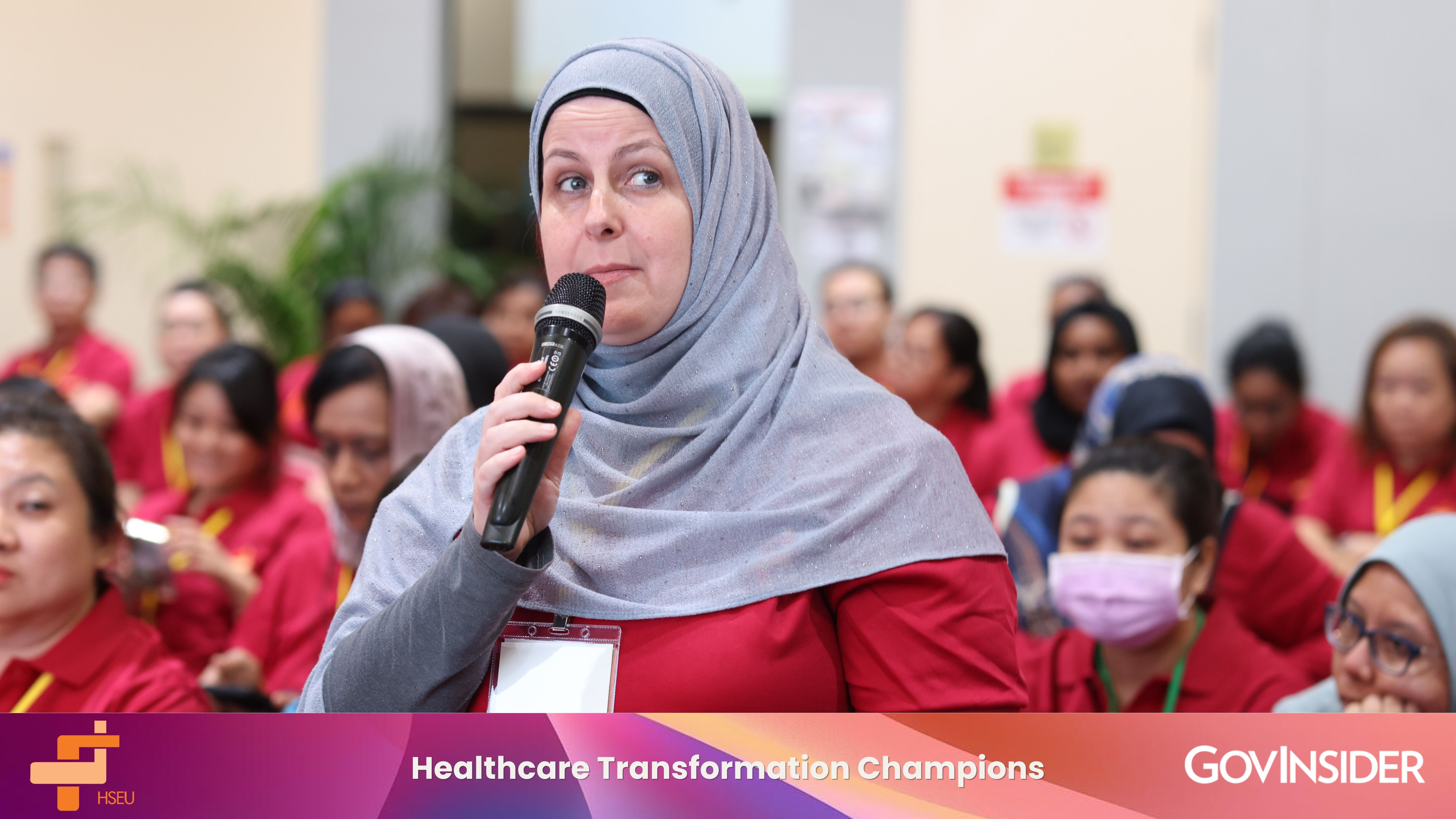
Ita Coffey, Principal Physiotherapist, Jurong Community Hospital, shares about her journey in healthcare transformation. Image: Healthcare Services Employees’ Union
Originally from the United Kingdom (UK), Ita Coffey moved to Singapore as a mid-career professional, motivated by Singapore’s reputation for being a multicultural, safe, and globally connected society.
At 34, she took a courageous leap, transitioning from administrative work into physiotherapy.
Today, she leads a team of four physiotherapists and three therapy assistants in Singapore’s first integrated day rehabilitation and community hospital, serving as a Principal Physiotherapist at Jurong Community Hospital (JCH).
“I always knew I wanted to do something more meaningful, for myself and my community,” she recalls. “Every patient is someone’s loved one. That belief guides everything I do, clinically and personally.”
At JCH, Coffey specialises in neuro-rehabilitation, caring for patients recovering from stroke or traumatic brain injuries.
Her professional responsibilities extend beyond patient care. She mentors her team, helps manage operations, supports patients emotionally, and promotes a culture of compassionate care.
A champion of change through lifelong learning
With over 15 years of experience in healthcare, Coffey believes in staying ahead through continuous learning.
She recently expanded her skillset in AI literacy and systems management. Her motivation? A desire to provide better outcomes and more efficient workflows, not only for her patients but for her team.
She credits the Healthcare Services Employees’ Union (HSEU) for exposing her to sector-wide trends and platforms for advocacy and professional development, such as union-sponsored Industrial Relations and leadership courses at OTCi (Ong Teng Cheong Labour Leadership Institute), dialogues with political office holders and senior management, and yearly negotiations for staff Annual Increments and Performance Bonuses.
“As physiotherapists, we must keep up with robotics and the latest clinical protocols. Lifelong learning is not optional; it is essential.”
Her pursuit of new skills also feeds her personally. Her goal for 2026: to take a chocolate-making class and pick up yoga, small acts of self-care amid a caregiving career.
Leadership rooted in empathy and listening
In addition to professional growth, Coffey embraces personal transformation, especially through active listening.
After receiving feedback that she sometimes responded too quickly, before fully understanding, she deliberately “practised listening to understand rather than reply.” This shift brought deeper empathy into her leadership and personal relationships.
Her emphasis on communication extends into her union advocacy. As an HSEU champion, Ita actively engages with union counterparts, modelling a style of leadership that builds bridges rather than walls. To Coffey, influencing positive change requires empathy, patience, and conviction.
Her journey is also deeply personal. She draws strength from her community and family, including three stepdaughters and her son. Through early life challenges and navigating different cultures, she stayed anchored by a central belief:
“Enjoy what you do, or you won’t be able to sustain it. Don’t chase money; chase meaning.”
Her path teaches others: mistakes are part of learning. Growth isn’t confined to classrooms or clinical theatres. It happens in community, in failure, and in recalibration.
 What Ita wants you to know
For professionals across all occupations and industries, Ita’s story brings light a simple truth: transformation is personal, not just systemic.
Clinical and professional competence matter, and so do curiosity, empathy, and lifelong growth.
“Step out of your comfort zone. You’ll make mistakes, but you’ll learn more and gain satisfaction when your patient regains independence.”
She sees union work not as adversarial, but as relational:
“If we can resolve issues calmly and constructively, like helping a nurse with an injury find a more suitable role, we strengthen the workplace as a whole.”
What’s next?
As she continues her journey at JCH, Coffey remains generous with her aspirations: expanding her tech and clinical skill base, nurturing her blended family, and contributing to a union culture that values care, compassion, and professional excellence.
Ita’s story is a testament to mid-career reinvention, personal resilience, and the power of learning, one patient, one colleague, one community at a time. For now, and for every tomorrow she continues to shape.