
Jenny Yeung, Deputy Head of Geotechnical Engineering Office (Planning and Testing), Civil Engineering and Development Department, Hong Kong
Meet the Women in GovTech 2025.
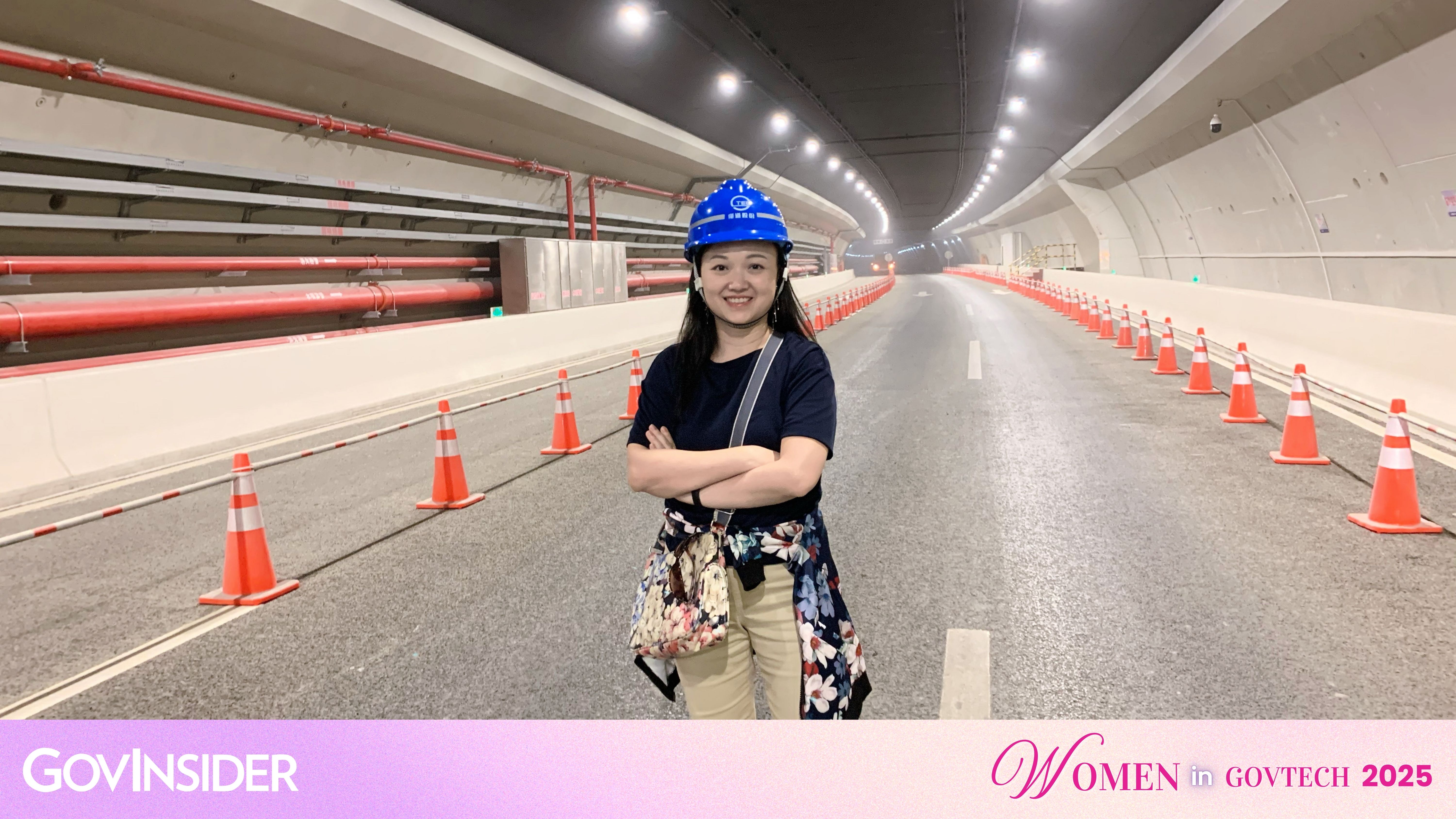
Jenny Yeung, Deputy Head of Geotechnical Engineering Office (Planning and Testing), Civil Engineering and Development Department, Hong Kong, shares about her journey.
1) How do you use your role to ensure that technology and policy are truly inclusive?
In my role as Deputy Head (Planning and Testing) of the Geotechnical Engineering Office (GEO) of the Civil Engineering and Development Department (CEDD) of Hong Kong SAR Government, I champion inclusivity by integrating public engagement and stakeholder consensus into our technology and policy development.
For instance, while advancing our landslide risk management system and geotechnical standards, we actively consult local practitioners and academics, and constantly benchmark against international standards through our annual meeting with the Slope Safety Technical Review Board, which comprises three prestigious geotechnical experts from around the world.
Moreover, as Chairperson of the Standing Committee on Concrete Technology, I promote active industry dialogue, and regularly collect feedback from project teams, contractors and suppliers when spearheading innovative construction materials, to ensure our solutions are practical, sustainable, and aligned with industry needs.
2) What’s a moment in your career when you saw firsthand how technology or a new policy changed a citizen’s life for the better?
A defining moment in my career was the implementation of a digital twin groundwater regulation system at a natural hillside in the Po Shan area on Hong Kong Island.
This area has a history of landslide risk - high groundwater levels led to a disastrous landslide in 1972 that claimed 67 lives. In response, the GEO designed an innovative and sustainable groundwater regulation system, comprising of a pair of drainage tunnels, each 3.5 m in diameter, with a total length of 500m, and a network of 172 sub-vertical drains.
This real-time monitoring technology helps reduce the risk of major landslides in the area by automatically lowering the groundwater level during heavy rain, thereby safeguarding nearby residents and infrastructure.
Given the uniqueness of the Po Shan Drainage Tunnel and its novel features, the GEO established a “Landslide Sci-Tech Chamber” inside the tunnel, which serves as a landslide education centre, allowing the public to appreciate the importance of slope safety management in Hong Kong.
3) What was the most impactful project you worked on this year, and how did you measure its success in building trust and serving the needs of the public?
The most impactful project our team undertook this year was the development of a machine learning-based Landslip Warning System.
Since its establishment in 1977, the GEO has studied and developed correlation models between rainfall and landslides, becoming the first organisation in the world to establish a Landslip Warning System.
As our understanding of the rainfall-landslide relationship has deepened, the GEO has continuously optimised this System which has evolved through four generations to date.
At present, the Landslip Warning System is jointly managed by GEO and the Hong Kong Observatory. A Landslip Warning is issued when prolonged heavy rain is forecasted that very likely to trigger a large number of landslides.
To further enhance the System’s accuracy, our in-house team developed a fifth-generation system that leverages the power of machine learning for multivariate analysis. This new machine learning-based System underwent a trial during the 2025 wet season.
The results demonstrated that it successfully achieved over 90% accuracy in predicting landslides, a significant improvement over the current system’s 70% accuracy.
In view of this satisfactory performance, we aim to fully implement the machine learning-based Landslip Warning System in 2026 for real-time landslide risk assessment.
The System’s enhanced reliability will improve the effectiveness of early warnings in addressing climate change challenges and will strengthen public trust in our technical leadership and commitment to proactive landslide risk management.
4) What was one unexpected lesson you learned this year about designing for real people? This can be about a specific project or a broader lesson about your work.
While developing public-facing systems like our Landslip Warning System, I learned that even the most advanced technology must be paired with clear communication.
We found that citizens engage more confidently when information is simple, visual, and actionable—reinforcing that inclusivity is not just about access, but also about understanding.
Although we may not need to explain the technical mechanisms or underlying algorithms of our machine learning-based Landslip Warning System to the public, we must educate them on what to do or what not to do when a warning is issued. This ensures they know how to protect themselves from landslide risks.
I truly believe that while technology is a science, public communication is an art.
5) We hear a lot about AI. What's a practical example of how AI can be used to make government services more inclusive and trustworthy?
Innovation has always been a priority for the GEO in enhancing our services and engineering practices.
In response to the increasing frequency and intensity of extreme weather events due to climate change, we are advancing a strategic plan to embed artificial intelligence (AI) and other digital technologies into slope safety management.
This transformation aims to establish a data-driven, AI-assisted framework which ensures efficient data-informed decision-making while upholding the critical role of engineering judgment. Besides the machine learning-based Landslip Warning System mentioned previously, we are also developing a Smart Slope Catalogue.
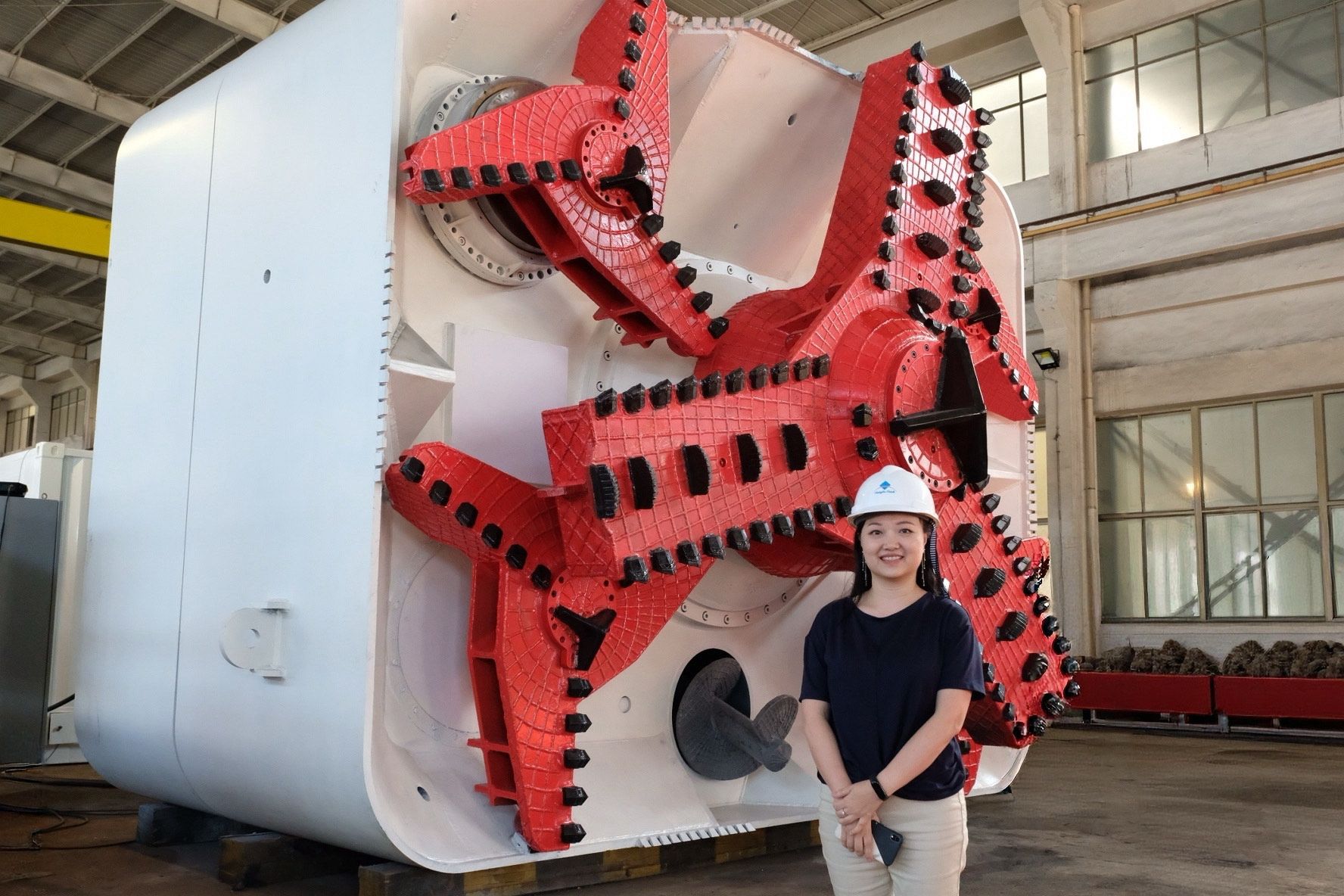
This AI-enhanced system expands our existing slope inventory, which contains information on about 60,000 man-made slopes in the territory, to include natural terrain catchments and other essential data.
The vast amount of information in the Smart Slope Catalogue, coupled with big data analytics, will greatly assist engineers in designing landslide prevention and mitigation measures and in making swift decisions during landslide emergency.
Under the HKSAR Government’s Open Data Policy, much of this information is also accessible to the public. This policy makes our services more transparent, trustworthy and inclusive.
To subscribe to the GovInsider bulletin, click here.
6) How are you preparing for the next wave of change in the public sector? What new skill, approach, or technology are you most excited to explore in the coming year?
In addition to keeping abreast of the latest global technology, I am pursuing an Executive Master of Public Administration at the Tsinghua University to prepare for the increasing cooperation between Hong Kong SAR and the Chinse Mainland.
This programme focuses on governance innovation and cross-boundary leadership.
I am particularly excited to deepen my expertise in public sector governance and sustainable infrastructure planning, which will be essential for ensuring Hong Kong’s resilience amid climate and technological shifts.
7) What advice do you have for public sector innovators who want to build a career focused on serving all citizens?
Stay grounded in public needs and take ownership. Listen actively and strive to understand others’ perspectives.
Collaborate across sectors to seek the highest common interest. Maintain authenticity and never underestimate your work’s impact on people. Embrace both technical excellence to drive innovation and emotional intelligence to build resilience.
As I have learned through my roles in engineering and community service, lasting impact comes from uniting professionalism with a genuine commitment to public service.
8) Who inspires you to build a more inclusive and trustworthy public sector?
I am inspired by the Chinese philosophy of "the one in charge (一把手)" — a leadership concept that emphasises vision, accountability, and synergy.
This approach, coupled with the profound dedication I have witnessed among frontline staff and volunteers during disaster responses and reconstruction projects, motivates me to help build a public sector that is both effective and compassionate.
I firmly believe that power comes with responsibility.
When we advance in our government careers, we must be bold enough to make the right decisions as the one in charge within our jurisdiction, particularly during crisis and other unusual situations.
9) If you had an unlimited budget, what would your dream project be?
My dream project would be to establish an Integrated Climate Resilience and Smart Slope Safety Platform for the Greater Bay Area.
This system would use AI, IoT, and cross-boundary data sharing to predict and mitigate geohazards across the region, protecting communities, supporting sustainable development, and strengthening Hong Kong’s role as a regional leader in landslide risk management and climate adaptation.
10) Outside tech, what excites you the most?
I am deeply excited by mentoring the next generation—especially young women in engineering—and contributing to community-building through volunteer work.
My involvement in rebuilding schools in Sichuan and supporting orphans in Yunnan has shown me that the most meaningful innovations are those that nurture hope and opportunity for people.