
Kang Sing, Senior Cybersecurity Consultant at the Cybersecurity Engineering Centre, Cyber Security Agency of Singapore
Meet the young public sector officials in the inaugural Young & Official Report 2026.
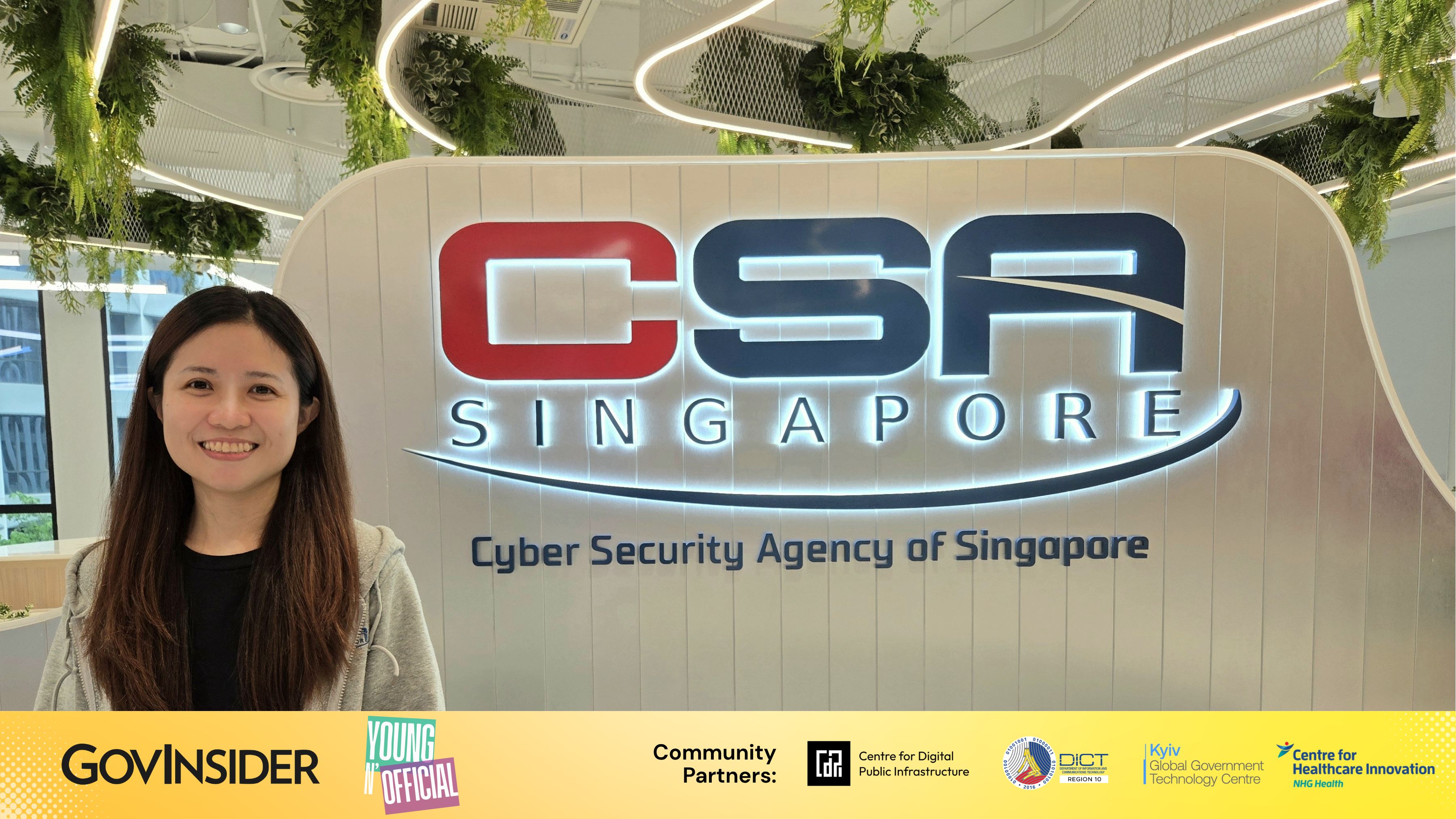
Kang Sing, Senior Cybersecurity Consultant at the Cybersecurity Engineering Centre, Cyber Security Agency of Singapore. Image: CSA
1) What does public service mean to you? Can you share more about your role in the public sector?
Public service to me means solving problems that most people never think about until they become very real.
Today, I lead mobile security work at CSA’s Cyber Security Engineering Centre (CSEC), where I help developers and organisations think about security earlier instead of fixing issues after launch.
What makes the work meaningful to me is that mobile phones are no longer just communication devices. They hold our identities, banking access, and personal conversations. When mobile security fails, the impact feels immediate and personal.
I have also worked on national initiatives around strengthening authentication against phishing and credential theft. Many threat actors today capitalise on how people opt for convenience and tend not to set strong passwords or set up two-factor authentication (2FA), and that they trust what they see online. That changes how cybersecurity needs to be approached today.
2) Tell us about a project you championed. What impact did it have on the community?
One project I found particularly meaningful was the Safe App Portal. We observed that many development teams wanted to improve mobile security, but security testing was often fragmented or difficult to operationalise consistently.
The Safe App Portal was designed to help developers identify common mobile security risks earlier in the developmental lifecycle. The goal was to make security assessments more practical, accessible, and actionable for development teams.
What I found heartening was the response from developers themselves. Many teams were open to improving security when the guidance felt practical rather than overly compliance-driven. It reinforced my belief that better security outcomes depend on making security easier to adopt.
3) As a young professional, how has your unique background or perspective allowed you to identify a solution that others in your organisations might have overlooked?
I grew up in a generation where digital services became part of everyday life very quickly, which shaped how I think about technology and user behaviour.
In cybersecurity, we sometimes focus heavily on technical strength or compliance requirements.
These are necessary, but sometimes, even strong security measures can fail if users find them too disruptive or confusing to adopt.
This perspective shaped how I approached cybersecurity initiatives by considering whether solutions would realistically fit into people’s daily behaviour.
I think younger officers are often more willing to challenge the idea that security and usability must always compete and to find a middle ground.
4) What is your personal strategy for maintaining your creative energy when faced with bureaucracy?
I try to focus on the purpose behind the process.
In cybersecurity, much of the work becomes visible only when something goes wrong. What keeps me motivated is remembering that the work affects how safely people interact with digital services every day.
I have also learned that meaningful change takes time. Good ideas usually need alignment and patience before they can scale properly.
Staying connected to the real-world impact of the work helps me maintain perspective, even when the process becomes challenging.
5) If you had just one area to invest in to accelerate transformation in the public sector (regulation, technology, talent, etc.), which one would you choose and why?
If I had to prioritise one area to accelerate transformation in the public sector, I would invest in interdisciplinary talent that can bridge technology, policy, and operations.
Many public sector challenges no longer sit within a single domain. Whether it is cybersecurity, AI adoption, or digital services, success often depends on how well teams can balance technical possibilities with operational realities.
This requires officers who can translate effectively between engineers, policymakers, operational teams, and industry partners. Some of the most meaningful progress happens when teams align early around the problem they are trying to solve.
Technology will continue to evolve quickly, but organisations adapt more sustainably when people can learn across domains and respond thoughtfully to change.
6) What is your greatest ambition as you grow in your public service career?
My greatest ambition is to help shape how the government builds trust in an increasingly digital society.
Many public sector challenges sit at the intersection of technology, policy, and operations. Over time, I hope to help bridge those perspectives instead of looking at problems only through a technical lens.
I also hope to help build environments where younger officers feel encouraged to question assumptions and contribute ideas early.
Ultimately, I want to contribute to systems that people can rely on confidently as society becomes increasingly digital.
7) What is a “universal value” that connects everyone in your department – from interns to directors – and how do you use that to drive collaboration?
A universal value that connects people across my department is a shared sense of purpose in solving real problems that matter to Singapore and its citizens.
Regardless of role or seniority, people are generally motivated when they can see how their work contributes to something meaningful.
I try to use that as a basis for collaboration by keeping discussions anchored on the broader problem we are trying to solve, rather than individual domains or perspectives.
I think that a shared sense of mission is one of the strengths of public service.
8) What is the best piece of advice you’ve got for the next generation of public servants?
Do not optimise only for visibility. Optimise for usefulness.
Some of the most impactful work in government happens quietly through long-term systems building, stakeholder alignment, and sustained follow-through. The outcomes may not always be immediately visible, but they can create lasting improvements over time.
I think it is important for the next generation of public servants to stay focused on solving real problems and creating meaningful impact, rather than only pursuing highly visible initiatives. Trust and resilient public systems are often built gradually through sustained effort.
9) What is a myth you wish to debunk about young public servants?
That young officers lack resilience or commitment.
In reality, many young officers I have worked with are highly committed to their work and willing to stay the course, even when the problems are complex, long-term, and not immediately visible. Public sector work often involves navigating ambiguity and improving systems gradually.
I have seen many younger officers step up when they understand the purpose behind the work. I think resilience in the public sector is less about seniority and more about mindset – being willing to learn, adapt, and keep improving systems despite incremental progress.
10) Write a letter to your future self in 2035. Please keep it within 200 words.
Dear future self,
Remember that cybersecurity is ultimately about people, not just systems. I hope that is still the reason you show up every day, to help people navigate our digital society with confidence.
Technology will keep changing. There will be new platforms, new threats, and new debates around trust, privacy, and security. But hopefully, the core mission remains the same
I hope you never become overly comfortable with the way things are done today. Stay curious. Keep questioning assumptions. Keep listening to younger officers who bring with them fresh perspectives.