
Kateryna Chernohorenko, Former Deputy Minister of Defence of Ukraine for Digital Development Transformation and Digitalisation
By James Yau
Meet the Women in GovTech 2025.
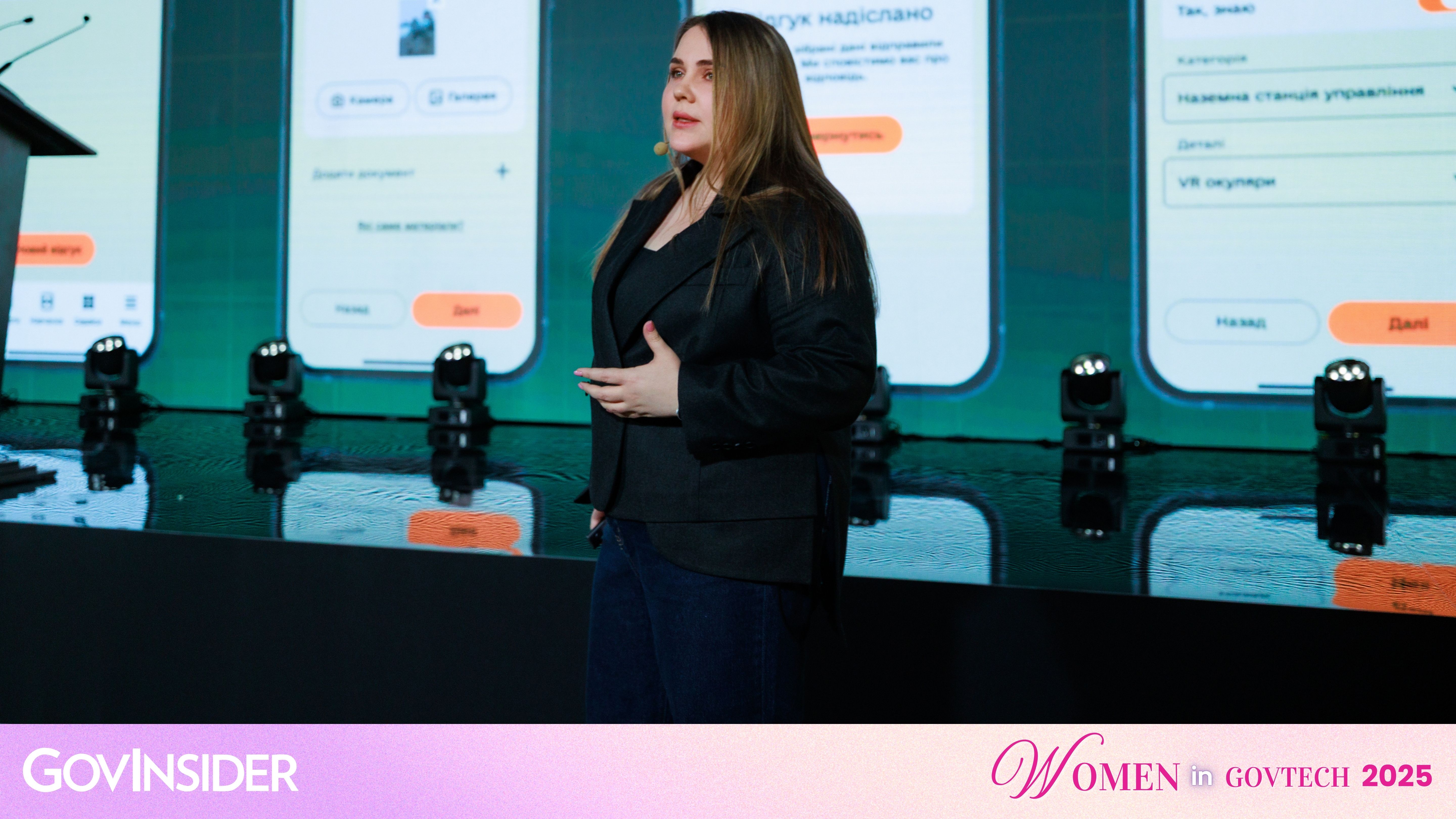
Kateryna Chernohorenko, Former Deputy Minister of Defence of Ukraine for Digital Development Transformation and Digitalization shares about her journey. Image: Kateryna Chernohorenko
1) How do you use your role to ensure that technology and policy are truly inclusive?
As the Former Deputy Minister of Defence of Ukraine for Digital Development, Digital Transformation and Digitalisation, I’ve built every product on three principles - accessibility, transparency, and respect for the citizen.
Inclusivity, to me, means ensuring that government services work for everyone - from people in large cities to those in remote villages, from active-duty soldiers to families of mobilised citizens, including people who cannot access services offline due to health or mobility limitations.
A defining example is Reserve+, Ukraine’s mobile application for military conscripts.
At the start of the full-scale invasion, millions of Ukrainians needed to update their military records in person at enlistment offices. The paper-based system collapsed under the demand: days-long queues, missing files, outdated data - while the front urgently needed reinforcements.
Within record time, our team launched Reserve+, enabling citizens to update data, apply for deferment, receive digital referrals for medical commissions, and even explore open military positions - all in just a few clicks on their smartphone.
Reserve+ has now been used by over four million citizens, dramatically reducing bureaucracy, saving the state millions, and - most importantly - restoring trust and dignity in how people interact with their government.
But inclusivity is not only about access - it’s also about fairness, transparency, and security. Reserve+ fundamentally changes how the mobilisation system operates: clear, standardised procedures replace the need for “connections” or insider knowledge.
Reserve+ is not just an app - it is a new model of how a government can earn trust through technology: inclusive, secure, transparent, and accountable to every citizen.
2) What’s a moment in your career when you saw firsthand how technology or a new policy changed a citizen’s life for the better?
One of the most powerful moments for me was seeing how our digital platform Army+ transformed daily life for Ukrainian soldiers.
Army+ is a mobile app created for the Armed Forces of Ukraine - a place where service members can handle dozens of essential tasks online: submit official requests, participate in surveys, access learning programs, and receive discounts or key support services.
In short, it replaces paperwork and bureaucracy with transparency and speed, allowing soldiers to focus on what truly matters - defending the country.
When we launched the app, we asked soldiers which service they needed most. After surveying 65,000 service members, we identified the biggest pain point: endless handwritten requests, especially for transfers to other units.
Previously, this was an entirely manual process - handwritten forms, multiple signatures, long delays, and even lost documents in the field. Some soldiers waited months for a decision, often without any feedback. It was unfair and demoralising.
Through Army+, we digitised this process completely. Now, a soldier can submit a transfer request directly in the app, track its status, and receive a clear response - all within 72 hours.
If approval is required and the commander doesn’t respond within 24 hours, the transfer is automatically approved under the principle of silent consent.
I’m in constant direct contact with service members, and I heard firsthand that for the first time ever, they feel heard, respected, and empowered to manage their own service paths.
That moment - when technology gave back agency and dignity to those who defend our country - is when I saw, very clearly, how digital transformation can change lives for the better.
3) What was the most impactful project you worked on this year, and how did you measure its success in building trust and serving the needs of the public?
In Ukraine, civilians and businesses constantly look for ways to support our defenders - not just with words but through real action.
Within the Army+ app, we launched a new service called “Pluses” - a programme of special offers and discounts for military personnel.
Through the app, each service member can generate a unique QR code to use personally or share with their family. It’s a simple but powerful way to express gratitude and care.
For me, this project is not just about convenience - it’s about unity, trust, and responsibility. It connects society, business, and the military in a shared act of appreciation.
The measure of success here isn’t just numbers; it’s the genuine feeling of respect and solidarity we see between those who serve and those they protect.
4) What was one unexpected lesson you learned this year about designing for real people? This can be about a specific project or a broader lesson about your work.
Everyone is chasing innovation - complex projects, advanced technologies, and long development cycles. But the biggest lesson I’ve learned is that we don’t have the luxury of time.
In a country at war, solutions must work here and now. People don’t need perfection - they need simple, fast, and scalable tools that make a real difference today.
The key is not complexity, but clarity: focus on what truly helps people, deliver it quickly, and improve along the way.
5) How are you preparing for the next wave of change in the public sector? What new skill, approach, or technology are you most excited to explore in the coming year?
I’ve gone a step further - I’m helping shape the next generation of public leaders. Today, I teach a course on “E-Governance, Document Management, and Digital Democracy " at the Kyiv-Mohyla School of Governance.
Together with students, we develop mini-projects based on real cases of digital transformation in Ukraine’s public and defence sectors. After five years in government and defense innovation, my mission is to share practical experience and inspire young professionals to build a more transparent and citizen-centered state.
To subscribe to the GovInsider bulletin, click here.
6) What advice do you have for public sector innovators who want to build a career focused on serving all citizens?
First and foremost - remember that public services are services. Citizens are users, not subjects.
In the private sector, the rule is simple: whoever provides the best service - fastest, easiest, and most transparent - becomes the leader.
The same should be true for government.
Imagine if getting a service from the state were as simple, accessible, and reliable as ordering an Uber. That’s the standard we should aim for.
To achieve it, we must learn from the private sector, adopt modern product thinking, and attract the best specialists - designers, engineers, analysts - to work in government.
Yes, the public system is complex and bureaucratic. But real reformers are those who challenge outdated systems, simplify what was overcomplicated, and adapt state institutions to the needs of today’s citizens.
It’s not the easiest career path - but it’s one of the most meaningful, because when government starts working like a great service, everyone wins.
7) Who inspires you to build a more inclusive and trustworthy public sector?
I’m most inspired by our Ukrainian soldiers - the people who ultimately use the products we build. Their courage, resilience, creativity, and adaptability are extraordinary.
Every day, they operate under the toughest conditions imaginable, yet they find new ways to solve problems, protect others, and move forward.
For us, this is the strongest motivation possible. If they can face that reality with such strength, we must do everything we can to make their daily routines simpler, faster, and more humane.
Technology should serve them - not the other way around.
8) If you had an unlimited budget, what would your dream project be?
I would invest in a national programme to support the development of dual-use technologies - innovations like robotic systems, drones, and autonomous platforms.
These technologies are already proving their value on the battlefield, but their potential goes far beyond defence. In peacetime, they can serve society by assisting in search-and-rescue missions, emergency response, agriculture, and infrastructure monitoring.
My dream project would bridge these two worlds - ensuring that technologies born in times of war can later save lives, rebuild communities, and strengthen resilience in peace.
9) Outside tech, what excites you the most?
People who aren’t afraid of challenges - who go where it’s hard, where things are messy, unclear, and need to be rebuilt from scratch - these are the people who truly move systems forward.