
Kateryna Podust, Head of the e-Residency Expert Group, Ministry of Digital Transformation of Ukraine
By James Yau
Meet the Women in GovTech 2025.
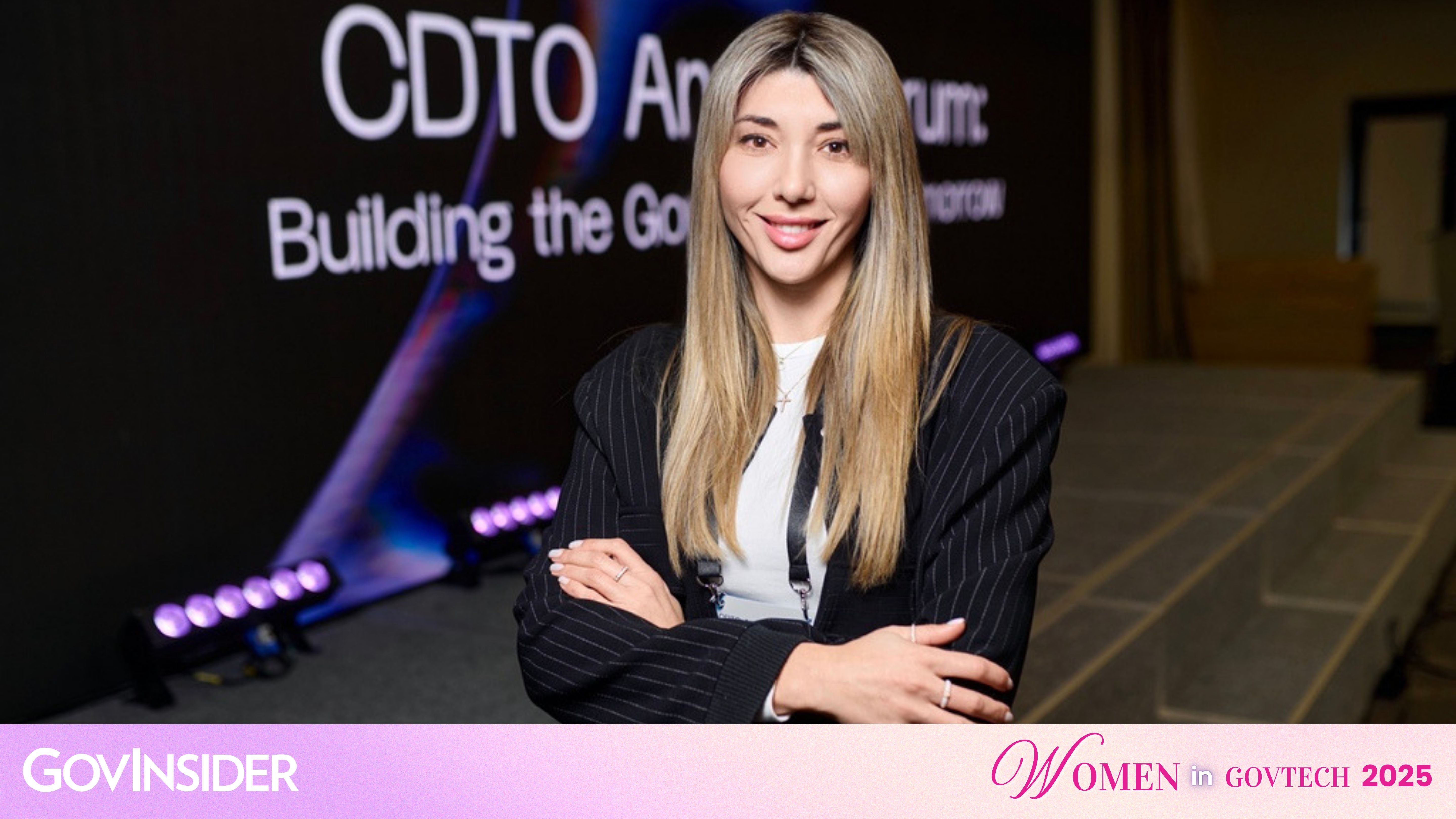
Kateryna Podust, Head of the e-Residency Expert Group, Ministry of Digital Transformation of Ukraine, shares about her journey. Image: Kateryna Podust
1) How do you use your role to ensure that technology and policy are truly inclusive?
I serve as the Head of the e-Residency Expert Group at the Ministry of Digital Transformation of Ukraine and project manager of uResidency, the first Ukrainian initiative to open government digital services to foreigners.
I create solutions that take into account the real needs of different user groups, from experienced non-resident entrepreneurs to those who are just discovering Ukrainian services and want to start a business in Ukraine entirely online.
For me, inclusivity is first and foremost an approach. I involve foreigners in testing, analyse their barriers, and check the clarity and accessibility of interfaces for different countries, constantly communicating and collecting feedback.
It is these insights that enable us to develop a service that works for individuals with diverse cultural and legal backgrounds.
While working on uResidency, I saw the obvious! Foreigners are already actively receiving services in Ukraine and need a modern, simple, digital channel of interaction. This became the impetus for the next stage - opening the Diia ecosystem to foreign users.
My goal is to make Ukrainian digital services truly global: open, secure, and equally accessible regardless of citizenship, experience, or location.
2) What’s a moment in your career when you saw firsthand how technology or a new policy changed a citizen’s life for the better?
The turning point for me was the first successful test of the full cycle of registration of foreigners in Ukraine through uResidency, when a foreign entrepreneur was able to open a business through his own smartphone without unnecessary bureaucracy.
I heard a direct reaction: “Ukraine has become a real opportunity for me.” For me, this was an indicator of much more than just a successful technical launch.
At that moment, I clearly saw how digitalisation truly erases borders - and how Ukraine, even in the realities of war, remains open economically, technologically, and mentally.
When a person gets a new chance thanks to the digital state, it is the best proof of the real impact of GovTech.
3) What was the most impactful project you worked on this year, and how did you measure its success in building trust and serving the needs of the public?
For me, the project that has had the most significant impact is one that I am actively working on and genuinely believe in - opening up government services to foreigners in Diia.
For the first time, we are creating a mechanism that will enable foreigners to undergo a secure, legal, and completely remote identification process without requiring any physical presence. This is a step that changes the very model of access to Ukrainian digital services.
We measure success by three clear indicators: trust - transparent processes, high level of security, and compliance with international standards; clarity - how many people complete identification without needing to ask for help; and satisfaction - simplicity, speed, and no obstacles during use.
I am confident that we are moving in the right direction, because foreigners already perceive Ukraine as a country where digital services are as accessible and convenient as they are for citizens. This builds trust and opens up new opportunities for their interaction with Ukraine.
4) What was one unexpected lesson you learned this year about designing for real people? This can be about a specific project or a broader lesson about your work.
The most significant discovery in creating services for foreigners was the realisation that real users are always a much more complex and diverse world than any model or hypothesis.
In practice, foreigners interact with Ukrainian digital services using completely different cultural codes, language barriers, varying levels of digital literacy, and even differing ideas about how the state operates.
This became particularly clear when we opened uResidency to the first Asian countries - India and Pakistan. Users from these regions have significantly different legal approaches, distinct document flow logic, and a distinct digital culture.
Their experience of interacting with government services is substantially different from that in Europe, so we built scenarios with adaptive explanations and interfaces, incorporating even more flexibility into the design.
This experience taught me the most important thing: that a truly inclusive service is not about the “average user,” but about taking into account the interests of each person, regardless of their background or country of origin.
And that is exactly how we build solutions where the path to public services remains simple, understandable, and barrier-free, even if there are thousands of kilometers and different cultural worlds between us.
5) We hear a lot about AI. What's a practical example of how AI can be used to make government services more inclusive and trustworthy?
We are already actively integrating AI into the creation of solutions that enhance the quality and speed of public services, both for Ukrainian citizens and foreigners.
One of the most practical areas is adaptive AI explanations of complex procedures in “human language,” taking into account the user's country of origin, the characteristics of their legal system, and their level of digital literacy.
For foreigners, this means much more than just text prompts. AI helps automatically verify the validity of documents, provide step-by-step prompts in real-time, and identify potential fraud risks before they become a problem.
This significantly reduces the number of errors, lowers the workload on operators, and expands access to services for people who previously could not use them due to language, cultural, or procedural barriers. AI makes government services not just smarter - but truly inclusive.
To subscribe to the GovInsider bulletin, click here.
6) How are you preparing for the next wave of change in the public sector? What new skill, approach, or technology are you most excited to explore in the coming year?
I have been working in the public sector for quite some time, and for me, any changes in the public sector are a natural part of development.
Each wave of transformation opens up a new vision, a new strategic framework, and an opportunity to make the state not only more modern but also competitive on a global level.
Preparing for change is not just about mastering new technologies, but also about thoroughly understanding how these technologies will impact models of public administration, citizen interaction, and Ukraine's position in the global digital ecosystem.
I am interested not just in innovation for innovation's sake, but in building an architecture that will allow Ukraine to be among the leaders in the field of digital identities, cross-border services, and global mobility.
My ambition is for Ukraine's digital state to be flexible, resilient, and able to adapt to a reality where borders are becoming increasingly conditional.
I want us not only to catch up with global trends, but also to shape them by offering new models of accessible, secure, and globally compatible digital services.
7) What advice do you have for public sector innovators who want to build a career focused on serving all citizens?
First and foremost, be bold, because real change in the public sector is brought about by those who are not afraid to challenge old approaches.
However, it is also necessary to remain realistic, as innovation has no value if it does not benefit people. It is important to remember that every technological solution affects someone's life, so our work requires not only creativity but also responsibility.
My message is that people should be put at the center, ideas should be tested on real users, and we should always ask ourselves, “What specific value does this create?”
GovTech is not about trendy technologies, but about shaping the future of the state. My advice is to think beyond the scope of projects. Think in terms of systems. Be ambitious in building solutions that change the rules of the game, not just improve processes.
Those who can combine courage, responsibility, and vision create a new quality of state, and it is these people who are moving Ukraine forward.
8) Who inspires you to build a more inclusive and trustworthy public sector?
I am inspired by the teams that develop Ukraine's digital state daily, as well as users who share their success stories and feedback.
I often think about people who are encountering Ukrainian digital services for the first time - their trust and enthusiasm are the best motivation to work towards making Ukraine a global digital hub.
9) If you had an unlimited budget, what would your dream project be?
Given the current realities in Ukraine, it isn't easy to think of anything more important than peace, stability, and the country's future security.
That is why, if I had an unlimited budget, I would create a project that would combine the development of the country with its ability to survive and prevail.
I would bring together the best Ukrainian and international teams to build a global infrastructure for digital interaction between the world and Ukraine.
It would be a scalable ecosystem of digital services, ranging from business and education to medicine and security, accessible to anyone who wants to cooperate with Ukraine, invest, start a business, innovate, or contribute to supporting our country.
It would be a “digital nation” without borders, capable of uniting millions of people around Ukraine's potential, economic development, and reconstruction.
Because Ukraine's desire for victory and independence is not only about strength, but also about intelligence, innovation, and the ability to build systems stronger than any aggression.
That is why my ambition is to create a digital infrastructure that serves people, supports the state, and helps Ukraine remain strong - now and in the future.
10) Outside tech, what excites you the most?
I am most fascinated by travel and intercultural communication.
Observing how different countries think, work, build their societies, and interact with each other is an inexhaustible source of inspiration for me.
Each new culture presents new approaches to solutions, new values, and fresh perspectives on the world. This experience shapes my professional vision.
That is why traveling fuels my desire to make government services accessible to everyone who wants to be closer to Ukraine. It reminds me that the world is enormous, people are different, and digital services can become the bridge that unites them.