
Kimberly Zhang, Head, Group Service Transformation, National University Health System (NUHS); Head, Healthcare Redesign, Alexandra Hospital, Singapore
Meet the Women in GovTech 2025.
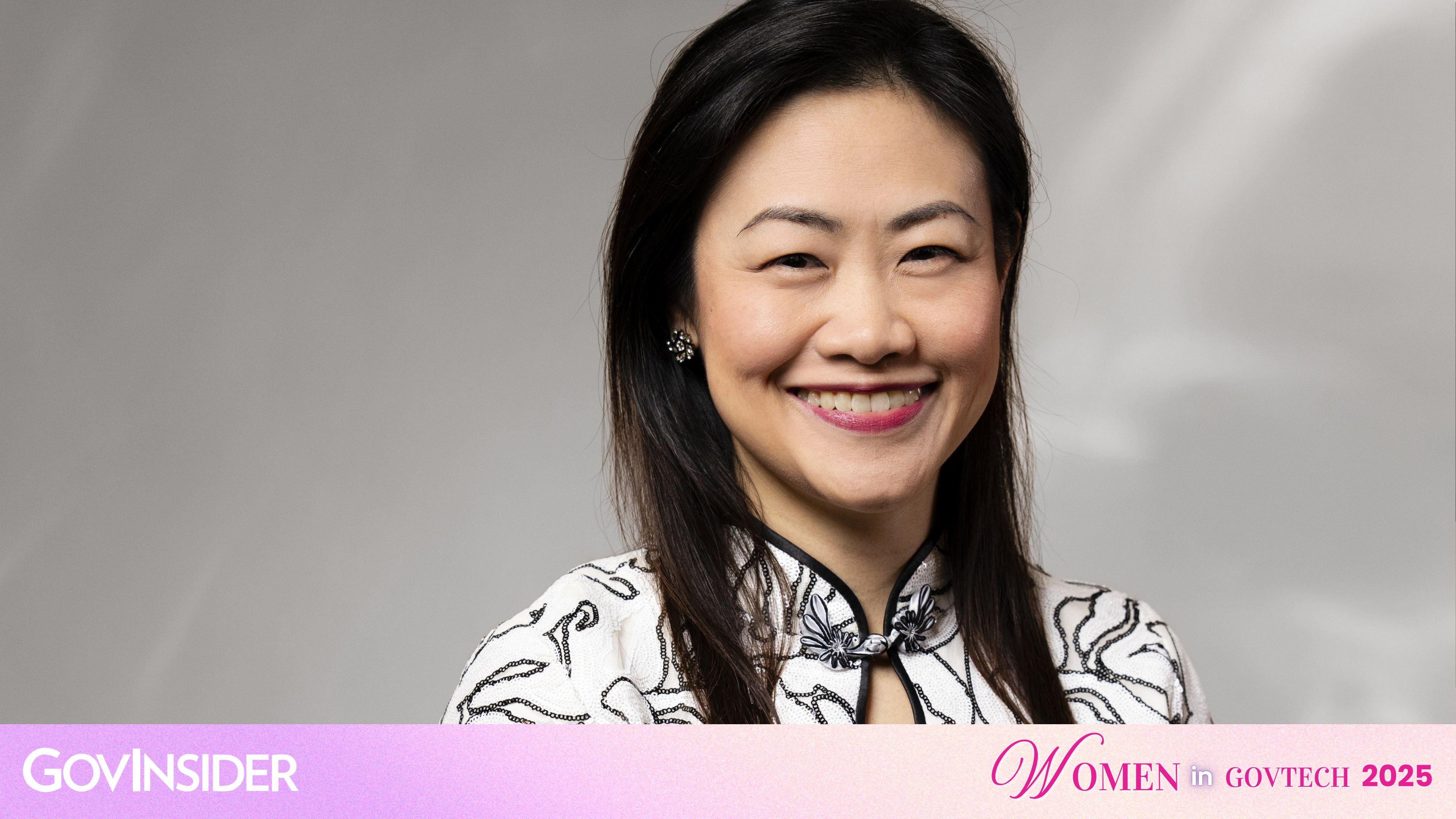
Kimberly Zhang, Head, Group Service Transformation, National University Health System and Head, Healthcare Redesign, Alexandra Hospital, Singapore, shares her journey. Image: NUHS
1) How do you use your role to ensure that technology and policy are truly inclusive?
In both my roles as Head of Group Service Transformation at the National University Health System (NUHS) and Healthcare Redesign at Alexandra Hospital, I have had the opportunity to connect with patients to better understand their care journeys, pain points and expectations, as well as work closely with colleagues directly involved in patient care.
This allows me to be the bridge between patients and healthcare providers, ensuring that the digital and virtual care services we design and implement are seamlessly integrated into patients’ journeys and staff workflows.
To do this, I try to keep my eyes and ears close to the ground so that we are constantly able to anchor our priorities and decisions on patient needs and focus on solving problems for care teams, and not implement technology for the sake of it.
2) What’s a moment in your career when you saw firsthand how technology or a new policy changed a citizen’s life for the better?
There was not a single definitive moment, but rather a journey of listening to our users’ feedback, exploring and discovering how it can be better designed or simplified, and ultimately improving our digital services to better meet the needs of the end users.
It was the act of putting in place an iterative process of closing feedback with development that made a tangible difference to our patients, caregivers and care teams, who use and rely on it daily.
3) What was the most impactful project you worked on this year, and how did you measure its success in building trust and serving the needs of the public?
We have released a new digital service to support patients who are planning to seek emergency care at any NUHS hospital, called ‘Emergency Visit’ on the NUHS App.
Users are now able to check estimated wait times at Emergency Departments, even before arriving at their destinations.
They can also complete a health declaration form in the App before their arrival. With the form filled in advance, patients or their caregivers can simply show it to screeners at the entrance and proceed directly to registration, which helps streamline a patient’s hospital journey.
It was a first in public healthcare, and we did not expect uptake to be high, as staff were sceptical that unwell patients would turn on the app before visiting the Emergency Department to check on wait times and key in their symptoms and travel history.
Within the first three months, the number of users grew to 18,000 per month, which was encouraging as it meant that some value had been realised for these patients and our care teams.
This also provided us with the momentum to further enhance the app features as well as to scale it to more hospitals.
4) What was one unexpected lesson you learned this year about designing for real people? This can be about a specific project or a broader lesson about your work.
Healthcare, like many other government services, is inherently complex, and we often find ourselves having to balance between achieving system efficiency and maintaining user centricity.
While trade-offs are sometimes a necessity, I learnt that bridging perspectives is equally, if not more important, by sharing our patients’ perceptions and experiences with care teams and always ensuring that the patient’s voice is in the room.
Similarly, closing the knowledge gap between patients and their care teams is another way to empower patients to make informed choices about their health decisions that would best suit their needs.
5) We hear a lot about AI. What's a practical example of how AI can be used to make government services more inclusive and trustworthy?
Artificial Intelligence (AI) should aim to increase accessibility to government services and information through ways such as seamlessly integrating with existing touchpoints or by creating touchpoints with lower barriers of entry (for example, WhatsApp), enhancing communication (for example, chatbots with multi-language options), or providing higher service availability (for example, 24/7 as opposed to office hours).
Ultimately, the goal of AI should also be to enable more meaningful citizen engagement experiences by providing customisable and personalised user journeys.
6) How are you preparing for the next wave of change in the public sector? What new skill, approach, or technology are you most excited to explore in the coming year?
With our digital-first strategy firmly established in the National University Health System (NUHS), we are currently looking to explore AI solutions that build trust with both healthcare providers and patients.
For healthcare providers, it is about understanding what AI can do, learning to train AI, designing guardrails, experimenting, deploying and finally scaling up for impact.
It is a new responsibility which requires critical thinking on the potential liabilities and the knowledge of governance and ethics when using AI as part of patient care.
For patients, we hope to evaluate their acceptance and response to the use of AI in their care journey, and ensure that service standards are not compromised.
7) What advice do you have for public sector innovators who want to build a career focused on serving all citizens?
- Thoroughly explore the problem space before jumping into the solution space.
- Identify key stakeholders and engage them early in the innovation process.
- Deploy Minimum Viable Products (MVP)s, analyse feedback, repeat. Perfection is the enemy of progress. Instead, focus on value creation and impact. Innovation is a journey, not a destination.
8) Who inspires you to build a more inclusive and trustworthy public sector?
Patients who are delightfully unsatisfied and take the effort to provide feedback to us, constantly raise the bar and drive me and my team to do more and better for them.
9) If you had an unlimited budget, what would your dream project be?
To build a personalised virtual health cheerleader to motivate patients to make better health choices daily, convince and remind them to attend health screenings at appropriate time points and support them in navigating their health journey throughout different stages of their life.
10) Outside tech, what excites you the most?
Understanding behavioural science and economics driving patients’ attitudes towards health and healthcare.