Lessons from Europe on strengthening sovereignty through GovTech innovation
Denmark’s Tech Ambassador Anne Marie Engtoft highlights that state digitalisation must be a top-down priority for governments to support other state functions, grow local markets and secure digital sovereignty.
-1769597657778.jpg)
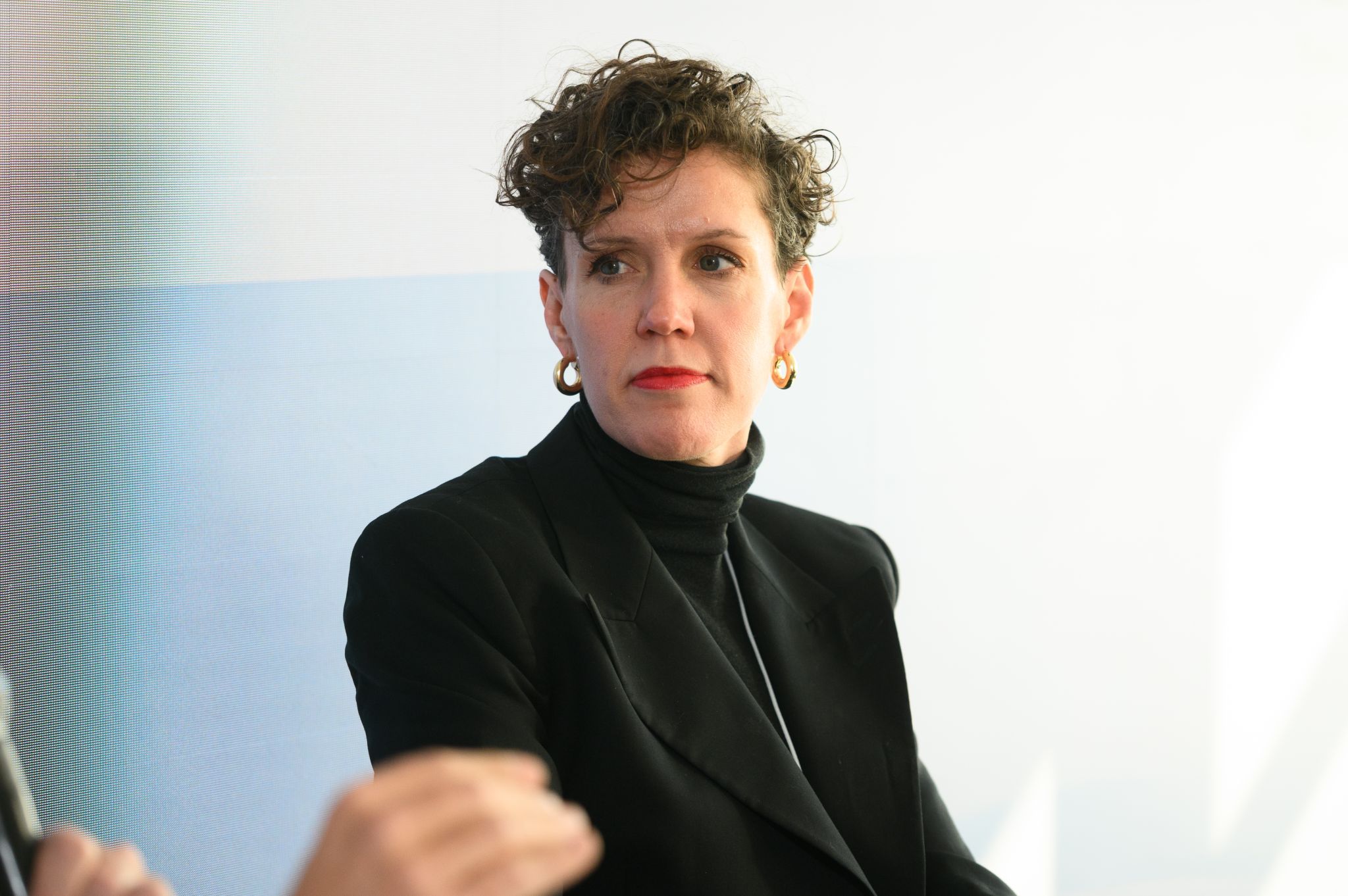
“The Return of the State: Technology as Geopolitical Arena” panel at the inaugural WEF's GovTech Day, featuring government representatives from Denmark and Germany. Image: Ukraine House Davos
The path to digital sovereignty does not go through protectionism or digital isolation.
While regulation is a starting point, true digital sovereignty is fueled by open markets and competitive innovations.
These were the sentiments drawn from “The Return of the State: Technology as a Geopolitical Arena” panel at the very first World Economic Forum (WEF)’s GovTech Day organised by the two Global GovTech Centres (GGTCs) in Berlin and Kyiv on January 21.
“You cannot protect a way to success,” said the Danish Ministry of Foreign Affairs’ Tech Ambassador, Anne Marie Engtoft, who was speaking alongside GovTech Deutschland’s Co-Chair of Government Innovation Board, Achim Berg, at the panel.
“In a changing geopolitical world, technology is the strategy, and that is how [states] will have a meaningful role to play,” she highlighted.
In Denmark’s case, “sovereignty is about innovating in open, competitive markets,” the ambassador noted.
Sovereignty is both regulating and innovating
To play a meaningful role on the global stage, governments must start building a GovTech ecosystem that fuels a domestic or regional market capable of competing with the world’s giants.
“Digitalisation of a state has to be a top-down priority right now,” she emphasised, adding how this priority could help states to stand stronger in a changing world, support other government functions, and grow local markets.
GovInsider previously reported about Ukraine’s ability to keep the government going with its robust digital public infrastructure (DPI) and Diia superapp. Simultaneously, the government has also forged a cross-border defence innovation ecosystem despite the pressures of active conflict.
Highlighting the need to innovate to strengthen sovereignty, Engtoft highlighted: “I don’t want to buy a worst-off product just because it’s European. I want to buy great European products.”
Beyond regulations, Europe needed to “get back into the game of developing technology,” she said, while also reflecting how the continent had led the first industry revolution with competitive innovations.
Engtoft explained that the continent has been a net exporter of artificial intelligence (AI) talent. A recent report also highlighted that Europe has a 30 per cent higher per capital concentration of AI professionals than the US, and nearly three times than that of China.
“The idea that there's not a culture for innovation or science. I think it's BS, to be honest,” she explained.
That said, “the sense of urgency that we're feeling right now is the moment we have to try and do things differently,” referring to the need for Europe to break its long-time reliance on foreign tech and reclaim a seat in the geopolitical table.
Also to gain more control of its digital assets and critical infrastructure, Engtoft shared that over the past year, the Danish government has been engaging American vendors to explore how they can guarantee more control and security for the government.
Playing Europe’s strength in global governance
Both speakers highlight Europe’s strengths in setting up the ethical and legal standards that the rest of the world often ends up adopting in some way, such as the General Data Protection Regulation (GDPR), AI Act and the Digital Markets Act (DMA).
Engtoft underscored that Europe’s influence extends far beyond its borders. In her conversations with ministers from the Global South, they have urged the continent to maintain its position because it is “setting fundamental global standards” where no others exist.
“I think a lot of the public is still fundamentally challenged by new technology. The rest of the world is still looking to Europe for the fundamental values at stake,” she said.
“We are so strong and we have so much power, and yet we don't play it right,” said Berg, underlining sovereignty as not just a legacy concept but the ability to exert influence and say “no” to outside pressure.
He suggested that if the entire Europe cannot agree on a stance, then the "big ones" like Germany, France and the UK could lead the charge and “talk with one voice.”
Innovating is the way forward
While the European Union (EU) has rolled out the Omnibus package to reduce compliance complexities for all companies, Engtoft shared that it was not going to “make or break [an European innovation] as an internationally successful technology.”
The problem was the lack of investment for startups when they exit the market after Series B or C.
“The only ones who are really deep pocketed in the market to buy [over these startups] are American companies. So, we need a better exit market for the European startups,” she said.
Having spent 30 years in the US, Berg observed that the successful companies in the US have at least half of their orders from the government.
He also emphasised the need for governments to look inwards for local innovative startups to involve them in GovTech projects.
Engtoft stressed that the single digital market is Europe’s lever, noting that an integrated economy provides the “power and weaponisation” needed on the global stage.
“We’re not going to regulate ourselves to success. We have to innovate ourselves and invest in that. So, I think they can be paired in a beautiful way where they become supportive of each other,” she explained.
In the digital sovereignty narrative, she noted that Europe has focused so heavily on the rules that it has neglected the necessary investment needed to scale its own entrepreneurs.
Read also: Singapore’s digital minister talks AI agents for digital inclusion, tech sovereignty, Jan 26, 2026