
Liana Gurung, Senior Manager (Prototypes), Digital Services & Products, National Library Board, Singapore
Meet the young public sector officials in the inaugural Young & Official Report 2026.
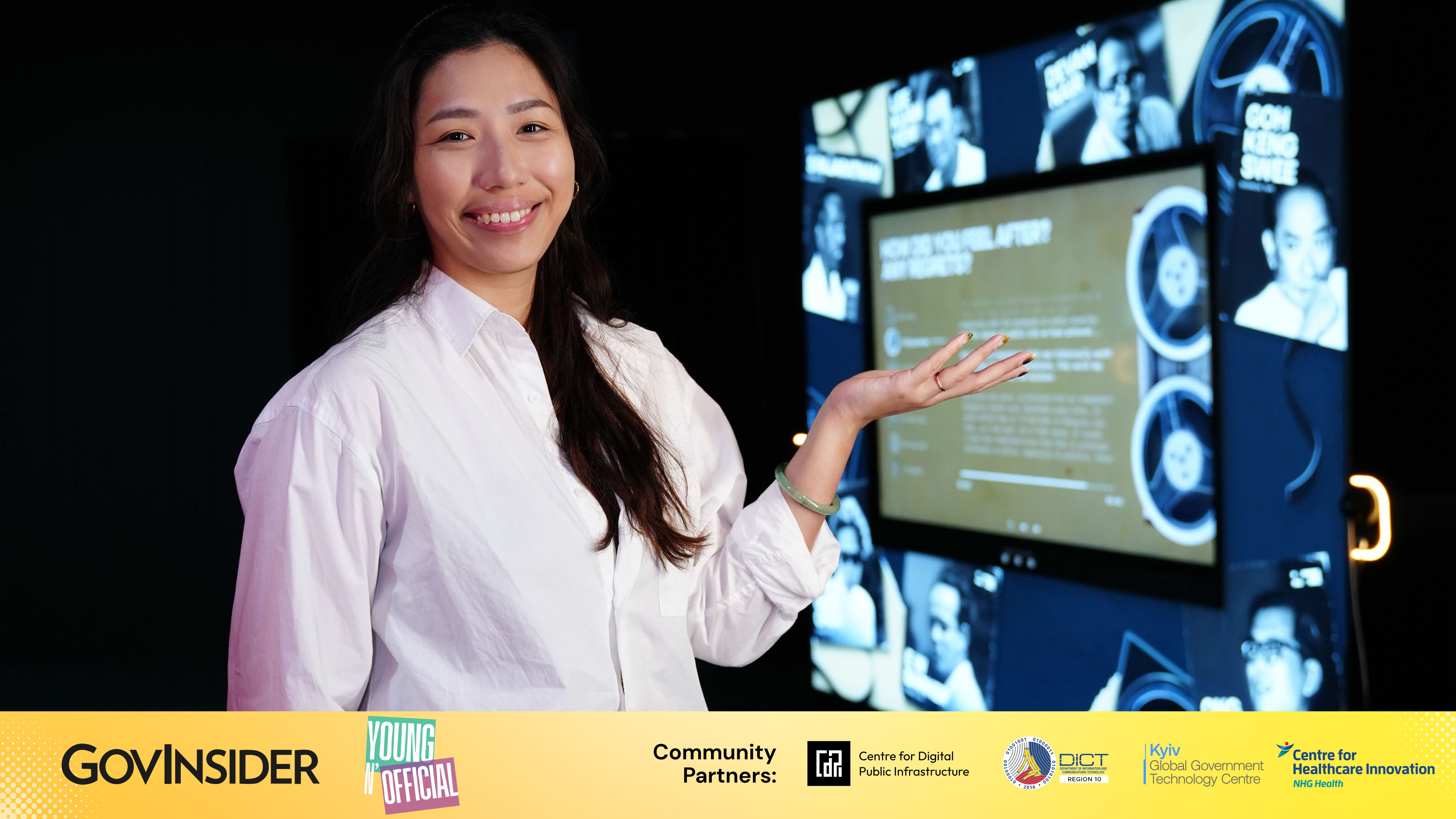
Liana Gurung, Senior Manager (Prototypes), Digital Services & Products, National Library Board, Singapore. Image: NLB
1) What does public service mean to you? Can you share more about your role in the public sector?
To me, it means being a part of – and contributing to – something bigger than myself, and helping to shape and serve a community I’m proud to be part of. I’ve worn a few different hats in NLB – from children’s librarian to being part of its strategy team, and more recently developing and managing prototypes that explore how emerging technology can better serve our patrons.
I’m also very grateful that NLB has always supported my growth and development – I’m now on secondment to the Ministry of Digital Development and Information (MDDI) and part of a foresight and policy incubation outfit that oversees our Smart Nation strategy.
2) Tell us about a project you championed. What impact did it have on the community?
I was given the opportunity to be part of the joint NLB-MDDI organising team behind the SG60 Heart & Soul Experience (H&S), which ran from August to December 2025, as well as The Albatross File: Singapore’s Independence Declassified exhibition, which is a permanent exhibition at the National Library Building.
H&S sought to create a “personal, national” exhibition by using Generative AI to customise each visitor’s journey through the showcase. Though it was by design a very tech-forward showcase, the part I was most deeply involved in was also incredibly human: I oversaw the Library Superstore section, which turned the spotlight onto how our partners across the private, people and public sectors were reimagining the future.
It was really inspiring to see the way partners were using technology to include and uplift – building spaces for our seniors to age with dignity, reducing waste by repurposing typically discarded food byproducts, creating digital tools to make learning and design easier for all.
The Albatross File exhibition also explored how technology could be used to bring a chapter of our history to life. I was involved largely in the communications aspect of the exhibition, but also got to run and support tours for the community.
I think the way the exhibition blends innovative, tech-enabled storytelling and our independence story – which honestly feels like it could put many thriller movie plots to shame – makes it uniquely placed as an intergenerational experience.
So many interesting conversations have been spun (and eavesdropped upon by yours truly…) as people pause at the interactive transparent screens housing documents negotiating Separation or comb through the dynamic timeline that dominates the main atrium of the space – sharing their experiences and memories of that time, their fears, anxieties, and hopes. (And extra points if they emerge from the film screening in Room a little misty-eyed!)
It’s been a joy and a privilege to have been part of projects that have had me on both ends of the spectrum of our Singapore story – dreaming up our future and also finding new ways to unlock the stories of our past.
Book your free tickets to The Albatross File: Singapore’s Independence Classified exhibition here!
3) What has been your favourite role so far?
I’ve really appreciated having the chance to move through so many different parts of the organisation.
The rich experiences I’ve had – curating programmes, developing exhibitions, facilitating workshops – have all fed into each other.
But the most impactful posting I’ve had has probably been in frontline operations. Serving patrons in the libraries, speaking (and joking!) with students at schools at book talks and borrowing sessions, always remind me of the importance of user-centricity in service design.
4) What is your personal strategy for maintaining your creative energy when faced with bureaucracy?
This may not be great wisdom but… taking a break! Whether it’s stretching your legs and wandering over to chat with a colleague or letting yourself tunnel into an idea rabbit hole – what keeps me refreshed is stepping outside myself (and especially my head), which also has the benefit of sometimes letting inspiration find me where I least expect it.
5) If you had just one area to invest in to accelerate transformation in the public sector (regulation, technology, talent, etc.), which one would you choose and why?
People! Especially with our external environment in flux – the pace of technological change, uncertain economic forces – people are what hold our communities together. It’s more than just “upskilling” or building toolkits – it’s also about designing platforms and mechanisms that allow for candid exchange and build the psychological safety needed to navigate change.
6) What is your greatest ambition as you grow in your public service career?
To never lose sight of the forest for the trees, and to stay hopeful and excited for what the future holds.
7) What is a “universal value” that connects everyone in your department – from interns to directors – and how do you use that to drive collaboration?
Our desire to leave things better than they were, even if we come at an issue from different and conflicting angles, and the trust that we are well-intentioned and solution-oriented, go a long way in diffusing tension and enabling candid conversations.
8) What is the best piece of advice you’ve got for the next generation of public servants?
It’s normal not to know everything.
How quickly things change means that we’re always going to be beginners at something, scrambling with new tools, discovering new problems, learning new contexts.
For me, the best approach to uncertainty has always been community – staying open to new ideas, crowdsourcing knowledge, and knowing that there are people out there probably just as confused as I am (haha). We have to do the work individually – trying out new things, seeking out information, investing in our own growth – but we also need to lean on others and let them lean on us.
9) What is a myth you wish to debunk about young public servants?
That we are always on our phones!
I know a lot of people who are very intentional about social media usage – though I wonder if we’re somewhat self-selecting because we are in NLB (and thus likely fans of books and reading), and therefore a bit more protective of our attention spans.
10) Write a letter to your future self in 2035. Please keep it within 200 words.
Hi, future me!
Happy 2035. Honestly, with all that’s happening in the world now, I can’t begin to imagine what 2035 might look like – how our work might have changed, how our structures have transformed, what the most pressing issues of our time might be.
But whatever the external landscape looks like, I hope some things haven’t changed. Like libraries still being a neighbourhood sight – with shelves holding our collective memories, and stories waiting to be discovered.
Most of all, I hope we’re still excited about the world in 2035 and beyond.
We probably won’t ever have all the answers, but I hope that we’ll stay curious enough to keep finding them.