
Lim Jin Yin, Deputy Director, Technology Strategic Planning & Integration, Tan Tock Seng Hospital, NHG Health, Singapore
Meet the young public sector officials in the inaugural Young & Official Report 2026.
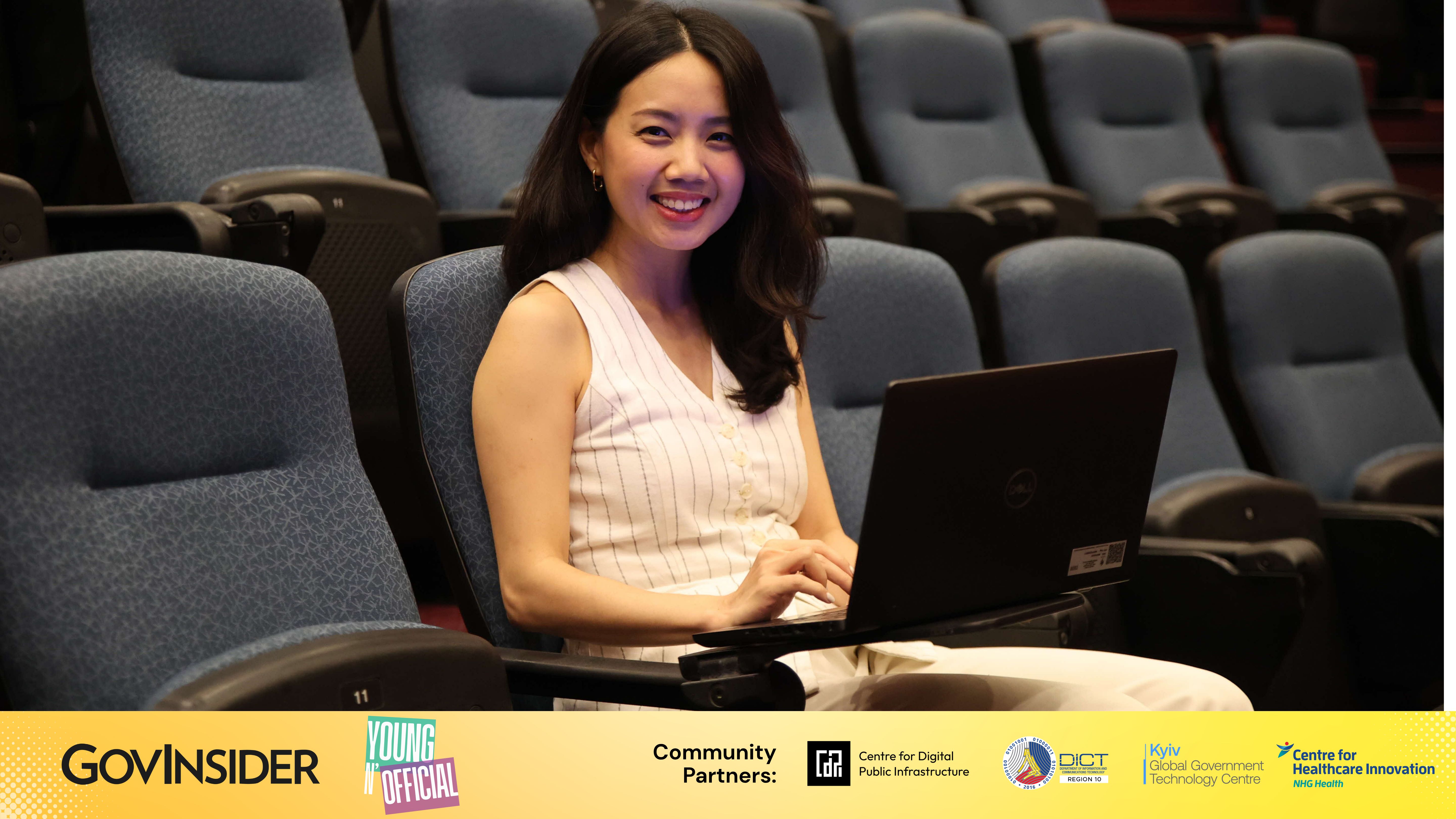
Lim Jin Yin, Deputy Director, Technology Strategic Planning & Integration, Tan Tock Seng Hospital, NHG Health, Singapore. Image: NHG Health.
1) What does public service mean to you? Can you share more about your role in the public sector?
Public service, to me, means playing a part in helping Singapore’s public healthcare system remain one of the best in the world.
In healthcare, the work has to look ahead while remaining safe, reliable and accessible for every patient who depends on it.
I serve as Deputy Director of Operations and Head of Department for Technology Strategic Planning & Integration, where my role is in technology planning for the hospital - from day-to-day improvements to longer-term transformation - spanning areas like digital adoption, robotics, artificial intelligence (AI) and service redesign.
2) Tell us about a project you championed. What impact did it have on the community?
One project I have been proud to champion is our Digital Concierge initiative.
We realised that if patients did not use the new digital features we had introduced, we would never fully reap the benefits of these digital features.
So, we invested in a Digital Concierge service to help patients pick up these features in the most intuitive way.
That has helped increase adoption rates, and patients are already getting used to a new digital experience with good feedback and appreciation for the high-touch initiative.
Technology is only as good as the people using it, and transformation succeeds only when people understand it, trust it and adopt it.
3) As a young professional, how has your unique background or perspective allowed you to identify a solution that others in your organisations might have overlooked?
One perspective that has shaped me is having had rotations across different hospital functions, which gave me a more horizontal view of how the organisation works as a whole and helped me spot opportunities that might otherwise fall between silos.
As I have worked at the intersection of operations management and innovation, I tend to ask very practical questions: Is it intuitive for the end user? Does it genuinely help the frontline?
That habit of looking at transformation through both operational and human lenses has helped me identify solutions that are not only innovative but also workable in real hospital settings.
4) What is your personal strategy for maintaining your creative energy when faced with bureaucracy?
I try to treat constraints as part of the design brief, not a barrier to creativity. In public healthcare, governance matters for good reasons - patient safety, accountability, cybersecurity and operational continuity.
So, my approach is to ask and understand the concerns, and then find room to test and improve within those guardrails. I also get a lot of energy from collaboration.
Some of the best ideas come when people from different functions sit down with a shared problem and build towards a practical solution.
That keeps the work creative, because it turns bureaucracy from something abstract into something you can work through with purpose.
5) If you had just one area to invest in to accelerate transformation in the public sector (regulation, technology, talent, etc.), which one would you choose and why?
I would invest in people.
In complex systems like healthcare, transformation depends on people who can bridge and integrate across technology, operations and the end-to-end experience.
A recent Harvard Business Review article argued that many innovations fail not because the idea is weak, but because organisations struggle to collaborate across boundaries - and that is where bridgers matter most.
They help connect different functions, translate across priorities and move ideas into implementation.
If we build more leaders and teams who can operate in that way, transformation becomes faster, stronger and more trusted.
6) What is your greatest ambition as you grow in your public service career?
My greatest ambition is to harness technology to transform healthcare in a way that makes the experience more seamless, reassuring and pleasant for the people who depend on it.
We are living in an exciting time, with so many opportunities in AI, automation and digital services to rethink how healthcare is delivered and experienced.
I am excited not only by the idea of Singapore remaining one of the best healthcare systems in the world, but also by becoming one of the most innovative and smartest.
As I grow, I hope to keep developing as a leader who can bridge strategy and execution so that innovation becomes part of how we deliver better care every day.
7) What is a “universal value” that connects everyone in your department – from interns to directors – and how do you use that to drive collaboration?
In my team, we believe people come together with different strengths to drive digital transformation well - whether they are operations-trained, clinically trained or new to healthcare.
That mindset creates a culture where there is no bad question, because curiosity helps us learn faster and work better together.
We also believe in progress over perfection: staying agile, being open, and improving as we go.
I use those values to drive collaboration by creating space for people to contribute from where they are strongest, while keeping everyone aligned on the same shared outcome.
8) What is the best piece of advice you’ve got for the next generation?
My advice for the next generation is to let your values be your beacon.
Pay attention to the work that feels meaningful enough that you would still find it rewarding even when it asks more of you - that often tells you something important about where your strengths, purpose and energy meet.
Stay open to opportunities, absorb as much as you can, and build a strong foundation in your knowledge and skill sets early. Public healthcare offers many paths, and you do not have to have everything figured out at the start. What matters is staying curious, grounded and willing to grow.
9) What is one misconception people have about innovation in public healthcare?
One misconception is that public healthcare is inherently slow or behind when it comes to innovation.
In reality, Singapore’s public healthcare system is serious about transformation, and there is growing support across the ecosystem to make that happen well - from funding and governance to sandboxes and structured ways to test new ideas responsibly.
That matters because healthcare innovation cannot be reckless; it has to be safe, trusted and scalable.
I actually think we are in a strong position: we are moving with intent, and building the capabilities and structures needed to innovate in a way that lasts.
10) Looking ahead to 2035, what excites you most about the future of innovation and technology in healthcare?
By 2035, I think healthcare will feel much more connected, predictive and quietly intelligent.
We will probably see AI taking on more of the invisible workload - from documentation and triage to navigation and administrative tasks - so that staff can spend more time on care and patients can move through the system more smoothly.
I also think virtual care, remote monitoring and robotics will become much more normal, not as futuristic add-ons but as part of everyday healthcare.
What excites me most is the possibility that healthcare can become both smarter and warmer at the same time: more personalised, more seamless and less stressful to navigate.
If we do it well, the technology of 2035 should feel less like technology and more like a healthcare system that simply works better for people.