
Lim Mei Ling, Senior Nurse Manager, Tan Tock Seng Hospital, Singapore
Meet the Women in GovTech 2025.
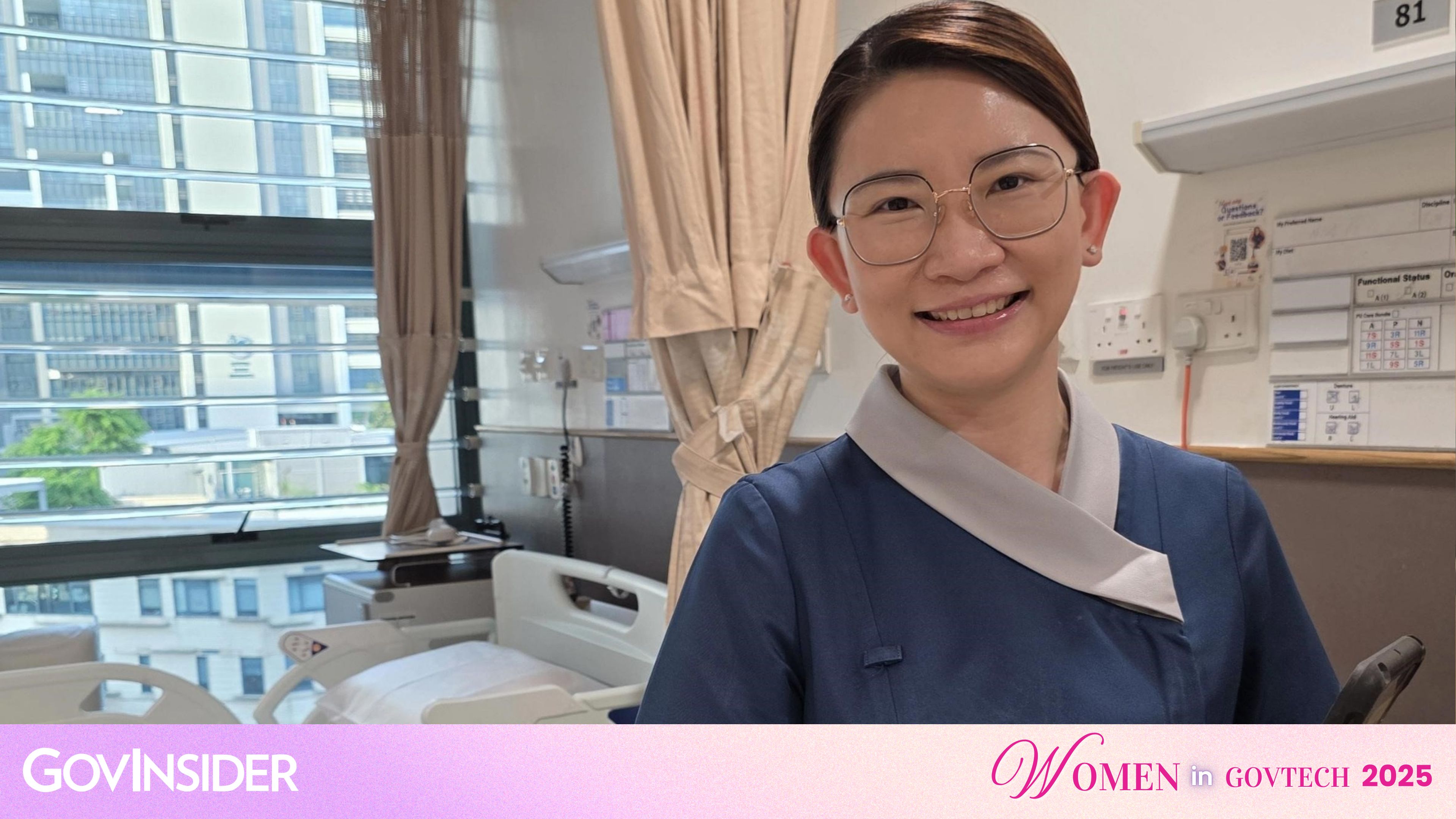
Lim Mei Ling, Senior Nurse Manager, Tan Tock Seng Hospital, NHG Health, Singapore, shares her life's journey. Image: NHG Health.
1) How do you use your role to ensure that technology and policy are truly inclusive?
As a Senior Nurse Manager leading 160 acute medical care beds and approximately 200 staff, I integrate operational excellence with innovation.
I am privileged to lead our Smart Ward initiative, transforming one of our wards into a living testbed where technology and compassionate care converge.
We trial and validate new care delivery models in real patient environments, ensuring innovation genuinely improves experiences and outcomes for both patients and staff, placing people before systems.
Genuine inclusivity cannot emerge from isolated brainstorming sessions or idealised tabletop discussions.
It requires direct engagement with those who will live with the outcomes: patients, caregivers, and our staff.
We start by listening to their pain points and physically mapping out processes through "Go and See".
This reveals routine, legacy-driven tasks that add little value, mundane activities we can eliminate using GROSS (Get Rid of Stupid Stuff) or transform through technology, creating time for what truly matters.
A two-half-day design thinking workshop ensures our solutions reflect real-world needs and are grounded in actual practice.
For me, co-creation, co-design, and co-challenge form the foundation of meaningful innovation.
We build solutions together, design with empathy, and challenge assumptions rigorously to ensure what we create actually works for patients, caregivers, and frontline teams.
This approach moves beyond consultation to genuine partnership, where those closest to the work shape the solutions that will transform it.
By testing ideas in real clinical environments and iterating based on lived experience, we ensure technology serves people rather than imposing additional burdens on already stretched teams.
We adopt a "test fast, scale fast, and fail fast" approach right in the midst of a busy acute medical ward with real patients and frontline staff.
Critical feedback is a gift; it drives real improvement.
When frontline staff and caregivers challenge our assumptions or point out flaws, we see it as insight, not criticism.
Every tough comment helps us refine, redesign, and create solutions that truly work in practice.
2) What’s a moment in your career when you saw firsthand how technology or a new policy changed a citizen’s life for the better?
The "Aha" moment came when our predictive monitoring system detected subtle changes in an elderly patient's vital signs, changes so slight that routine checks would have missed them entirely.
That early warning gave the nurse the opportunity to step in before things worsened, preventing a potential emergency.
Right then, I saw technology not just as a tool, but as a genuine lifeline.
That moment taught me something crucial: technology protects both patients and the teams caring for them.
By spotting early warning signs, we stop crises that harm patients and leave staff emotionally affected.
This helps prevent the "second victim" phenomenon, where clinicians struggle with the aftermath of adverse events.
Meaningful innovation protects everyone involved in care: those receiving it and those providing it.
For me, success is straightforward: doing the fundamentals well and making care better for all.
Patients get safe, timely treatment and discharge home sooner, whilst staff finish work on time, look after their mental wellness, and have energy left for themselves.
When both patients and teams feel at peace, that is real success.
3) What was the most impactful project you worked on this year, and how did you measure its success in building trust and serving the needs of the public?
Smart Ward 1.0 was the most transformative project I led this year, not because of the technology we introduced, but because we reimagined how care is delivered.
Together, we created a real-world testbed where AI insights, automation, and redesigned nursing roles worked in harmony with human compassion and clinical judgement.
We measured success through outcomes that truly matter:
- 288 per cent increase in nurse-led medication reviews, liberating nurses from administrative burdens to focus on clinical care.
- 0.7-day reduction in average length of stay, enabling patients discharged home sooner
- US$845,000 (S$1.09 million) in annual cost savings, which can be reinvested into patient care
Beyond our ward, 16 innovations scaled to 36 other wards, multiplying impact across the hospital.
The real success was not just about the numbers. It was witnessing patients place their trust in technology to keep them safe, and watching my team discover that innovation could enhance rather than complicate their work.
When nurses tell me they feel more confident making clinical decisions, and when patients discharge home sooner without compromising the quality of their care - that's when I know we have achieved something meaningful.
To me, that is the essence of meaningful public sector innovation: technology that strengthens people, not replaces them, and the power of working with a dedicated team alongside willing adopters and collaborators who bring these innovations to life.
4) What was one unexpected lesson you learned this year about designing for real people? This can be about a specific project or a broader lesson about your work.
One unexpected lesson from the Smart Ward 1.0 journey was that staff anticipate change, but what they truly fear is the "U": unclear instructions, uncertainty about the impact, and unfamiliarity with what it means for their daily work.
When change feels imposed rather than co-created, resistance deepens. The solution lies in clarity, transparency, and genuine involvement.
When we bring people into the process, they shape the change rather than simply endure it.
5) We hear a lot about AI. What's a practical example of how AI can be used to make government services more inclusive and trustworthy?
One powerful way artificial intelligence (AI) can make government services more inclusive is by highlighting "unseen" needs in the community.
Many vulnerable groups, such as seniors, caregivers, and low-income families, may not step forward to ask for help. AI can analyse patterns such as missed appointments, delayed renewals, or reduced engagement to identify early signs of stress or risk.
This enables Community nurses/partners to intervene early, offer targeted support, and ensure that resources reach those who need them most.
AI builds confidence in government not by replacing human connection, but by helping us care for people who might otherwise slip through the cracks.
6) How are you preparing for the next wave of change in the public sector? What new skill, approach, or technology are you most excited to explore in the coming year?
The Smart Ward journey has shown me that the next wave of public sector transformation will be defined by agility and integration, with the ability to redesign systems, empower people, and connect care seamlessly across settings.
I am preparing for this by strengthening my team's digital mindset, encouraging cross-disciplinary or even cross-institutional collaboration, and building the capability to test and scale innovations more quickly and safely.
Change only becomes sustainable when people feel ready, supported, and confident.
Looking ahead, I am excited to explore virtual nursing, remote monitoring, and new care models that blend physical and digital touchpoints.
These advancements will help us serve citizens earlier, more consistently, and with a level of personalisation that was not possible before, whilst ensuring a safe and supported transition of care from hospital to home and reducing healthcare costs and the financial burden on caregivers.
To subscribe to the GovInsider bulletin, click here.
At the same time, we must prepare for a longevity workforce; a future where people work longer and bring diverse experiences across generations.
This means designing age-inclusive technologies so that every healthcare professional, regardless of age, can thrive in a digitally enabled care environment.
By embracing longevity, we not only sustain our workforce but also enrich care with the wisdom, resilience, and innovation that comes from multigenerational collaboration.
7) What advice do you have for public sector innovators who want to build a career focused on serving all citizens?
Stay close to the frontlines and let people be your compass.
Invest time understanding the day-to-day realities they face and allow their needs to guide your solutions, because innovation only matters when it improves lives.
Be courageous enough to try, humble enough to learn, and persistent enough to refine. Don't fear failure - fear building something nobody needs.
And always remember that the best solutions come from collaboration, not isolation.
8) Who inspires you to build a more inclusive and trustworthy public sector?
I am humbled and inspired by the people I meet daily, the leaders who model the way, colleagues who care deeply, and the patients and caregivers who depend on our healthcare system.
Their trust, resilience, and vulnerability remind me to keep striving for a public sector that is inclusive, compassionate, and worthy of the faith people place in us.
9) If you had an unlimited budget, what would your dream project be?
My dream project would be to create a connected healthcare ecosystem where every person receives the right support wherever they are: in the ward, in the community, or at home.
A system where teams can support patients continuously, where transitions are safe and smooth, and where families feel confident caring for their loved ones.
It would blend digital tools, personalised monitoring, and strong community partnerships, all designed around the needs of the people who rely on our healthcare system.
10) Outside tech, what excites you the most?
Beyond technology, what excites me most is the human side of the work—the stories, the growth, the resilience.
Building a culture where people feel valued and supported. Watching my team develop and helping others discover their strengths brings me a deep sense of purpose.