
Loo Mandell, Senior Staff Nurse, Institute of Mental Health, NHG Health, Singapore
Meet the young public sector officials in the inaugural Young & Official Report 2026.
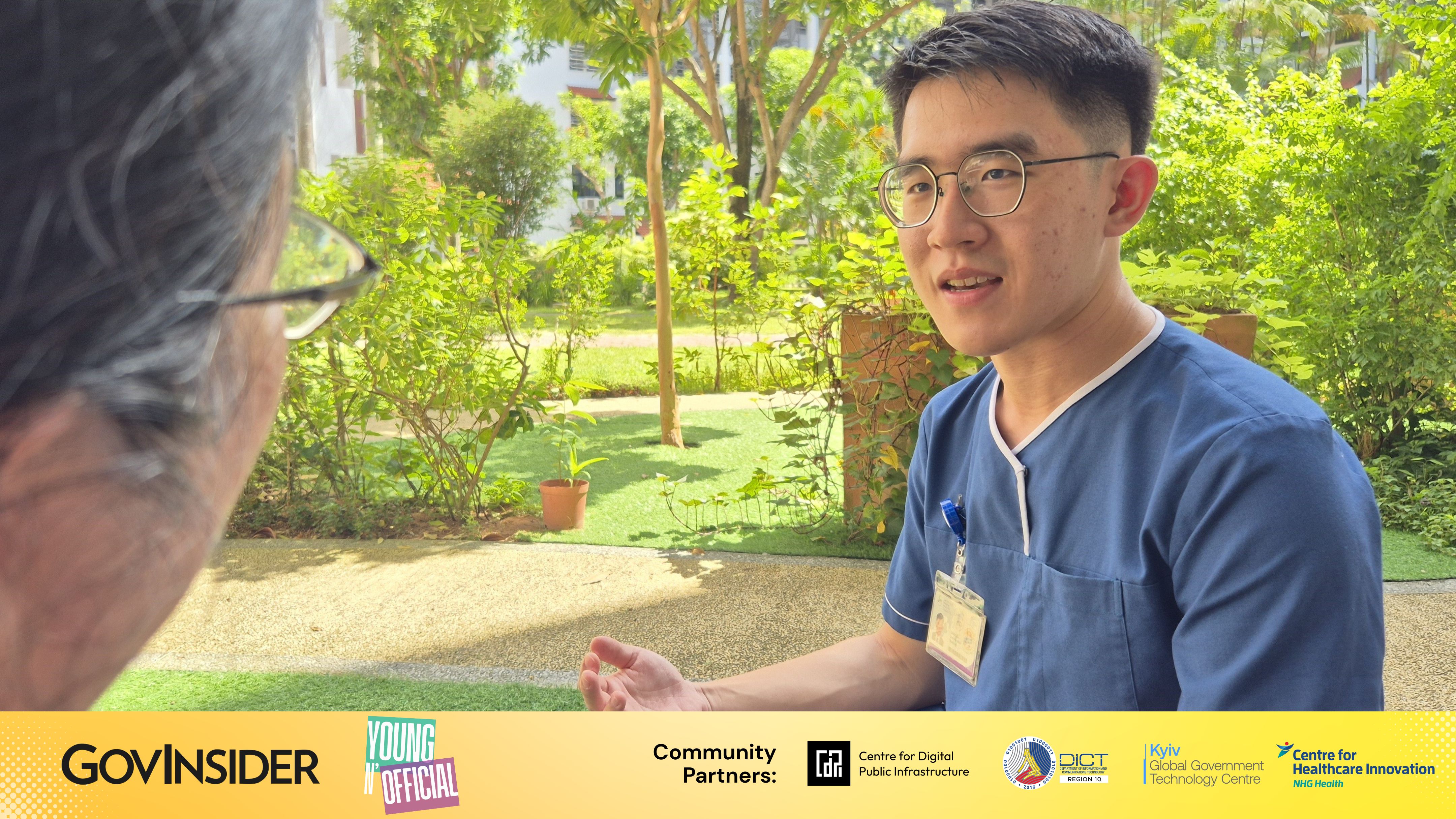
Loo Mandell, Senior Staff Nurse, Institute of Mental Health, NHG Health, Singapore. Image: NHG Health.
1) What does public service mean to you? Can you share more about your role in the public sector?
Public service is about serving with purpose beyond oneself and making a meaningful impact in people’s lives.
I’m a Senior Staff Nurse at NHG Health’s Institute of Mental Health (IMH), working in the Early Psychosis Intervention Programme (EPIP) ward, where I provide care to patients experiencing early psychosis.
I support recovery, build therapeutic relationships, and create a safe environment where patients can feel supported and empowered to navigate distress and uncertainty and move forward.
2) Tell us about a project you championed. What impact did it have on the community?
I led the Patient Structured Activity initiative to incorporate structured therapeutic activities into nursing care across inpatient wards.
These activities include psychoeducation, group interventions, and family education to better support patients’ recovery.
Working closely with nursing teams, I drove adoption and built staff capabilities to maintain the sustainability of this recovery-oriented care approach.
Additionally, I am part of the team implementing the Person-Centred Care (PCC) model at IMH, operationalising individualised care approaches and therapeutic nurse-client engagements.
These initiatives enhance bedside care to include meaningful therapeutic engagement.
As a result, patients experience improved satisfaction and greater ownership in their recovery journey, families feel more involved and equipped to support recovery, and nurses gain confidence in their therapeutic roles and strengthen their professional practice in holistic patient care.
3) As a young professional, how has your unique background or perspective allowed you to identify a solution that others in your organisation might have overlooked?
As a young professional, I bring fresh perspectives and new ideas to my profession.
My frontline experience enables me to identify gaps in service delivery and care processes. I actively drive innovation and recognise opportunities to strengthen nursing practices and enhance care delivery at both the ward and organisational levels.
For example, working with my Nursing Clinical Practice Council (NCPC) team, I led initiatives to strengthen medication administration processes.
We reviewed and optimised workflows, reinforced standardised practices, and implemented staff training and system enhancements, ultimately enhancing patient safety and reducing medication errors.
4) What is your personal strategy for maintaining your creative energy when faced with bureaucracy?
I see bureaucracy as a framework for safe, accountable care while balancing this with ground empowerment.
As Chairperson of the NCPC, I advocate for shared governance by creating platforms for nurses to share ideas for practice improvements.
This enables ground-up innovation that remains aligned with organisational priorities.
5) If you had just one area to invest in to accelerate transformation in the public sector (regulation, technology, talent, etc.), which one would you choose and why?
Technology!
When integrated with artificial intelligence (AI), it can transform healthcare.
AI-powered technology can streamline workflow, reduce administrative burden and enable consistent care delivery.
Healthcare demands are becoming increasingly complex, and expectations for timely, safe, and efficient care continue to grow. It also supports clinical decision-making and early risk identification, allowing healthcare professionals to focus on therapeutic engagement and improving patient outcomes.
6) What is your greatest ambition as you grow in your public service career?
I want to advance mental health services to better meet the population’s evolving needs.
I aspire to become an Advanced Practice Nurse (APN), taking on greater responsibilities in clinical leadership, care innovation, and evidence-based practice.
Beyond this, I hope to make a broader impact by shaping practice, strengthening systems, and improving care across institutional, community, and national levels.
7) What is a "universal value" that connects everyone in your department - from interns to directors - and how do you use that to drive collaboration?
Teamwork is a value that connects everyone in my department.
In a psychiatric setting, care can be complex and emotionally demanding, and we rely on one another to provide safe and consistent care.
By fostering open communication and mutual support, I strive to create an environment where staff feel safe, supported and able to work collaboratively.
8) What is the best piece of advice you've got for the next generation of public servants?
Always remember your purpose and the difference you can make in someone’s life, especially when they are at their most vulnerable.
In nursing, a small act of care or kindness can bring comfort, reassurance, and hope to a patient.
Holding on to this purpose will help you stay resilient and strong through difficult moments and remind you why your role matters, not just in what you do, but in how you make people feel.
9) What is a myth you wish to debunk about young public servants?
I hope to challenge the misconception that young professionals are too junior to contribute. While experience is important, young professionals bring fresh perspectives, adaptability, and the courage to explore new ideas.
10) Write a letter to your future self in 2035.
Dear Future Self,
As you read this, I hope you are proud of how far you have come.
Looking back - from the day you decided to join nursing, to your first day in Nanyang Polytechnic, and your first day stepping into IMH, you have come a long way.
It was not always easy, but you kept going.
I hope you have achieved what you once set out to do, and, more importantly, stayed true to your purpose. The lives you have touched, the patients and families who thanked you, and the moments of connection - these are what truly shaped you into who you are today.
I am sure your family is proud of you, just as you should be proud of yourself - not only for your achievements, but for the impact you have made and the person you have become.
And I hope Grandma, wherever she is, is watching over you with pride.
Remember how you stood by your family during one of the most difficult times - those moments of love, strength, and care truly defined what it means to be a nurse.
I believe she felt it, and that will always stay with you.
With pride,
Mandell in 2026