
Lynette Ong, COO, Tan Tock Seng Hospital, Singapore
Meet the Women in GovTech 2025.
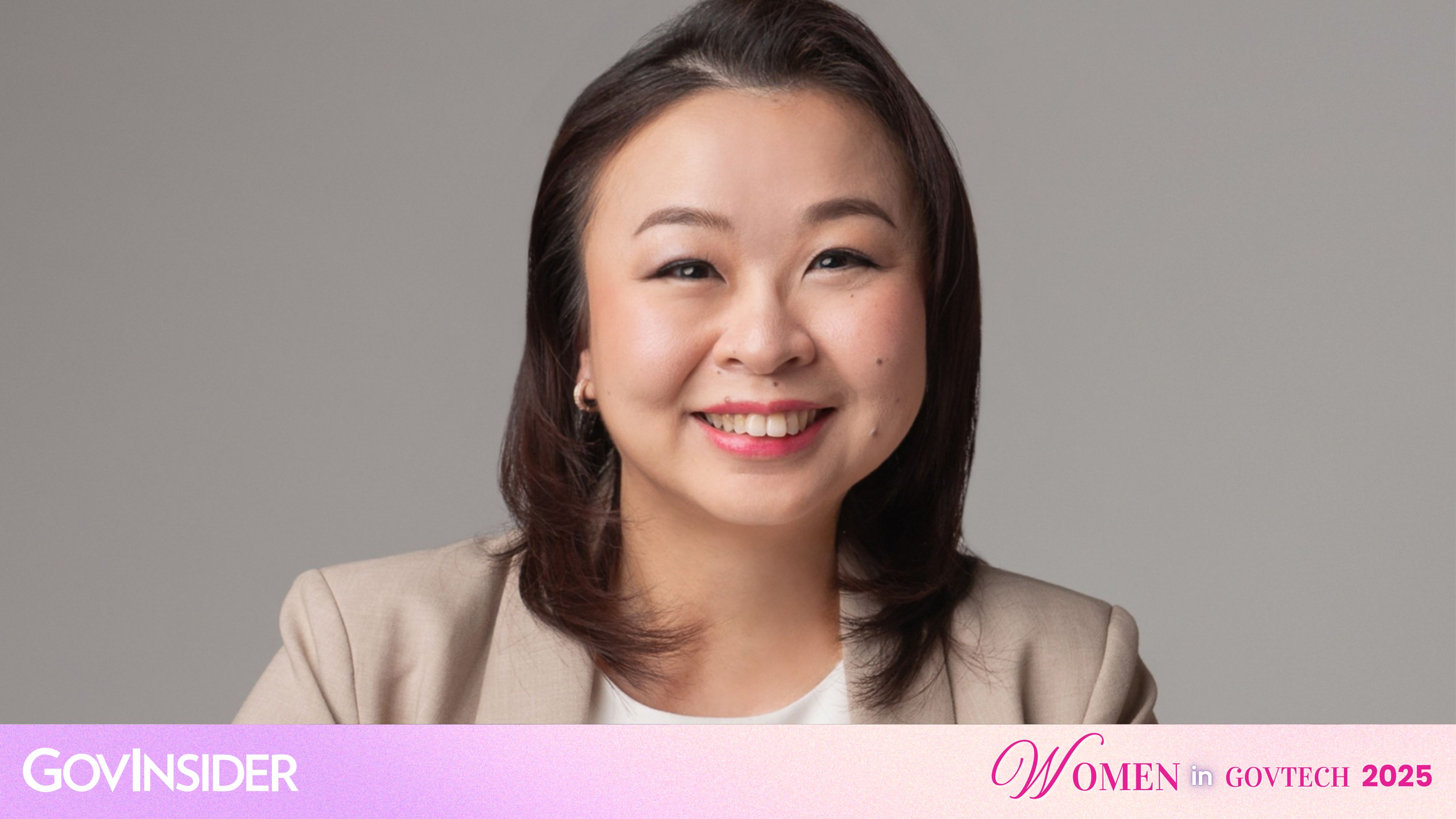
Lynette Ong, COO, Tan Tock Seng Hospital, NHG Health, Singapore, shares her life's journey. Image: NHG Health.
1) How do you use your role to ensure that technology and people development policy are truly inclusive?
Technology, when deployed in the right space and at the right time, is useful in augmenting work processes to provide convenience and enhance productivity.
It provides opportunities for coworkers to be upskilled and perform higher-value roles that are of value to our patients.
Prior to the deployment of any technology, due diligence was needed to study the “As-Is” processes, identify waste, eliminate non-value adding steps, and identify opportunities for manual processes to be delivered by technology, followed by co-developing the “To-Be” process with key stakeholders.
Discussions about the future state would help stakeholders identify opportunities for job redesign and upskilling of staff.
2) What’s a moment in your career when you saw firsthand how technology changed a citizen’s life for the better?
The proliferation of health apps provides convenience to our patients for their registration, appointment making and payment.
This is helpful for digital natives or technology-savvy patients.
It reduces the time spent queuing and waiting for these key touchpoints.
For the less technology-savvy patients, we need to guide them on the use of the apps, and they also have the option of approaching our staff to help them with registration, appointment making and payment.
As a healthcare organisation, we must always work towards providing a “high tech, high touch” experience for our patients.
During Covid-19, the availability of technology facilitated remote monitoring of patients and telehealth consultations, which helped us to continue our timely care delivery to patients.
Those were the early days of my understanding of how technology has a positive impact on people’s lives.
3) What was the most impactful project you worked on this year, and how did you measure its success in building trust and serving the needs of the public?
We had to implement the National Billing System (NBS), Harmonised Integrated Pharmacy System (NHIPS) and electronic Financial Counselling (eFC) system in June this year, and NHG Health’s Tan Tock Seng Hospital was the largest site then to come on board the 2+1 systems.
The interdependency of the systems and complex transition planning called for watertight coordination amongst many stakeholders and supporting one another in this journey.
The key goal was to make it a non-eventual experience for our patients and improve backend operations.
Thankfully, all was generally well with the collective efforts behind the scenes.
4) What was one unexpected lesson you learned this year about designing for real people? This can be about a specific project or a broader lesson about your work.
When we look at process improvement, the approach usually focuses on the steps involved and what is of value to people.
The layering of technology can help boost productivity.
When it works, the end-to-end process will be effective.
Interestingly, even with advanced technology like AI, process management can be challenging.
What I have learnt is to adopt a new process philosophy that needs to be structured around people, AI, data, and analytics while embracing the time-tested approach, and combine all of these to improve business performance.
5) We hear a lot about AI. What's a practical example of how AI can be used to make government services more inclusive and trustworthy?
Artificial Intelligence (AI), when used as a care assistant, can be inclusive and trustworthy.
For example, at the outpatient clinics, we use AI to analyse the likely no-show cases, which helps clinic assistants to pay more attention to patients who are more likely to default appointments and give them a call.
If the patient is unable to turn up, we can arrange to give the appointment slot to another patient.
6) How are you preparing for the next wave of change in the public sector? What new skill, approach, or technology are you most excited to explore in the coming year?
I would like to explore more of the use of agentic AI to improve operational processes such as call centre operations, in which fully autonomous agents can act independently to perform routine tasks, analysis, quality control, and even training.
7) What advice do you have for public sector innovators who want to build a career focused on serving all citizens?
In technological adoption, people will remain the linchpin of technology’s success.
To subscribe to the GovInsider bulletin, click here.
Technology will advance rapidly, and it’s important to prepare to unpack one’s beliefs when the technology has moved on and shift our thinking.
This will help us to embrace evolving technology constructively.
8) Who inspires you to build a more inclusive and trustworthy public sector?
Prof Philip Choo, who was the pioneer for the establishment of the Kaizen Office in Tan Tock Seng Hospital.
Prof Choo is a strong believer in Lean philosophy, and the core of Lean philosophy is about people. He inspired me to always keep people at the core when I drive service transformation.
9) If you had an unlimited budget, what would your dream project be?
To design a one-for-all and all-for-one IT system to streamline care across different care settings – hospitals, community hospitals, nursing homes and community/ social agencies.
10) Outside tech, what excites you the most?
Learning new things every other moment.