
Malta forms AI Governance Council to put people at the centre of AI adoption
By Valeryn Liaw
Malta has established an AI Governance Council to coordinate AI adoption across the whole-of-government, and the government’s Chief AI Officer, Jonathan Gerada, shares more.
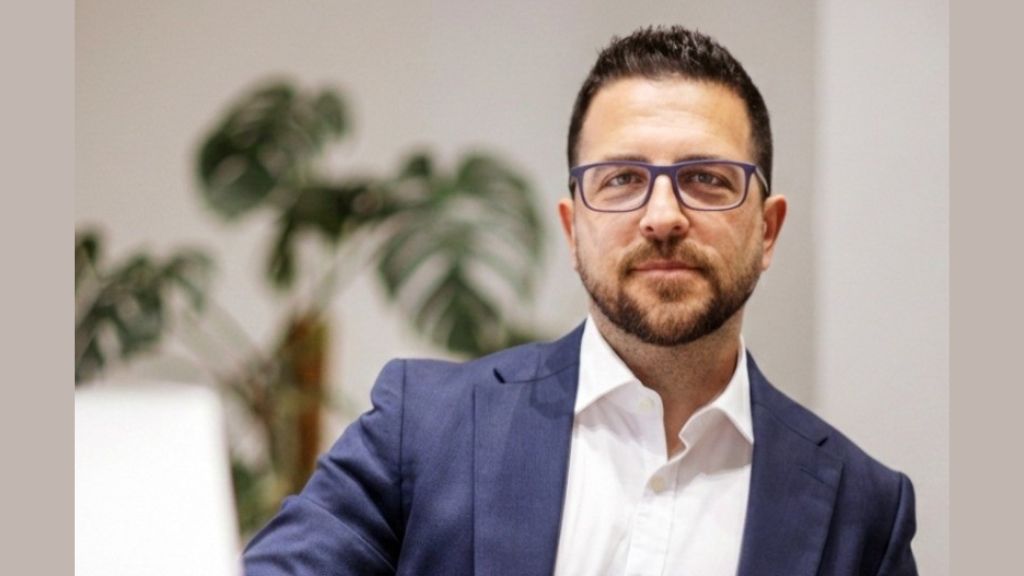
Malta's new Artificial Intelligence Governance Council brings government capabilities together to improve coordination, consistency and visibility, turning AI governance from policy into practical action. Image: Jonathan Gerida LinkedIn.
Malta is among the countries with high rates of generative artificial intelligence (AI) usage, supported by capacity building efforts, such as the AI for All project coordinated by the Malta Digital Innovation Authority (MDIA).
But as AI adoption matures, scattered efforts across government can become harder to sustain and coordinate.
For Malta, a key success factor is strengthening coordination while keeping people at the centre of how the technology is used.
This human-centred approach is reflected through the establishment of an Artificial Intelligence Governance Council, led by the government’s Chief AI Officer, Jonathan Gerada.
“We are one of the few countries that have taken this particular step, and also the creation of several governance structures to accompany my function across government,” Gerada tells GovInsider.
Instead of replacing existing bodies, the Council brings different capabilities together to coordinate AI adoption across government.
“We need visibility, coordination and consistency. This cannot be done unless a central body is able to excel in this particular subject and guide the rest of the public administration,” he adds.
Gerada describes the Council as bringing together “action-takers rather than paper-pushers”.
For civil servants, it means turning governance decisions into practical steps, instead of creating another layer of policy.
Measuring AI success by public value
In the public sector, successful AI adoption goes beyond cost savings. That is why the Council focuses on how technology benefits people, including public servants and the communities they serve.
“We don’t want just chatbots,” says Gerada. “If we identify a process that improves service from three-hour delivery to two minutes, that is a huge difference.”
For Gerada, public servants are also “clients” of these systems.
Administrative work that saves time internally can ultimately improve services for citizens.
The Council’s principle is simple: analyse, simplify and automate.
Before deploying a tool, public institutions should first ask whether a process is worth automating at all.
“Am I going to lift and shift a process from paper to AI?”
“A proper system that gives good service to people is, for us, a profit as well,” says Gerada. “Profit is not just money,” he adds.
Keeping people as the focus and tools as the enabler
While AI governance is often treated as a compliance exercise, Gerada sees it as an organisational transformation effort.
This starts with how governments decide how AI should be used. Instead of concentrating efforts only on high-profile sectors, the Council takes a broader view of how technology can improve people’s lives.
“Balancing [the effort] is not just being done sectorally by saying we want to advance education or health,” Gerada says. “We want to look at this as a way of life rather than simply as a subject.”
The goal is not simply to increase AI usage, but to make the adoption purposeful, targeted enough to solve real problems. The efforts include using AI for healthcare diagnostics, personalised education and financial regulation.
To achieve that, civil servants need to be equipped with the right skills. For Gerada, AI proficiency should not stop at the basic know-how. It should be tailored to the work public servants actually perform.
“The concept is understanding whether you need a screwdriver, a hammer or a saw. It is about identifying the proper tool,” he explains.
While Malta has invested in broad AI literacy, including a year-free premium AI subscription for citizens, the Council is coordinating with organisations to tailor advanced AI courses for specific roles, such as accountants, HR officers or procurement professionals.
More importantly, it is to ensure people keep pace with the changes.
“People need to be informed, retrained and, most of all, made part of the change process, because you cannot make this happen without having people in mind.”
Making accountability a human responsibility
Beyond technical training, Malta ensures that humans remain as the decision maker from the conceptual stage.
“AI should always support professional judgement, not replace it,” Gerada says. “You cannot have accountability on a machine,” he adds.
Such responsibility should be held not just by public institutions, but also technology providers.
“Policies are being applied, and there are also technical controls on our machines, but this does not stop the fact that people have to be informed to choose the proper way of doing things.
“Otherwise, the weakest link in security is always the user who is not informed.”
AI can make mistakes and hallucinate. Public servants should therefore understand its limits and when professional judgement should take priority.
As Gerada highlights, “A human is the overseer of this, and a human in the loop has to be from concept.”
Tools may evolve, but Gerada believes the fundamentals of public-sector AI adoption will remain. He envisions a future where AI is developed in a responsible manner to serve humanity interest.
“If you ask me about today, three years from now or six years from now, we will still need public value, efficiency, security, accountability and trust,” Gerada says.
“The best way to deal with it is to embrace change as a way of growing, becoming more mature and more intelligent in the way you do things.