
Malta gave every citizen AI. Now what?
Malta Digital Innovation Authority (MDIA)’s CEO Kenneth Brincat says that the AI for All initiative is about building a population that knows how to keep learning through whatever comes next.
-1779761463515.jpg)
An AI literacy session held at the Kalkara local council, Malta, where participants were introduced to what AI is, how it's shaping everyday life and how it can be used confidently, safely and responsibly. Image: Malta Digital Innovation Authority and Pastoral Formation Institute
Before Malta made headlines for being the first country in the world to roll out free premium artificial intelligence (AI) access to all citizens, the small country was already one of Europe’s most AI-active nations.
Some 46.5 per cent of its population was already using generative AI, trailing only Denmark and Estonia.
So why did Malta build a national AI literacy programme?
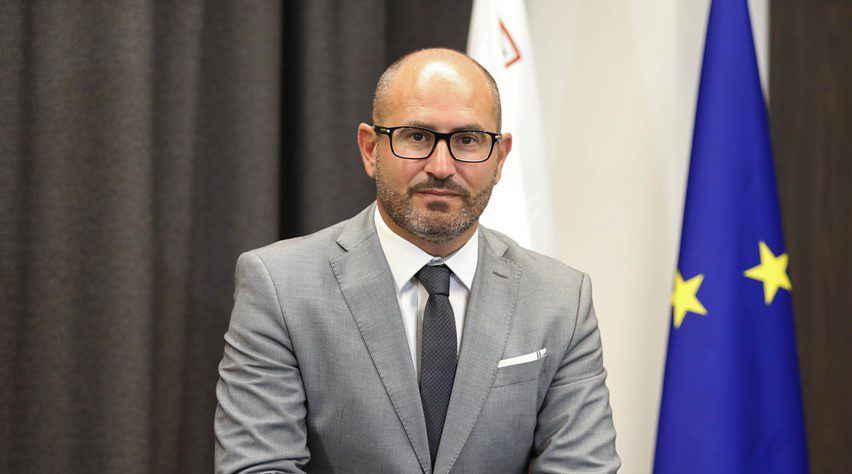
For Malta Digital Innovation Authority (MDIA)’s CEO Kenneth Brincat, the goal was never adoption itself. The focus was on whether AI was being used responsibly.
Citizens get free access on one condition: they must first complete a two-hour literacy course built around ethics, not prompting techniques or product tutorials.
Speaking to GovInsider about the AI for All initiative, Brincat says the main aim of the initiative is not to get its citizens to use the tool, “but make sure that they know how to use AI, why it’s important in our daily lives and how to use it responsibly”.
According to him, the free subscription is just a carrot to get people to sit through learning the fundamentals of AI. Within 48 hours of its launch, 6,000 people have signed up for the course.
Malta’s target is to become the most AI-literate country in Europe and beyond, he says.
Literacy as a mindset, not a skillset
Brincat differentiates literacy from proficiency, with the latter implying more technical skillsets around using AI models like prompting and coding.
“Literacy is not about the skillset, it’s about the mindset,” he says, adding that it’s the mindset to be curious, open and willing to experiment responsibly.
He adds that the initiative is trying to build a population that knows how to learn, because “in five years, there will be something else.”
Brincat frames MDIA’s role around three pillars: regulation to avoid harm, promotion and facilitation of digital innovation, as well as education so that citizens and businesses know how to use tech responsibly and understand why rules matter.
Rather than leaving course design to the tech provider OpenAI, MDIA looked to the University of Malta, which has housed a dedicated AI department for decades, to shape what responsible AI literacy should mean for a Maltese citizen.
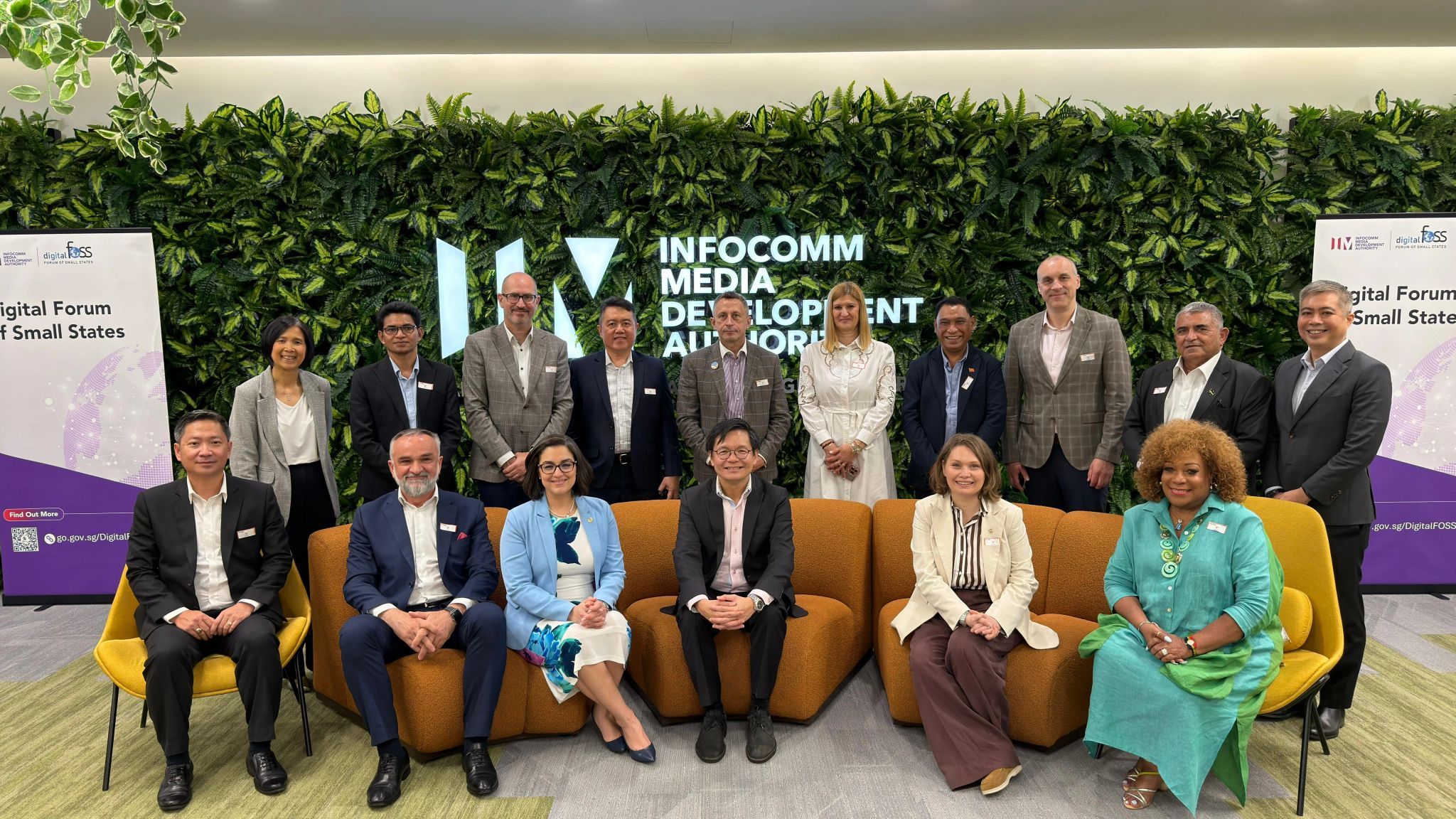
Speaking at the sidelines of the ATx Summit in Singapore, Brincat shares that Malta is part of the Digital Forum of Small States (Digital FOSS) hosted by the Infocomm Media Development Authority of Singapore (IMDA).
While not all states are on the same level of progress, there is a consensus that AI literacy is a non-negotiable requirement, and that small states need to be more agile and move faster in rolling out programmes for citizens and small and medium enterprises (SMEs), he adds.
Year two and beyond
While year one of the initiative focuses on the fundamental course, Brincat says that MDIA plans to roll out courses for different specialisations in the coming months.
These specialisations may range from entrepreneurs, public servants, parents, and more to cater to their different needs.
For example, Malta's Digital Innovation Hub (DiHubMT) currently runs an AI course designed for C-suite executives.
Senior leaders, he notes, do not typically show up for courses alongside everyone else. So, the hub designed a course for them, bringing data and AI directly into the context they know best: decision-making.
The DiHubMT generally focuses on more advanced upskilling courses for the workforce to improve AI proficiency, he says.
As to whether the government will fund a second year of subscriptions, Brincat says it is undecided but optimistic that if year one is successful, the government might invest again.
The result is therefore a tiered approach, from foundational literacy for all citizens to more targeted proficiency for the workforce.
Taking AI to the town square
Before the initiative was launched on the national scale, the government was already knocking on church doors.
Earlier this year, MDIA partnered with the Pastoral Formation Institute, the headquarters of Malta’s parish churches, to run AI literacy sessions at the community level.

Rather than sending government officials, MDIA trained the elderly peers trusted within their own communities to hold sessions inside local parishes.
The trainers would sit beside residents on their laptops and walk them through the online course in person.
“The uptake was very good,” he says. "The Pastoral Formation Institute came back to us to extend it even to more parish churches.”
The parish sessions were, which in Brincat’s words - “a teaser” - one way to warm up the communities before the national initiative was launched so that elderly residents knew where to go for help.
Recognising its limits to just reach elderly residents and Catholic community, MDIA will also extend the programme to local councils and municipalities to reach more age groups, he says.
“Given a lot of hype in the country about this AI course, we’re taking this opportunity to not only deliver AI literacy, but also digital literacy,” he notes.
From economic tool to social enabler
Brincat explains how Malta’s national AI strategy has evolved since 2019.
Back then, AI was framed as a new niche sector within the economy alone. “We were looking at AI as a launch pad to drive economic growth,” he recalls.
That framing no longer fits now. Coupled with a stronger economy today, Malta now sees AI as a horizontal enabler for societal well-being, which is illustrated through Malta’s Vision 2050.
“It's quite clear in Vision 2050 that AI plays an important role as an enabler of all the pillars that we have,” he explains, with the pillars being sustainable economic growth, accessible, citizen-centred services, resilience and education, smart land and sea usage.
The updated national AI strategy, to be released later in the year, will introduce funding schemes for the private sector to adopt AI to boost both societal well-being and economic growth, he says.
Brincat also highlights the importance of global harmonisation of AI strategies, as interoperability gaps will undermine even the best-designed national strategies.
AI governance is a global issue, and small states cannot solve it alone.
What is needed is not competition between national strategies, but the kind of international cooperation that ensures every country, large or small, can meaningfully participate, he notes.