
Martyn Chek Yew Chuan, Senior Medical Social Worker, Khoo Teck Puat Hospital and Yishun Community Hospital, NHG Health, Singapore
Meet the young public sector officials in the inaugural Young & Official Report 2026.
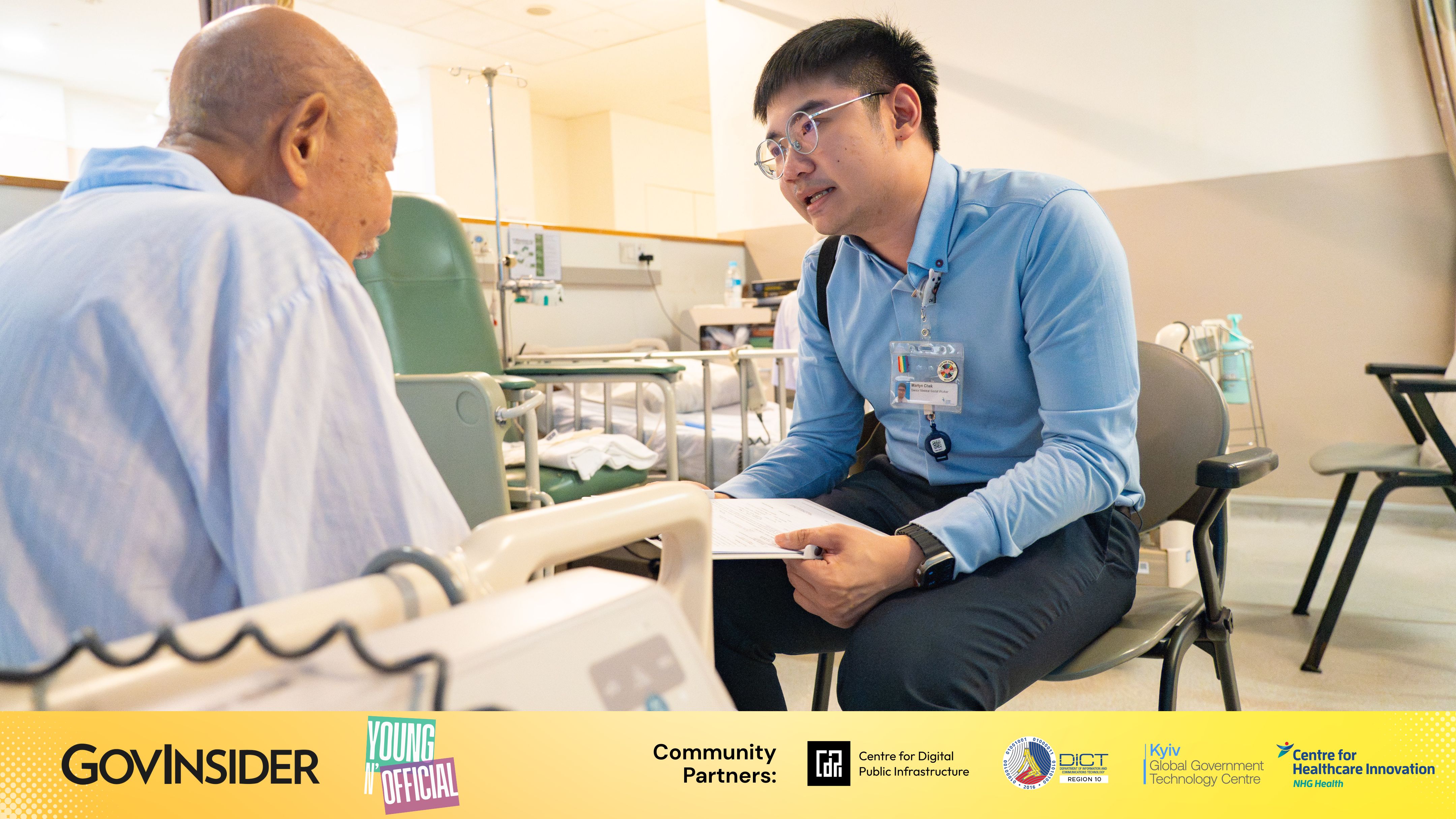
Martyn Chek Yew Chuan, Senior Medical Social Worker, Khoo Teck Puat Hospital and Yishun Community Hospital, NHG Health, Singapore. Image: NHG Health.
1) What does public service mean to you? Can you share more about your role in the public sector?
Public service means being a bridge between hope and healing for those who need it most. As a Senior Medical Social Worker at Khoo Teck Puat Hospital and Yishun Community Hospital, I serve hospital patients and their families during some of their most vulnerable moments.
My role extends beyond clinical duties – I'm part of multidisciplinary teams that develop holistic support programmes, implement digital transformation initiatives, and ensure that every patient receives not just medical care, but comprehensive psychosocial support that empowers their recovery journey.
2) Tell us about a project you championed. What impact did it have on the community?
I spearheaded the revival of group work programmes for stroke survivors following COVID-19 disruptions. Recognising that stroke survivors faced unique challenges in community reintegration, I refined our group work approach to combine peer support with patient empowerment.
This involved implementing structured frameworks and goal-setting protocols with regular reviews, as well as themed modules addressing specific post-stroke challenges such as mobility adaptation and psychosocial adjustment. A key feature was peer-facilitated empowerment sessions where past stroke survivors co-led evidence-based self-management strategies, making the content more relatable and actionable.
Since restarting in 2024, the programme has enrolled approximately 120 unique patients and caregivers.
Early indicators are promising – participants have consistently rated sessions as "Good" or "Very Good", and self-reported outcomes include reductions in social isolation, alongside increased confidence in navigating post-stroke life and greater motivation to adopt lifestyle modifications for stroke prevention.
These results reflect not just programme uptake, but a meaningful shift in how stroke survivors engage with their own recovery and long-term wellbeing within the community.
3) As a young professional, how has your unique background or perspective allowed you to identify a solution that others in your organisations might have overlooked?
Growing up as a digital native gave me a different lens when looking at our case triaging and allocation process. Where others saw a workflow that inherently required human judgment, I saw an opportunity for AI to enhance both accuracy and efficiency — without replacing the human expertise at the heart of medical social work.
This perspective led me to champion MiSS-T (Medical Social Service Triage Bot), an AI-powered solution that analyses patient data to accurately assign cases between Social Work Associates and Medical Social Workers based on complexity factors. The impact was tangible: MiSS-T eliminated four manual workflow steps and reduced case handover rates to 5.47 per cent.
What made this possible wasn't just familiarity with technology, but the ability to translate that familiarity into a practical solution for a healthcare context — bridging the gap between what our team needed on the ground and what emerging tools could realistically deliver.
4) What is your personal strategy for maintaining your creative energy when faced with bureaucracy?
I embrace a Kaizen mindset – finding small, continuous improvements within existing systems rather than fighting them.
When faced with bureaucratic constraints, I ask: "How can we work within this framework to better serve our patients?"
This approach led me to leverage data analytics for evidence-based decision-making and optimise resource allocation to ensure our high-risk patients receive timely interventions. Bureaucracy becomes less frustrating when you view it as a puzzle to solve rather than a wall to break down.
5) If you had just one area to invest in to accelerate transformation in the public sector (regulation, technology, talent, etc.), which one would you choose and why?
Talent development, specifically in digital literacy and adaptive thinking. Technology and regulations will evolve, but people drive transformation.
Through my experience training colleagues on digital systems and my involvement in youth leadership programmes, I've seen how investing in people's capabilities creates exponential returns.
When public servants are equipped with both technical skills and innovative mindsets, they become catalysts for change across all other areas – regulation, technology, and service delivery.
6) What is your greatest ambition as you grow in your public service career?
To build a healthcare and social support ecosystem where no patient or family feels alone in their journey. Beyond my professional role, my volunteer experiences have shown me the power of communities and peer networks in creating meaningful change.
I hope to strengthen social-health integration by mobilising volunteers, peer supporters, and community partners alongside digital innovation and data-informed interventions to better anticipate psychosocial needs. My ambition is to demonstrate that compassionate, community-driven care can be scaled sustainably without losing its human touch.
7) What is a “universal value” that connects everyone in your department – from interns to directors – and how do you use that to drive collaboration?
Dignity – the belief that every patient deserves respect, hope, and quality care regardless of their circumstances. This value transcends professional boundaries and unites doctors, nurses, therapists, and social workers alike.
I leverage this shared commitment by framing all initiatives around patient dignity. Whether implementing new technology or restructuring programmes, I always ask: "How does this honour the dignity of those we serve?" This approach transforms potentially divisive discussions into collaborative problem-solving sessions.
8) What is the best piece of advice you’ve got for the next generation of public servants?
Don't wait for permission to care! Some of my most impactful work – from reviving support groups to training colleagues on new systems – started with me simply seeing a need and taking action.
The public sector needs people who combine compassion with competence, who can navigate systems while never losing sight of the humans those systems serve. Your fresh perspective isn't a liability; it's exactly what the sector needs to evolve.
9) What is a myth you wish to debunk about young public servants?
That we're impatient and want to change everything immediately.
In reality, young public servants often bring sustainable, thoughtful approaches to change. My work with digital transformation and programme development shows that we understand the importance of gradual implementation, stakeholder buy-in, and evidence-based improvements. We're not here to disrupt for disruption's sake – we're here to build better systems that serve people more effectively.
10) Write a letter to your future self in 2035. Please keep it within 200 words.
Dear Future Martyn,
I hope you're still waking up excited to serve others. By now, I trust you've seen the stroke support programmes we started expanding regionally to support patients across Singapore. I hope the data analytics frameworks we're building today have evolved into predictive systems that prevent crises before they occur.
Remember the patients who called you their "gentle social worker with a big heart"? I hope you've maintained that gentleness while scaling your impact. The digital tools we're implementing today should have freed up countless hours for human connection with your time.
Most importantly, I hope you're still learning, still volunteering, and still believing that every small act of service creates ripples of positive change.
Keep serving with purpose.
Your younger, hopeful self.