
Michelle Teo, Manager, Incubation, BizTech Group, Infocomm Media Development Authority of Singapore
Meet the young public sector officials in the inaugural Young & Official Report 2026.
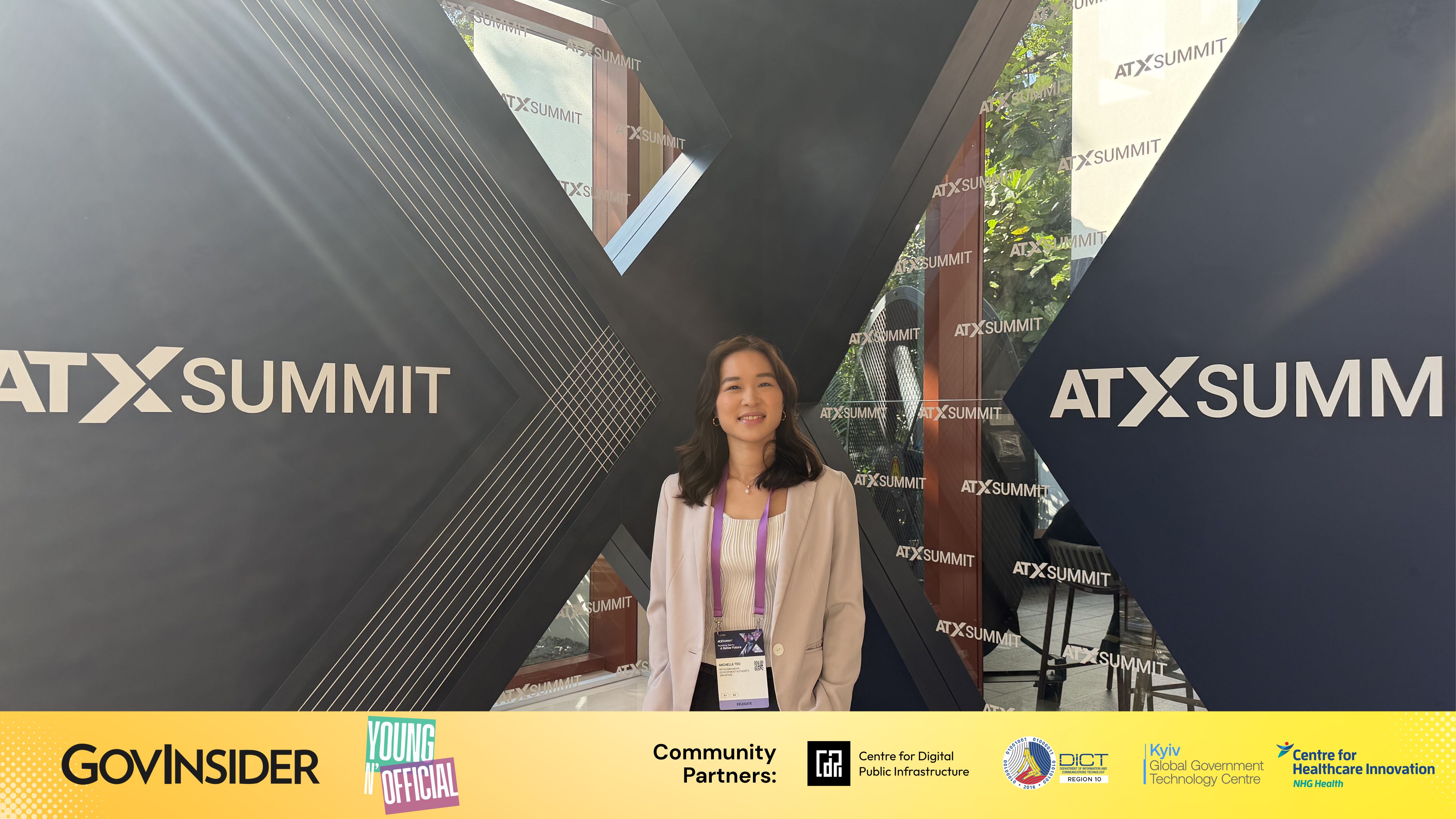
Michelle Teo, Manager, Incubation, BizTech Group, Infocomm Media Development Authority of Singapore. Image: IMDA
1) What does public service mean to you? Can you share more about your role in the public sector?
Public service means creating genuine human impact by building something for entire industries and communities.
At the Infocomm Media Development Authority of Singapore (IMDA), I work at the intersection of technology to develop artificial intelligence (AI) products at a national infrastructure level - with broad applications across Singapore's economy and society.
That responsibility carries a different weight than commercial product development.
When I see a tool my team has built uplifting an entire industry, empowering how people do their jobs more efficiently, it reminds me why public service is deeply purposeful.
2) Tell us about a project you championed. What impact did it have on the community?
I led the end-to-end product launch of the GPT-Legal question and answer (Q&A) model at TechLaw.Fest 2025, which now serves about 10,000 lawyers in Singapore.
Because our legal system is so rich with local nuances, research has long meant navigating decades of keyword-based searches, a process that demands significant time and expertise just to surface the right results.
GPT-Legal changes that by helping legal professionals find relevant information more quickly, freeing up time to focus on other aspects of case preparation since it enables natural language queries purpose-built for Singapore's legal context.
This is something that generic AI models would not be able to cater to.
What makes this meaningful is not the technology itself, but the shorter legal research journey for the legal community and the practical, positive impact it can have on their day-to-day work.
This is also what sets our work apart from commercial entities.
Rather than measuring success by adoption and revenue, we build to catalyse transformation in different sectors, and that purpose shapes the areas we choose to focus on and the depth of commitment we bring to such projects.
3) As a young professional, how has your unique background or perspective allowed you to identify a solution that others in your organisation might have overlooked?
Having been a national gymnast for more than half my life, I learnt early on that no athlete succeeds alone.
The coaches, my parents, and the support system around me were indispensable to my performance, and these same values are how I approach product work.
I carry this same mindset into how I work with our industry partners, treating them as co-creators.
Working well with partners like the Singapore Academy of Law requires a genuine exchange: we immerse ourselves in the nuances of their legal practice, and in turn, help them understand what the technology is truly capable of.
Without that shared understanding, we may build something technically impressive but practically irrelevant.
Gymnastics taught me the value of relentless repetition: performing the same routine hundreds of times, always in pursuit of something to refine. That process built in me a sharp eye for detail and an instinct to push past 'good enough'. Both qualities carry directly into my product work, where I tend to notice gaps that others have long stopped questioning.
4) What is your personal strategy for staying motivated when managing heavy workloads and tight deadlines?
Competing in international competitions such as the Southeast Asian (SEA) Games and Commonwealth Games taught me early that composure under pressure and disciplined time management are habits built through years of training.
Those foundations carry directly into how I manage demanding programmes today - staying structured, prioritising what matters, and keeping the team moving forward.
Part of that means being comfortable with incomplete information. At the pace technology moves, waiting for full clarity is rarely an option, and making sound decisions with what is available is itself a discipline.
What truly keeps me motivated is purpose.
Just as seeing the Singapore flag fly at competitions filled me with pride and fulfilment, seeing the products we build transform the way industries and professionals work gives me that same sense of meaning and sustains me through even the most demanding stretches.
5) If you had just one area to invest in to accelerate transformation in the public sector (regulation, technology, talent, etc.), which one would you choose and why?
People.
They are the fundamental ingredient for responsible AI adoption - not an afterthought, but the starting point.
While technology becomes increasingly accessible, what remains scarce is individuals who understand both AI and their domain deeply enough to deploy it responsibly.
People design how we interact with AI, shape its development pathways, and define what responsible AI systems look like in practice.
Our work on GPT-Legal is a good example of this.
Knowing when to trust an AI system is not instinctive - it has to be deliberately designed.
Working closely with our partners, we developed confidence indicators to help legal professionals better understand and interpret AI-generated responses, building the trust needed for meaningful adoption.
That kind of human-centred design is only possible through deep collaboration.
Ultimately, a team that can critically assess AI tools, adapt as technology evolves, and lead transformation will generate value that outlasts any single product.
6) What is your greatest ambition as you grow in your public service career?
My ambition is to help professionals do their best work by building AI products that not only automate tasks but also amplify their expertise and capabilities over time.
In the AI era, progress should not be measured by how many applications are launched, but by whether the tools we build change the way people work for the better.
GPT-Legal is an early signal of that ambition.
Beyond legal research, we are working to extend it into a foundational legal AI utility powering a wide range of workflows across different legal tasks and practice areas.
That is the kind of infrastructure-level impact I want to keep building toward to benefit both industries and professionals.
7) What is a “universal value” that connects everyone in your department – from interns to directors – and how do you use that to drive collaboration?
Embrace the unknown, and never stop learning.
Working on frontier technology means tackling problems where the answers are still being written, and that shared uncertainty is oddly unifying.
There is a collective energy that comes from knowing the work we do today is shaping something that has never existed before.
That spirit shows up in how we work: sprint sessions where anyone, regardless of seniority, can challenge an assumption or propose a direction, and an open culture where ideas are raised and debated freely.
It is not just about executing tasks but genuinely figuring things out together, and that sense of shared ownership is what connects everyone.
8) What is the best piece of advice you’ve got for the next generation of public servants?
Embrace ambiguity and see it as an opportunity rather than an obstacle.
I’ve learnt that performing in high-stakes, unfamiliar environments and adapting quickly is a skill you build — and that same mindset is what frontier technology demands.
When you find yourself in uncharted territory, lean into it. Bring people along, make decisions with the information available, and keep moving forward despite uncertainty.
The ability to stay curious, ask the questions others may not ask, and drive outcomes without a clear playbook is what makes the difference.
In a world where technology is moving faster than policy, the most valuable skill is not knowing all the answers but having the courage and curiosity to find them.
9) What is a myth you wish to debunk about young public servants?
That we are executors rather than drivers of change. In my experience, young officers are trusted with significant responsibilities and are actively shaping decisions at the highest levels.
At IMDA, we are given the room to lead, not just support.
We are involved in managing complex programmes, leading end-to-end product launches, and building frameworks for creating partnerships and measuring real-world impact.
I experienced this firsthand leading the GPT-Legal launch at TechLaw.Fest, working directly with C-suite stakeholders and even getting the chance to present to the Chief Justice of Singapore.
Young public servants are not just bringing energy and enthusiasm; they are bringing the boldness to challenge convention and the courage to push boundaries in ways that drive real change.
10) Write a letter to your future self in 2035. Please keep it within 200 words.
Hello, Future Self,
I hope the AI tools we built have meaningfully improved how professionals work across industries in Singapore and beyond, and that what started as bold ideas within a small team has become a foundation that others continue to build upon.
Beyond the outcomes, I hope you are still finding joy in your work and never settling for good enough.
Just as your national athlete days taught you that you are always competing to be a better version of yourself and that there is always a new challenge to rise to, never lose that intellectual curiosity - the relentless desire to question, explore, and imagine what is possible.
That is what brought you here, and it is what will keep the work meaningful for years to come.
- Michelle