
Min Chua Min, Senior Staff Nurse, NHG Polyclinics, NHG Health, Singapore
Meet the young public sector officials in the inaugural Young & Official Report 2026.
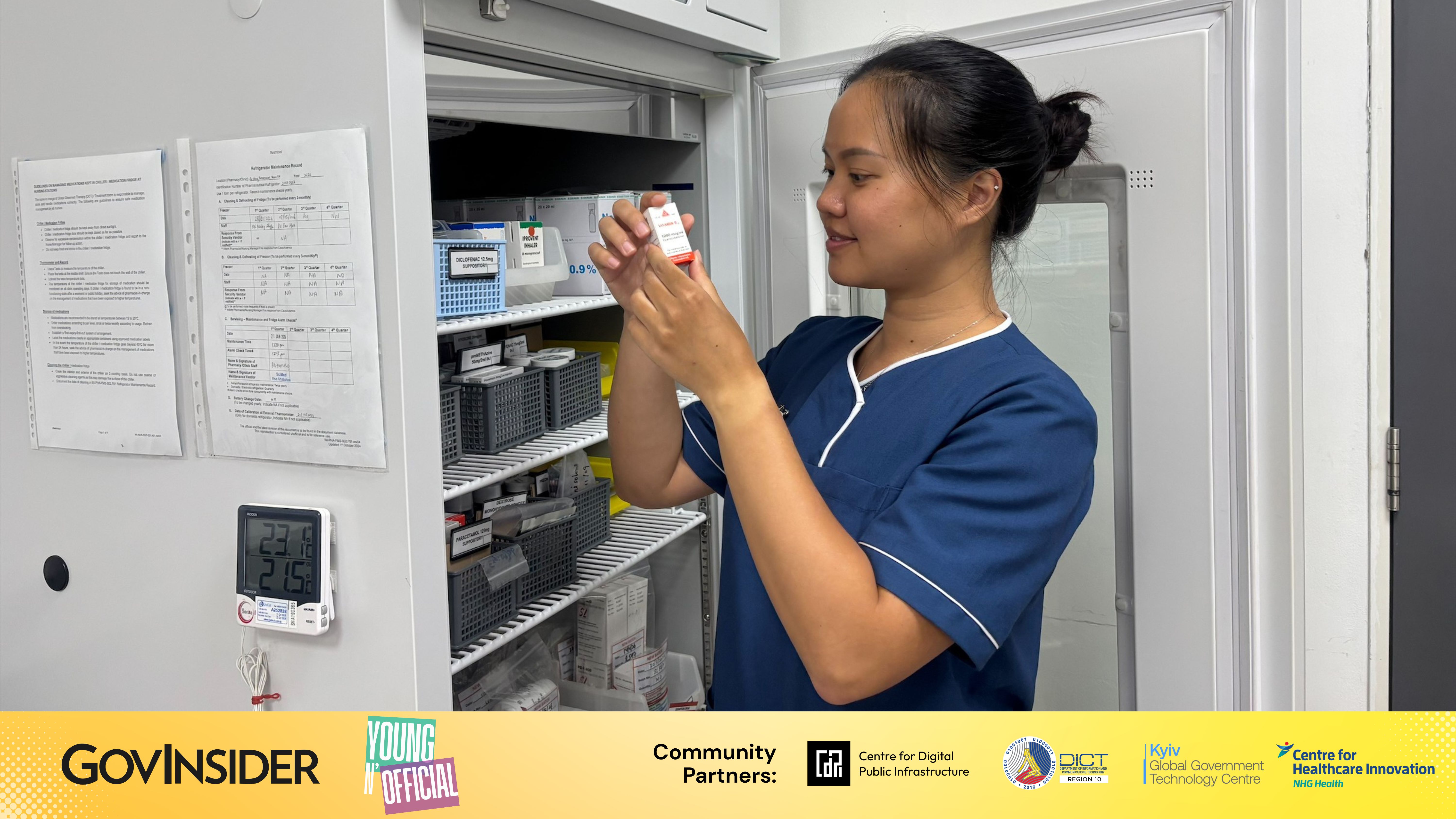
Min Chua Min, Senior Staff Nurse, NHG Polyclinics, NHG Health, Singapore. Image: NHG Health.
1) What does public service mean to you? Can you share more about your role in the public sector?
To me, the public sector is where policy meets people, where government guidelines, initiatives, subsidies, and scheme enhancements are translated into real support for patients’ lives.
In our work, that might look like a newborn receiving their screenings and immunisations, a working adult managing a chronic condition and difficult finances, or an elderly patient seeking reassurance and social support more than treatment.
As a Senior Staff Nurse in NHG Polyclinics, I work at that intersection.
In a high-volume primary care setting, we provide holistic care at various stages of life – from neonatal screenings, childhood immunisations, wound dressings, preventive and chronic health management to women’s health services. My role ensures that quality care is rendered safely and delivered with empathy.
2) Tell us about a project you championed. What impact did it have?
I worked on a project exploring how data and AI or machine learning could strengthen vaccine demand forecasting.
Working with Synapxe, we translated frontline operational difficulties into a system-level question: how can we forecast needs more accurately, instead of scrambling to react to them?
With better forecasts, we can better manage demand surges and ensure that patients have access to their vaccinations when they need them.
More than just the technical impact, this project showed that insights from everyday clinical work can shape how systems are designed and that meaningful innovation often begins with noticing what does not quite work on the ground.
3) As a young professional, how has your unique background or perspective allowed you to identify a solution that others in your organisation might have overlooked?
Having fresh eyes in the industry means I notice what others have learned to work around.
I am not yet fully shaped by “how things have always been done,” which allows me to question processes that may feel routine but are not always intuitive.
Because I am closer to that learning curve, I can more easily pick up where confusion or inefficiency occurs.
This perspective helps me suggest small but meaningful adjustments which improve clarity and confidence without disrupting what already works.
4) What is your personal strategy for maintaining your creative energy when faced with bureaucracy?
I’ve learned that structure and creativity are not opposites.
They simply move at different speeds.
Healthcare systems are built carefully for good reasons: safety, equity, and accountability. Instead of resisting that, I try to understand it and work within it with patience and perseverance.
When change feels slow, I focus on what can shift at my level: a workflow tweak, a clearer explanation for patients, a better interaction.
I believe that these small changes compound over time and can make a difference.
5) If you had just one area to invest in to accelerate transformation in the public sector (regulation, technology, talent, etc.), which one would you choose and why?
I would invest in talent.
Sustainable transformation depends on people who are supported, skilled, and motivated.
In healthcare, technology and policy are only effective when staff are equipped to apply them well.
Without the extra capacity to embrace change, transformation will face high levels of inertia and will not be sustainable.
Investing in mentorship, development, and leadership creates an environment where staff feel that they have the space to learn, question, and lead.
6) What is your greatest ambition as you grow in your public service career?
I hope to become a leader who never loses sight of the ground.
My ambition is to strengthen primary care – not just through systems and processes, but through people.
I want to contribute to service improvement, mentor junior nurses, and help shape care that is both efficient and deeply human.
7) What is a “universal value” that connects everyone in your department – from interns to directors – and how do you use that to drive collaboration?
The universal value is patient care. Regardless of role or seniority, everyone is united by a commitment to patient well‑being. Every decision, in some way, affects a patient.
When conversations are anchored in patient impact rather than individual tasks, it becomes easier to align priorities and work together.
8) What is the best piece of advice you’ve got for the next generation?
Impact rarely happens immediately, and is instead built over time through patience and a lot of hard work.
The work may not always feel visible or celebrated. But consistency in how one shows up, with professionalism, empathy, and integrity, builds trust over time. Trust may not be easy to establish, but it can be easily broken down. Don’t give up!
9) What is a myth you wish to debunk about the young?
A common myth is that the younger generation lacks resilience or commitment.
In reality, many are deeply committed; we simply see possibilities for doing things differently. We ask questions not to challenge for the sake of it, but to improve the system. With the right support and trust, that curiosity becomes a strength.
10) Write a letter to your future self in 2035. Please keep it within 200 words.
Dear Future Me,
I hope that you have become the change you want to see in healthcare. Keep choosing patience over frustration, and purpose over recognition.
Not every effort will be visible, but it will matter.
Continue to listen, learn and adapt with patience and grace. Systems will change, but the heart of service must remain constant. Stay grounded in the people you serve, as they are the reason behind every decision you make.