
Mongolia gallops towards a digital future
The government’s Vision 2050 strategy plans to use digitalisation to improve its socio-economic development, balancing regional leadership with a commitment to national heritage and environmental preservation.
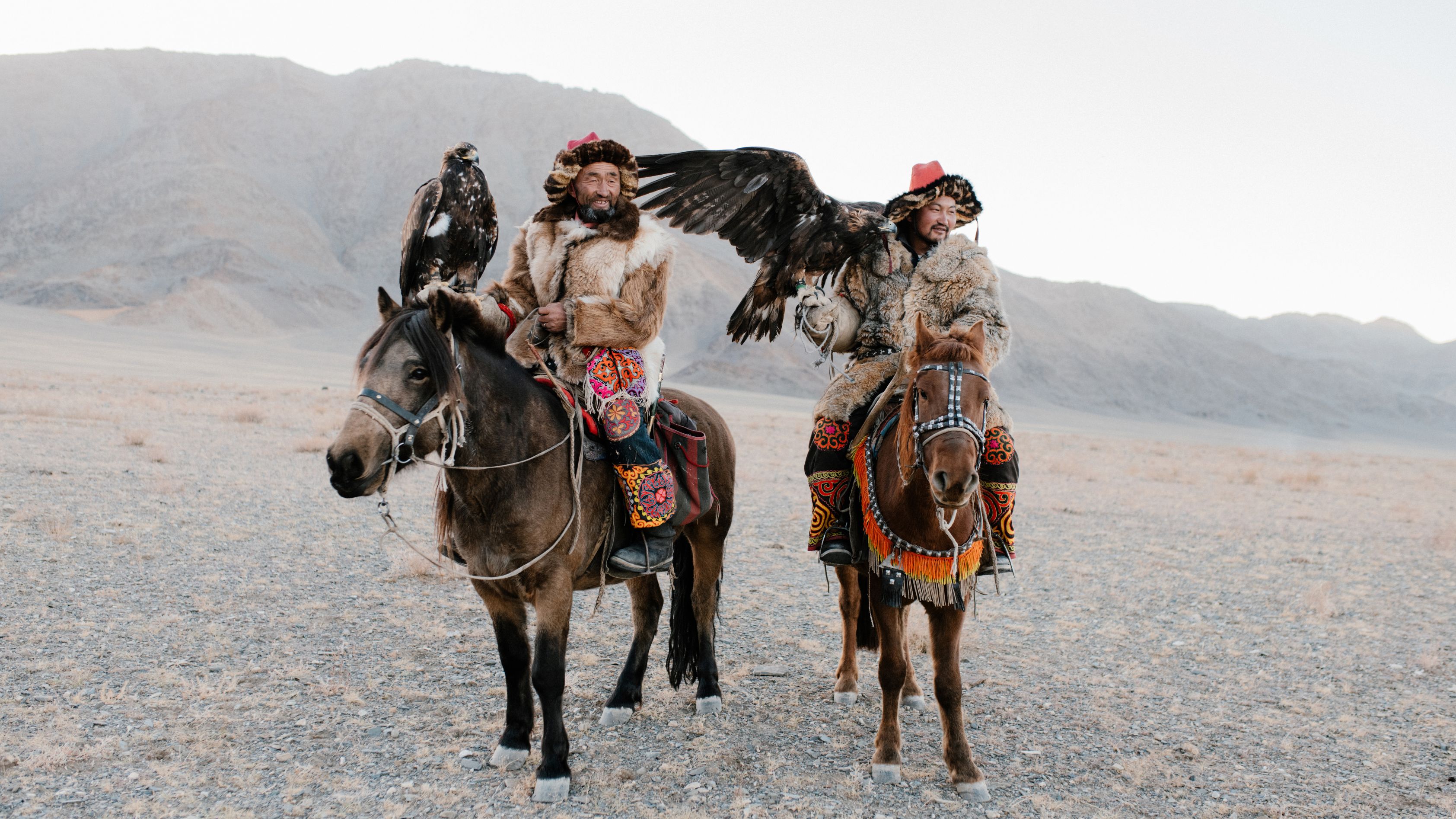
Mongolia aims to preserve its unique heritage and lifestyle while becoming a regional leader in socio-economic development, leveraging digital technologies to improve living standards and governance. Image: Canva.
Known for its breathtaking landscape, the Gobi Desert, mineral resources and unique wildlife like the Przewalski’s horse, Mongolia is the largest landlocked country in the world with a landmass four times the size of Germany.
With a population of just 3.5 million and with two behemoths, Russia and China, as neighbours, the country is looking to use technology to integrate itself with the rest of the world.
In May 2020, the Mongolian Parliament, State Great Hural, adopted its Vision 2050 document, which aims to transform the nation into a regional power and high-income country by 2050.
Speaking to GovInsider, Mongolia’s National Statistics Office (NSO) Director of Census and Data Analysis Department, Ariunbold Shagdar, says the goal for Mongolia is to become a regional leader in socio-economic development by 2050, “while strictly preserving our national identity and environment”.
Shagdar was one of the speakers at this year’s Festival of Innovation 2026, organised by GovInsider.
One of the primary objectives of the Vision 2050 document is to tap into digitalisation and data to diversify the Mongolian economy beyond its reliance on mining.
The other objective is to foster a people-centred living environment by expanding digital public services through the E-Mongolia platform, he adds.
NSO is the backbone of Mongolia’s evidence-based decision-making, he says.
Three-phase digital roadmap
Shagdar notes that the country’s digital roadmap consists of three distinct phases.
“By 2030, we are concentrating on building the legal and security foundation for digital government,” he says.
“After that, till 2040, we will move to the integration phase, applying Infocomm Technology (ICT) innovation across all economic sectors to boost productivity.
"And by 2050, we hope to achieve a fully human-centred digital government that ensures transparency, eliminates corruption and puts the citizen at the heart of public service,” shares Shagdar.
He sees the shift toward a digital, human-centred government as the latest chapter in a century of progress since NSO’s roots in 1924.
While the 1960s were marked by the state establishing a systematic, scientific foundation, the 1990s saw the transition towards a market-based system, he explains.
Pushing data-driven governance
“Mongolia has made massive strides in data-driven governance”, Shagdar says, adding that the nation now treats data as a strategic asset on par with leaders like Estonia, Canada, and the US.
Sharing some key milestones, Shagdar notes that since May 2024, NSO has been collaborating with the country’s Ministry of Digital Development and Communications to implement the government integrated database and metadata integrated database.
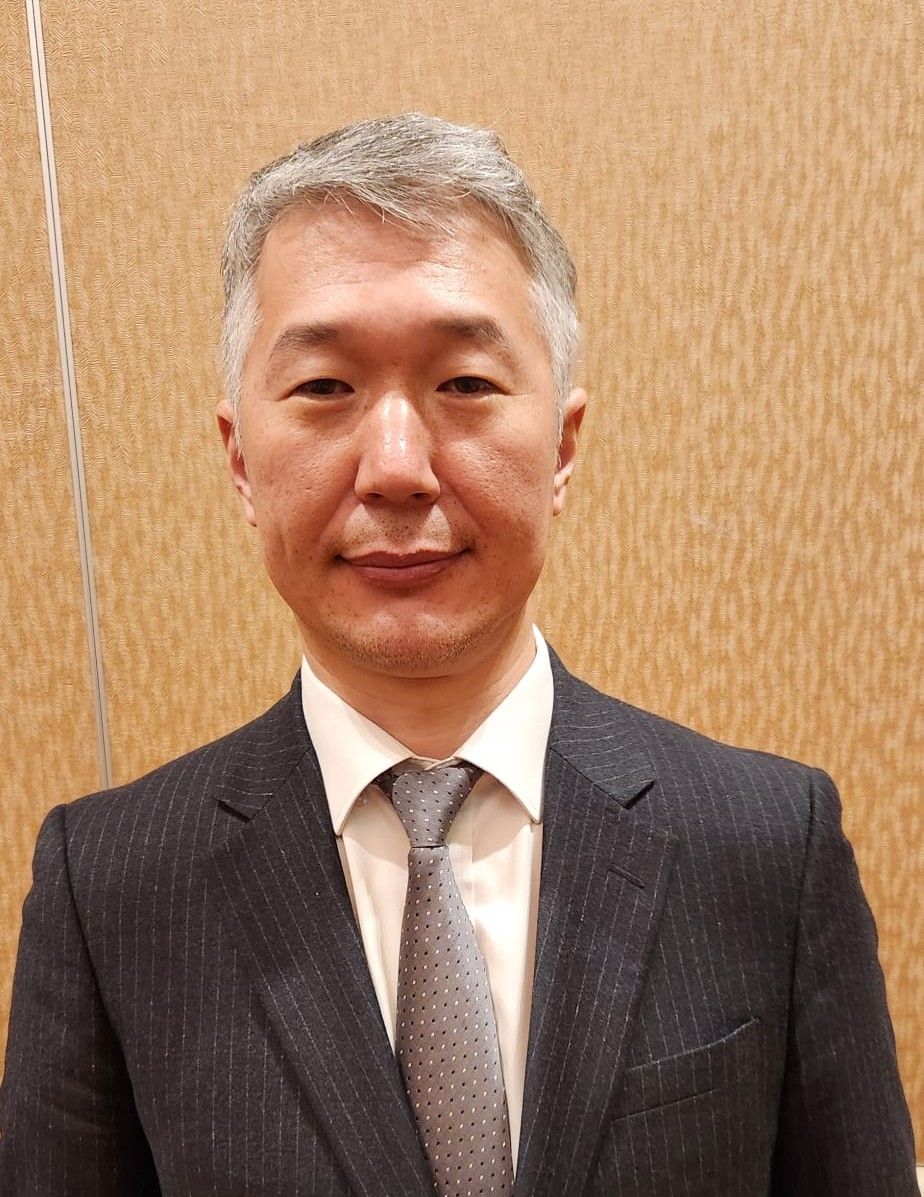
“This has created a unified ecosystem where the state, businesses, and citizens can access high-quality data for research and policy,” Shagdar says.
Since 2020, NSO has successfully moved away from traditional, labour-intensive data collection and has been using more efficient register-based methods for data collection.
“For the 2025 interim census, we integrated 30 databases from 14 different state organisations, verifying data from 570,000 households through the National Data Centre’s digital systems,” Shagdar says.
His department is planning a “mixed method” census for 2026, where over 50 per cent of the data will be pulled directly from administrative records, he adds.
“Our goal is to maintain an e-government ecosystem where data isn't just collected but is actively used to improve the lives of Mongolians through smarter, faster, and more accurate decision-making,” Shagdar shares.
Using big data in official statistics
The organisation has been collaborating with the UN Global Platform to collect, handle and integrate big data into official statistics, notes Shagdar.
“We are currently moving away from an 'analogue' past and moving toward a 'digital' future by focusing on three pillars: human capacity, technical infrastructure, and data security,” says Shagdar.
Explaining the importance of big data integration into official statistics, he shares that the country’s traditional agricultural data collection is an enormous task.
Currently, 17,700 enterprises and households fill out paper questionnaires nine times a year. This data moves through local governors before being manually typed into our servers. It is slow, labour-intensive, and prone to error, he says.
With the help of the UN, the NSO has been pioneering the use of remote sensing to automate data collection.
Shagdar notes that during the 2022 agriculture census, the NSO generated “ground truth” data to train machine learning (ML) models.
NSO is now using the Spectral Angle Mapper (SAM) method for crop classification using satellite imagery combined with multispectral drone data and on-site field measurements to identify crops.
Once the crop is identified, NSO then uses the Random Forest algorithm for crop yield estimations.
“This allows us to identify crops like wheat and potatoes directly from satellite and drone imagery,” he adds.
In 2024, NSO, in collaboration with Partnership in Statistics for Development in the 21st Century (PARIS21), piloted a project in Arkhangai province where an 81.63 per cent accuracy rate has been achieved in identifying large livestock and a 98.11 per cent rate in identifying traditional Mongolian dwellings called Gers.
Using AI to count sheep
Last year, NSO also piloted an artificial intelligence (AI) application to count sheep and goats directly from video footage as they graze.
Shagdar notes that while the results are promising, “we are realistic about the challenges; high-resolution imagery and drone operations are costly and require specialised skills”.
This is why the country continues to invest in training staff in image processing and AI to ensure these technologies are managed sustainably in-house, he says.
Shagdar’s department is also working with the Ministries of Food, Agriculture and Light Industry to develop an open-source system to scale the use of remote sensing methods nationwide.
He notes that international cooperation has been vital for Mongolia’s digitalisation journey.
In 2025, Mongolia has been elected to the governing board of the UN Statistical Institute for Asia and the Pacific (SIAP).
“Our chairperson serves on the Executive Committee of PARIS21 and the Board of Directors for the Association of National Census and Statistics Directors of America, Asia and the Pacific (ANCSDAAP).
“These roles allow us to shape global data standards, not just follow them,” Shagdar says.
The ultimate proof of our progress is in the data itself, he adds, saying: “Thanks to our adherence to the UN National Quality Assurance Frameworks, our international rankings have reached historic highs”.
Mongolia now ranks 11th in the world and second in East Asia for data openness in the Open Data Inventory (ODIN) rankings.
'
In 2024, the World Bank Statistical Performance Index ranked the country 47th globally, moving up five places.
“These rankings confirm that the Mongolian NSO is now a world-class institution, providing high-quality, transparent data that meets the highest international standards,” says Shagdar.