
Montaña Merchán, Coordinator of Enabling Technologies, Ministry for the Digital Transformation and of the Civil Service, Spain
By Sol Gonzalez
Meet the Women in GovTech 2025.
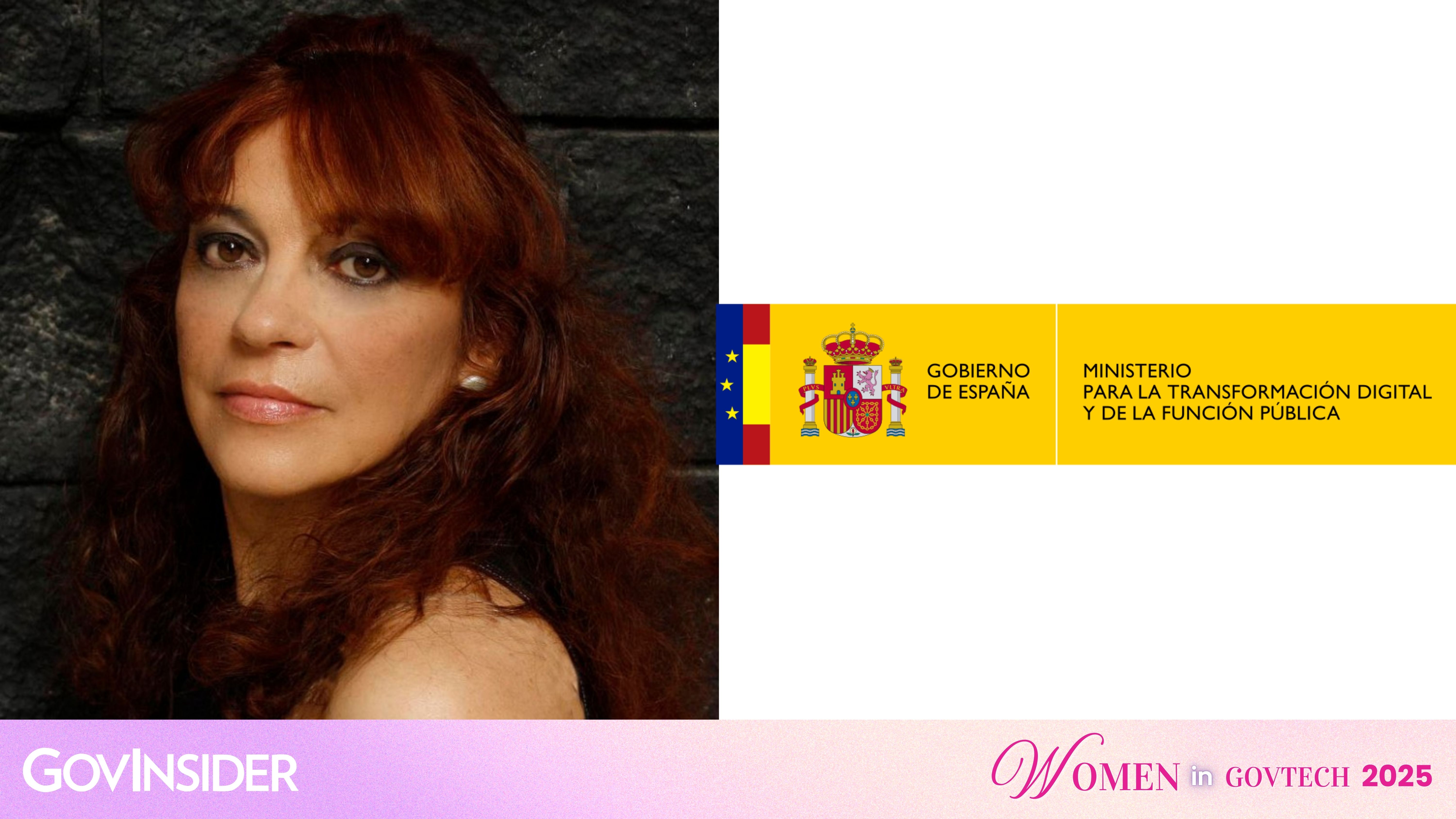
Montaña Merchán, Coordinator of Enabling Technologies, Ministry for the Digital Transformation and of the Civil Service, Spain, shares about her journey.
1. How do you use your role to ensure that technology and policy are truly inclusive?
Spain has two regulations in this area:
- Royal Legislative Decree 1/2013, of November 29, on the rights of persons with disabilities and their social inclusion.
- Royal Decree 193/2023, of March 21, which regulates the basic conditions of accessibility and non-discrimination for persons with disabilities in accessing and using goods and services available to the public.
We also have the Accessibility Observatory, which conducts periodic reviews to provide an online assessment for Public Administrations.
Regarding my role, I have developed two plain language guides for the administration to improve the writing of online content and make administrative language more accessible to citizens.
Why two guides? One is for textual content and the other for visual content. Both are important for comprehension. An image should complement the text.
All the reports I publish must comply with accessibility regulations.
2. What’s a moment in your career when you saw firsthand how technology or a new policy changed a citizen’s life for the better?
The first time I realised that technology is an ally for people with disabilities was when I developed the second version of the citizen portal.
Before launching the site, it was tested by a group of blind people who used technology to read the website's content. I was surprised by their ability to navigate the web and also witnessed the barriers we had to eliminate when publishing content.
It was a collaboration with the Spanish association ONCE, which works for the autonomy and inclusion of blind people, and this collaboration has continued over time.
3. What was the most impactful project you worked on this year, and how did you measure its success in building trust and serving the needs of the public?
Aside from the plain language guidelines, I worked on building a European blockchain-based infrastructure to facilitate data exchange between European administrations.
We finished in September 2025. We expect it to serve several data-sharing use cases, which are already underway.
This will facilitate the European single market.
In all use cases, we worked with the idea of "design for all."
4. What was one unexpected lesson you learned this year about designing for real people? This can be about a specific project or a broader lesson about your work.
The most unexpected lesson is bittersweet. On the one hand, I was excited about the evolution of artificial intelligence in all areas, but I also understood the risk it poses to the average citizen. I'm not talking about common cases.
I focused on authority IA bias or automation bias and on the detection of fake content.
On the first topic, I gave some talks in the AI in Social Sciences course. Regarding the second, following a talk on the subject, I decided to create a training program about it.
This issue is important because the general public gives 99% credibility to the responses of generative AI, when a study coordinated by the European Broadcasting Union (EBU) and the BBC concludes that 45% of AI responses based on news had some kind of inaccuracy issue, and 81% had some kind of problem, such as incorrect attributions.
This is a problem for society, especially considering the democratization of these systems and the fact that they will soon be feeding on information they generate themselves.
5. We hear a lot about AI. What's a practical example of how AI can be used to make government services more inclusive and trustworthy?
I recently completed a project analysing administrative language on education websites using generative AI.
It yielded a lot of information. Now, the administration uses AI to search for information, but I personally consider this very basic and not very useful.
I think that the most impactful change in administration will be the implementation of agentic AI. The development of more transparent, objective, and inclusive services.
The combination of AG and AAI will be able to provide citizens with a more agile, more active service that is less dependent on appointments, queues, and administrative language.
6. How are you preparing for the next wave of change in the public sector? What new skill, approach, or technology are you most excited to explore in the coming year?
As I've already mentioned, the IAA (Innovation in Administration and Administration) will involve a reduction in middle management, identifying the need for governance, accountability, and oversight.
Automation projects in public procurement and its use in HR management are already bearing fruit and changing processes.
Blockchain will also be a star technology, as it can solve traceability and transparency problems that AI presents. It's an ally of AI.
7. What advice do you have for public sector innovators who want to build a career focused on serving all citizens?
Interestingly, I've delivered innovation training this year. The relationship between innovation and public administration is complex but possible, and there are examples of this.
- The first piece of advice is resilience. Don't wait to have everything you need to innovate; change what you can change.
- Seek the silent "Yes." It's not about getting enthusiastic approval, but about obtaining tacit permission.
- Practice contagion and forming coalitions with other groups.
- Maintain an innovative mindset: training, a lateral perspective, thinking like the citizen.
- And most importantly, share your experience—both the positive and the negative.
8. Who inspires you to build a more inclusive and trustworthy public sector?
That's a tough one. It would be predictable to say that I'm inspired by the citizens, by their unmet needs. That's a politically correct answer.
But if I'm being honest, the reality is that what inspires and drives me is curiosity.
Curiosity about new technologies, about why the process is the way it is, and what would happen if we did it completely differently. About the impact on society.
9. If you had an unlimited budget, what would your dream project be?
To create avatars of civil servants to assist citizens.
These avatars would be well-trained in both providing information and helping them complete paperwork.
They would be specially trained to speak clear language to citizens with disabilities, the elderly, or those with learning gaps.
With this army of virtual avatars, I would eliminate queues, appointments, and barriers in language, comprehension, space, and time. That would be my dream.
10. Outside tech, what excites you the most?
Art: painting, theater, and dance above all. I practice all three in my free time with varying degrees of success and skill.
And whenever I have the chance, I attend related events. I'm a "friend of the Reina Sofía Museum."