
Mushira A. Eneizat, Institutional Culture and Change Lead, Prime Ministry of Jordan
By James Yau
Meet the Women in GovTech 2025.
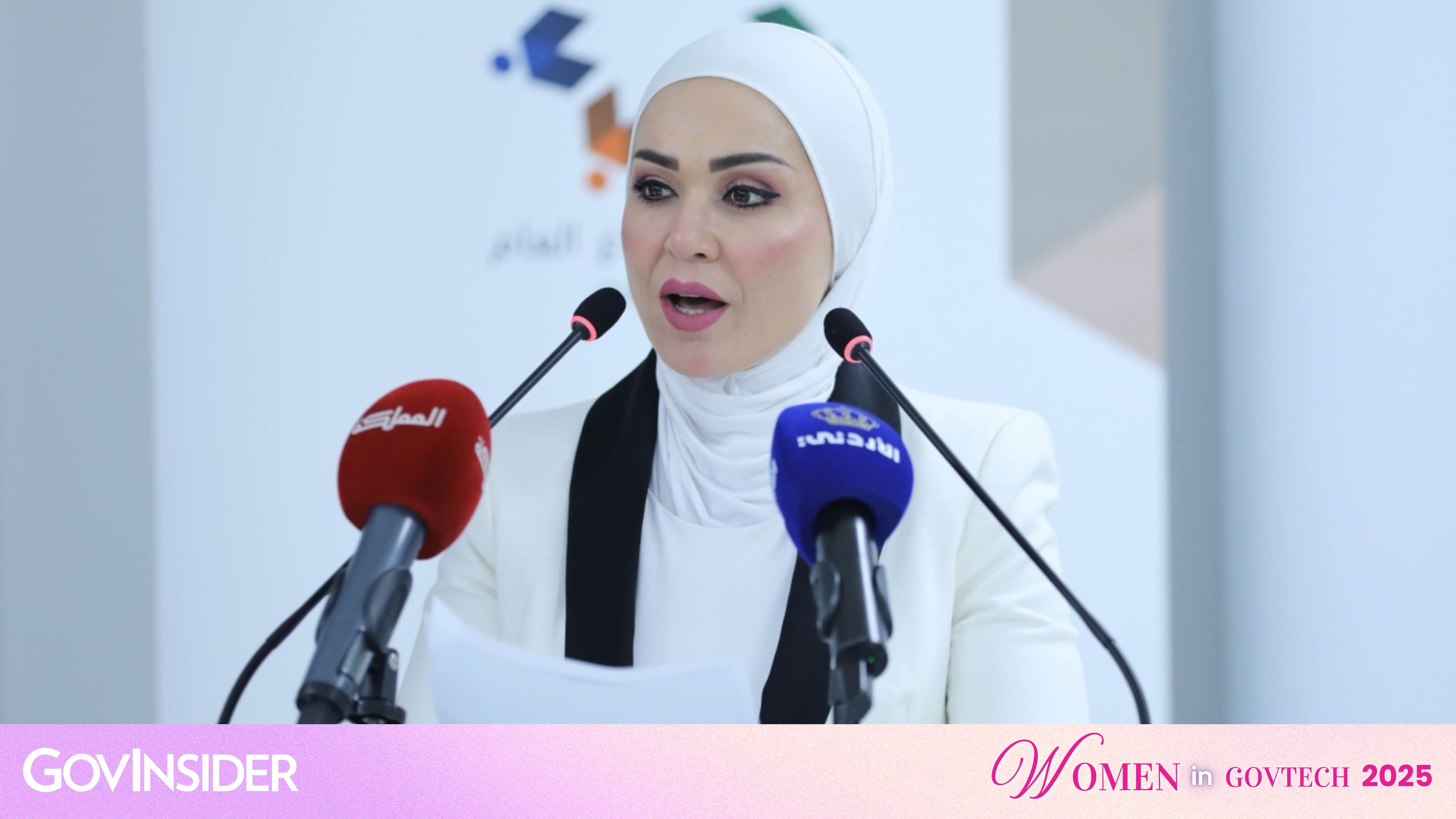
Mushira A. Eneizat, Institutional Culture and Change Lead, Prime Ministry of Jordan, shares about her journey. Image: Mushira A. Eneizat
1) How do you use your role to ensure that technology and policy are truly inclusive?
In my role as the Institutional Culture and Change Lead at the Prime Ministry of Jordan, I have the privilege of working at the heart of the country’s public sector transformation.
It is a role that brings me close to citizens, public servants, and decision-makers, and it allows me to help shape how government institutions evolve to meet people’s needs in a rapidly changing world.
One of my core responsibilities - and personal commitments - is to ensure that the technology we introduce and the policies we design truly include everyone, especially those who are most often overlooked.
My starting point is always simple: every reform must begin with people.
Technology is powerful, but it becomes meaningful only when it makes life easier for a mother renewing her child’s passport, a young graduate applying for a job, an elderly person visiting a clinic, or a person with a disability trying to access a service.
When I think about inclusivity, I think about these real, everyday situations. My role is to make sure that no one feels the government is too distant, too complicated, or too digital for them.
One of the ways I do this is by shifting the culture within government institutions. In many countries - including ours - public service has long been shaped by routines, paperwork, and rigid procedures.
When we introduce new technology without changing the way people think and work, the result is frustration on both sides: employees struggle, and citizens feel excluded. So I put a lot of effort into helping institutions adopt a more open and human-centred mindset.
Over the past years, Jordan has been implementing a national reform program that aims to modernise the public sector.
As part of this agenda, I lead efforts to understand the values, behaviours, and practices that shape daily life inside government. We use this understanding to promote fairness, transparency, trust, and a stronger focus on citizens.
When an institution embraces these values, its services naturally become more inclusive, regardless of whether they are delivered on paper or through digital platforms.
Inclusivity also means ensuring that every citizen - regardless of age, location, income, or ability - can access government services comfortably.
In Jordan, this is especially meaningful because our population is diverse and includes people living in rural areas, border towns, refugee communities, and families who may not have access to the latest technology.
When we plan digital services, I always ask: Does this solution work for the whole country, or only for those who live in big cities?
If the answer is the latter, then it is not truly inclusive.
To address these differences, we encourage a balanced approach between digital and physical services. Digital transformation should never mean digital exclusion.
We work to ensure that services remain available through multiple channels, so people can choose what suits them best. An inclusive government is one that gives people options - not one that limits them.
Trust is a major theme in all of this. Around the world, people often feel detached from government, especially as services become more digital.
In my role, I try to ensure that technology becomes a bridge, not a barrier. Citizens need to feel that the digital services offered by government are reliable, secure, and easy to use.
They need to know that their data is protected, their voices are heard, and their dignity is at the center of our work. When government is transparent, consistent, and approachable, trust begins to grow - step by step.
Finally, I believe inclusivity is a journey, not a destination. Every reform we introduce must be tested, revisited, and improved. When we find gaps, we fix them.
When people express frustration, we listen and respond. My job is not to claim that everything works perfectly - it is to ensure that we keep moving closer to a government that serves everyone with fairness, empathy, and respect.
In summary, I use my role to make technology and policy more inclusive by humanising government culture, simplifying services, listening deeply to citizens, supporting public servants, promoting fairness, and ensuring that no person - regardless of background or circumstance - feels left behind.
Inclusivity, to me, is the heart of public service. It is the promise that government exists for everyone, not just for those who find it easy to navigate. And it is this promise that I work every day to help fulfill.
2) What’s a moment in your career when you saw firsthand how technology or a new policy changed a citizen’s life for the better?
One of the most memorable moments in my career - one that still stays with me - happened during a field visit to a government service center shortly after Jordan began rolling out new digital procedures and simplifying many public services.
While observing the waiting area, I noticed an elderly woman sitting quietly with a small envelope in her hand. She looked worried and overwhelmed, and a staff member told me she had been returning to the same office for several days trying to complete a simple service related to her pension.
Every time, she would arrive with a new paper someone had told her to bring. Every time, the rules seemed unclear. And every time, she would go home without an answer.
She explained that she did not have children living nearby, she had no experience using online platforms, and she had been “afraid to bother anyone” for help.
This was the exact type of citizen we keep in mind when designing reforms. I sat next to her and listened carefully as she explained her situation.
When she opened the envelope, I saw she was carrying documents that were no longer required under the new simplified policy - we had eliminated several steps, including the need for physical papers.
I asked a staff member to check her case, and within minutes, using the new digital system, her entire request was processed. What had taken her days of emotional stress and multiple bus trips to the city was resolved in less than ten minutes.
When she realised she was finally done, she held my hand and said something I will never forget: “I feel like the government finally sees me.”
That moment reaffirmed why inclusive policy and technology matter so deeply.
It is easy for reforms to look impressive in presentations or dashboards; it is another thing entirely to see how they touch a person’s life in a deeply human way.
For her, this was not just about a faster service - it was about dignity, relief, and the feeling that her government cared enough to make things simpler.
This experience also opened an important conversation with the staff. They shared how the new system allowed them to support citizens more confidently and spend more time assisting people rather than handling paperwork.
They told me they, too, felt more valued because they could make a real difference in people’s lives. It reminded me that successful modernisation must support both sides of the counter - the citizen receiving the service and the employee delivering it.
That day, I saw clearly how a policy change paired with the right technology can transform a process that once felt heavy, confusing, and intimidating into something humane and accessible.
It was a reminder that behind every service - no matter how small - we are dealing with someone’s livelihood, their rights, their time, and their sense of dignity.
Since then, I’ve carried that woman’s words with me in every meeting, workshop, and policy discussion.
They guide how I advocate for simplifying rules, reducing paperwork, improving digital access, and designing services that are truly centered on people’s real experiences - not assumptions.
This moment reaffirmed my belief that the true success of GovTech is not in how advanced the systems are, but in how much they make people feel seen, respected, and supported. And that is the standard I strive to uphold every day.
3) What was the most impactful project you worked on this year, and how did you measure its success in building trust and serving the needs of the public?
The most impactful project I worked on this year was launching and leading a nationwide series of workshops to build Jordan’s Change Ambassadors Network - a growing community of public sector employees who champion institutional culture, service values, and citizen-centred transformation inside their organisations.
For years, one of the biggest challenges in public sector reform has been ensuring that change does not remain at the policy level, but actually reaches the people who deliver services every day.
Technology and policies can set the direction, but it is employees who determine how citizens experience government. This is why creating a network of “change ambassadors” felt critical: it allowed us to empower the human element of reform.
Throughout the year, we held workshops across ministries, municipalities, and public agencies. These sessions brought together employees from different levels and backgrounds—not only managers or specialists, but also frontline staff who meet citizens daily.
The workshops were practical, interactive, and centred on real experiences. We discussed topics such as service behaviours, communication styles, empathy, transparency, and how employees can serve as internal role models for positive change.
One of the most powerful aspects of the workshops was seeing how quickly employees connected with the idea that they are the culture.
Many told us that this was the first time they had been invited to speak openly about challenges, values, relationships inside the institution, and the small behaviours that shape trust.
They started sharing stories of citizens who struggled, the pressure of outdated procedures, and the realities they face on the ground.
These conversations were not only valuable - they were transformative.
To subscribe to the GovInsider bulletin, click here.
4) What was one unexpected lesson you learned this year about designing for real people? This can be about a specific project or a broader lesson about your work.
One unexpected lesson I learned this year is that people don’t resist technology - people resist feeling unseen.
During several workshops with public sector employees and citizens, I noticed that their concerns were rarely about the digital tools themselves.
Instead, they were about feeling left out of the design process, overwhelmed by change, or worried that technology would make services colder and less human.
This taught me that designing for real people means designing for their emotions, not just their needs. A simple explanation, a moment of empathy, or involving them early in decision-making often mattered more than the features of the system itself.
It reminded me that successful design is not about perfection - it’s about connection. When people feel heard and valued, they welcome change. But when they feel invisible, even the best-designed solution will fall short.
This insight now guides everything I do: start with the human, not the system.
5) How are you preparing for the next wave of change in the public sector? What new skill, approach, or technology are you most excited to explore in the coming year?
I am preparing for the next wave of change in the public sector by focusing on strengthening the readiness of people and institutions to adapt.
Real transformation begins with mindsets - so I am investing in building a culture of continuous learning, openness to new ideas, and the ability to adjust quickly to evolving needs and expectations.
In the coming year, I am excited to explore approaches that help us understand citizens more deeply, especially methods like co-design that involve people directly in shaping services from the start.
I am also interested in using modern digital tools that help government communicate more clearly, work more efficiently, and deliver services in ways that feel simpler and more human.
On a personal level, I am focusing on developing flexible leadership skills - being able to make decisions with clarity, encourage innovation, and listen actively to both employees and citizens.
Overall, I am preparing for the future with optimism, believing that the next phase will combine advanced technology with genuine human connection to create a more responsive and citizen-centred public sector.
6) What advice do you have for public sector innovators who want to build a career focused on serving all citizens?
My biggest advice is this: never lose sight of the people behind the policies.
Innovation in the public sector is not about tools or strategies - it is about improving someone’s everyday life, often in ways they may never see or thank you for. That requires patience, humility, and a deep sense of purpose.
Second, stay close to citizens. Spend time in service centers, listen to frontline employees, observe how people actually experience government. Real insights rarely come from reports - they come from real stories.
Third, embrace collaboration. No one innovates alone. Work with communities, civil society, youth, experts, and even critics. The most inclusive solutions come from diverse perspectives.
Fourth, be brave enough to simplify. Sometimes the boldest innovation is removing a step, rewriting a sentence, or redesigning a process so it respects people’s time and dignity.
Finally, protect your empathy. It will be your greatest advantage.
The public sector needs leaders who not only think but feel - leaders who design with compassion and believe deeply that every citizen deserves to be seen, heard, and served with fairness.
7) Who inspires you to build a more inclusive and trustworthy public sector?
I am deeply inspired by Her Majesty Queen Rania Al Abdullah, whose leadership embodies compassion, dignity, and a deep commitment to people.
She has always championed the idea that every citizen - especially the most vulnerable - deserves opportunity, respect, and a voice. Her work in education, youth empowerment, digital literacy, and social justice continually reminds me that progress must be human-centered and inclusive.
Queen Rania’s ability to combine vision with empathy, and elegance with impactful action, motivates me to pursue a public sector that reflects these same values. She inspires me to see every policy, service, and reform through the eyes of the people we serve.
When I think about building trust and fairness in government, I look to her example - one that proves leadership can be both strong and kind, innovative and deeply human.
8) If you had an unlimited budget, what would your dream project be?
If I had an unlimited budget, my dream project would be to build a National Behavioral and Culture Innovation Lab - a permanent, multidisciplinary institution dedicated to understanding how people think, behave, serve, and experience government, and using those insights to redesign public services across Jordan.
This lab would unite behavioural scientists, designers, data experts, public servants, and citizens to work side-by-side on improving how institutions function from the inside out.
It would focus on the “human layer” of government - the motivations, emotions, habits, and cultural norms that shape every interaction between citizens and the state.
The lab would test real-world solutions:
• How small behaviour changes in service centres can reduce frustration and build trust.
• How leadership behaviours shape institutional culture.
• How communication, service design, and nudges can improve compliance, fairness, and citizen experience.
• How digital transformation can be implemented in ways that support - not overwhelm - employees and the public.
Most importantly, it would serve as a national engine for culture transformation, helping institutions shift from a system-centered mindset to a truly citizen-centred one.
With such a space, we could turn behavioural insights into everyday practices, and transform institutional culture from an abstract concept into measurable, visible, human impact.
10) Outside tech, what excites you the most?
Outside the world of technology and public sector reform, what excites me most is people - their stories, motivations, and the incredible capacity they have to grow and change.
I am endlessly inspired by human potential and the small moments where individuals surprise themselves with courage, creativity, or kindness.
I’m also deeply energised by community spaces - whether it’s a lively discussion with young people, a workshop with public servants, or simply observing how people connect, support each other, and build meaning in their daily lives.
These interactions remind me why the work we do in government matters.
And on a personal level, I find joy in nature and movement - long walks, open spaces, and quiet moments that reset the mind and reconnect me with what’s important.