
Mushtariybegim Akhmadjonova, Research Engineer, The Space Research and Technology Agency under the Ministry of Digital Technologies of the Republic of Uzbekistan
By James Yau
Meet the Women in GovTech 2025.
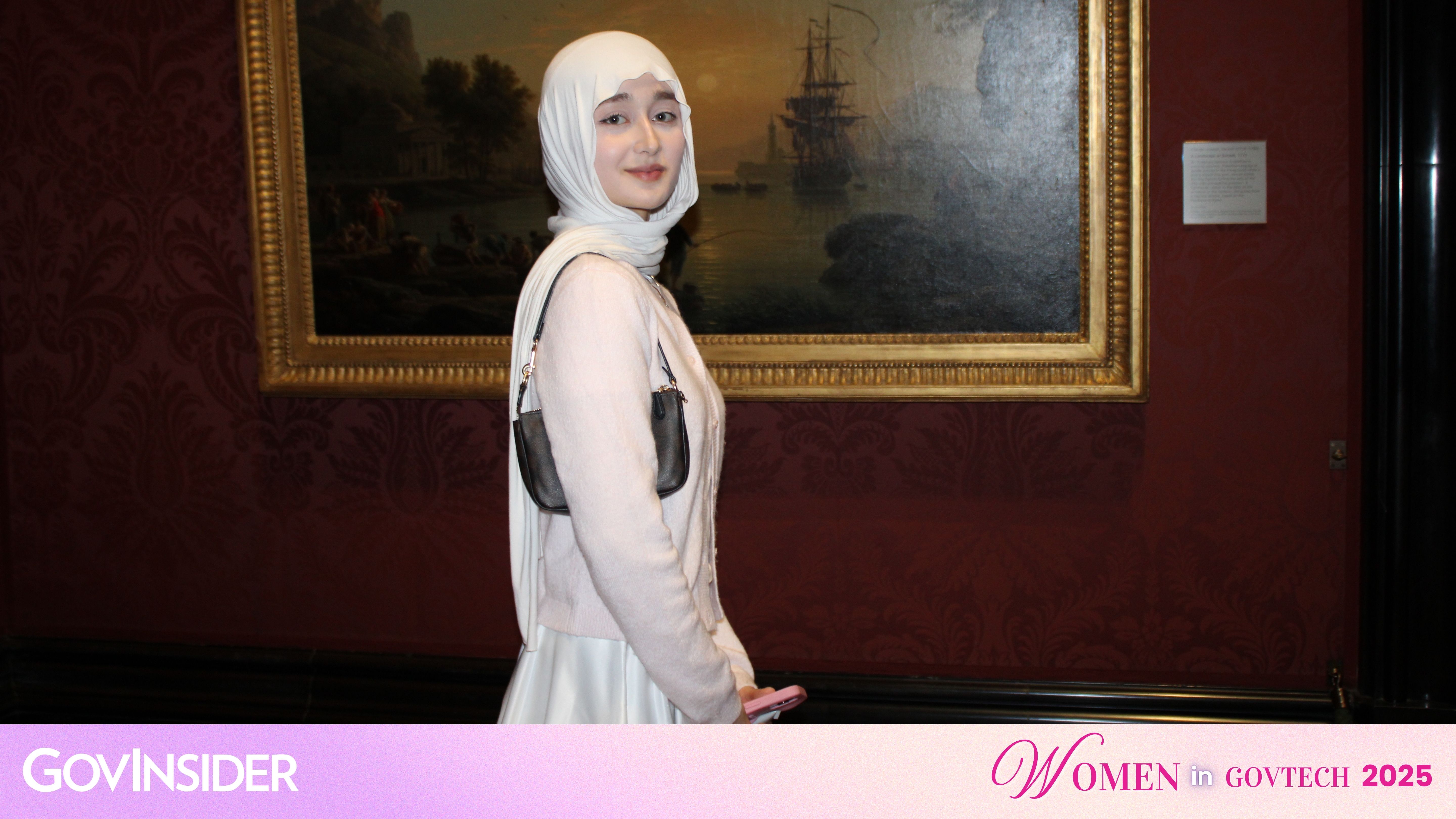
Mushtariybegim Akhmadjonova, Research Engineer, The Space Research and Technology Agency under the Ministry of Digital Technologies of the Republic of Uzbekistan, shares about her journey. Image: Mushtariybegim Akhmadjonova
1) How do you use your role to ensure that technology and policy are truly inclusive?
In my role at the Center for Space Monitoring and Geoinformation Technologies, I translate aerospace engineering capabilities into accessible tools. My background in spacecraft systems enables sophisticated monitoring, but the real challenge lies in ensuring these capabilities serve those who need them most.
We design web-based interfaces that transform complex satellite data processing into clear, actionable information for farmers, water managers, and policymakers without technical training.
As a woman in aerospace engineering in Central Asia, I actively support initiatives expanding diverse perspectives in government technology services, recognising that effective solutions emerge from teams reflecting the populations they serve.
2) What’s a moment in your career when you saw firsthand how technology or a new policy changed a citizen’s life for the better?
Following a strong regional earthquake felt across Uzbekistan’s southern regions, I analysed radar satellite data for several critical water reservoirs, detecting millimeter-scale ground displacement.
This information allowed disaster management authorities to rapidly assess structural safety without waiting for time-consuming field inspections.
These reservoirs support thousands of downstream residents, and satellite-based monitoring enabled officials to make informed decisions quickly, demonstrating how technology can protect communities precisely when it matters most.
3) What was the most impactful project you worked on this year, and how did you measure its success in building trust and serving the needs of the public?
My most impactful work involved developing monitoring systems for water resource management and geological hazard assessment. In agriculture, we analyzed over 90,000 fields across 17 districts, revealing significant variability in water use that now informs resource planning.
In hazard monitoring, early-warning capabilities directly support public safety. For me, impact is measured by whether decision-makers trust the data and can act on it in time to protect people and infrastructure.
4) What was one unexpected lesson you learned this year about designing for real people? This can be about a specific project or a broader lesson about your work.
I learned that technical accuracy alone does not guarantee usefulness. My training emphasised mathematical rigour, but real-world adoption depends on clarity and relevance.
During emergency response, officials needed direct answers - not technical detail. This reinforced that public-sector technology requires both analytical excellence and strong communication to ensure insights are understood and acted upon.
5) We hear a lot about AI. What's a practical example of how AI can be used to make government services more inclusive and trustworthy?
During my 2024 internship under the UK Space Agency’s SPIN programme, I worked on computer vision for spacecraft pose estimation. This experience showed how AI can transform specialised expertise into scalable capability.
In infrastructure monitoring, machine learning enables rapid detection of critical changes that would otherwise take weeks of manual analysis. The key is transparent, explainable AI that supports experts rather than replacing them, building trust in automated decision support.
To subscribe to the GovInsider bulletin, click here.
6) How are you preparing for the next wave of change in the public sector? What new skill, approach, or technology are you most excited to explore in the coming year?
I am focused on operationalising technology - moving from demonstrations to sustainable services. Experience has shown me that technical capability only creates value when embedded in robust institutional workflows.
I’m also exploring multi-sensor data fusion and satellite constellation optimization to support long-term government services aligned with Uzbekistan’s growing space capabilities.
7) What advice do you have for public sector innovators who want to build a career focused on serving all citizens?
Understand problems before proposing solutions. The earthquake response taught me that value lies in reliably delivering the right information at the right time, not methodological novelty.
Build bridges between technical and non-technical stakeholders through translation as important as analysis itself. Embrace interdisciplinary learning as essential to public sector work where citizens' needs don't respect disciplinary boundaries.
Maintain perspective about impact timelines - projects often require years before informing operational decisions, reflecting the responsible approach necessary when building systems affecting thousands of lives.
8) Who inspires you to build a more inclusive and trustworthy public sector?
I come from a family rooted in science and engineering across generations, which taught me that technical excellence matters most when it empowers others.
My parents’ support of my pursuing aerospace engineering abroad, particularly as a woman, reinforced that capability is independent of background. I’m inspired by colleagues who adopt unfamiliar technologies in service of the public and by global communities committed to open knowledge and collaboration.
9) If you had an unlimited budget, what would your dream project be?
I would establish a sovereign satellite constellation in Central Asia to enable real-time Earth observation, climate monitoring, and disaster resilience. This would include optical, thermal, and radar sensors with onboard AI for autonomous change detection.
Beyond just technology, it would create a regional aerospace ecosystem, training engineers and empowering the next generation - especially women - to build and operate space systems locally.
10) Outside tech, what excites you the most?
Language learning has always fascinated me, as each language offers a new way of thinking - much like engineering disciplines. Cooking provides creative balance through immediate results, while digital content creation allows me to communicate complex ideas visually.
These interests remind me that even the most advanced analysis only creates impact when it’s clearly communicated.