
Nigeria's Lagos state pilots ideas through non-profits before spending public money on them
With her non-profit, Gbemisola Kayode-Bolarinwa, Director, ICT Training & Service Management from the state's Ministry of Innovation, Science & Technology, turns community pilots backed by volunteers and partners into evidence government can act on.
-1789624364983.jpg)
In Nigeria, partnerships between the government and non-profit organisations have become a "growing approach" to test ideas, gather citizen feedback, and help shape digital policies. Image: Canva
Gbemisola Kayode-Bolarinwa wears two hats in the Lagos state's Ministry of Innovation, Science & Technology and her own non-profit organisation to close the digital divide among the local communities in Nigeria.
As the state ministry's director of ICT training & service management, she navigates the approvals, budgets, and procurement processes that come with launching a digital skills programme in the local communities.
She also heads the Centre for Digital Inclusion & Impact Initiative (CDIII) that tests ideas in the communities before the government invests significant public resources.
Speaking to GovInsider, Kayode-Bolarinwa says that in Nigeria, partnerships between the government and non-profit organisations have become a "growing approach" to test ideas, gather citizen feedback, and help shape digital policies.

Gbemisola Kayode-Bolarinwa (fourth from the left) was inaugurated as the Vice Chairman of the Nigeria Computer Society (NCS), Lagos chapter. Image: Kayode-Bolarinwa's LinkedIn
While government provides the authority, policy direction, and resources to implement programmes at scale, the non-profit brings flexibility, community engagement, and the ability to test new ideas quickly, she adds.
"Technology changes very quickly, and citizens' needs continue to evolve.
"Another challenge is that government may not always have enough direct interaction with underserved communities to fully understand their digital needs," she adds.
While policies can be well-intentioned and well-funded, they may still miss what people on the ground need.
Kayode-Bolarinwa believes that "public sector innovation should not be driven by the government alone," adding that innovation should be approached by multiple stakeholders across civil society, technology professionals, and citizens, with each testing the problem from a different angle.
How a digital programme gets scaled from non-profit to government
"We begin by listening to communities and identifying a real challenge," says Kayode-Bolarinwa.
In practice, this requires building a network of volunteers, development partners and private organisations to support the implementation of a pilot on the ground.
Once the pilot's results are monitored and documented, the evidence moves to the government.
Her familiarity with the government structures also allows her to point out the relevant department and direct this evidence to.
The department will then review the evidence and decide whether to adopt and scale the programme through public funding.
"If the pilot succeeds, the government has reliable evidence before expanding it across the state.
"If improvements are needed, they can be made at a much lower cost. This reduces risk and increases the chances of success," she explains.
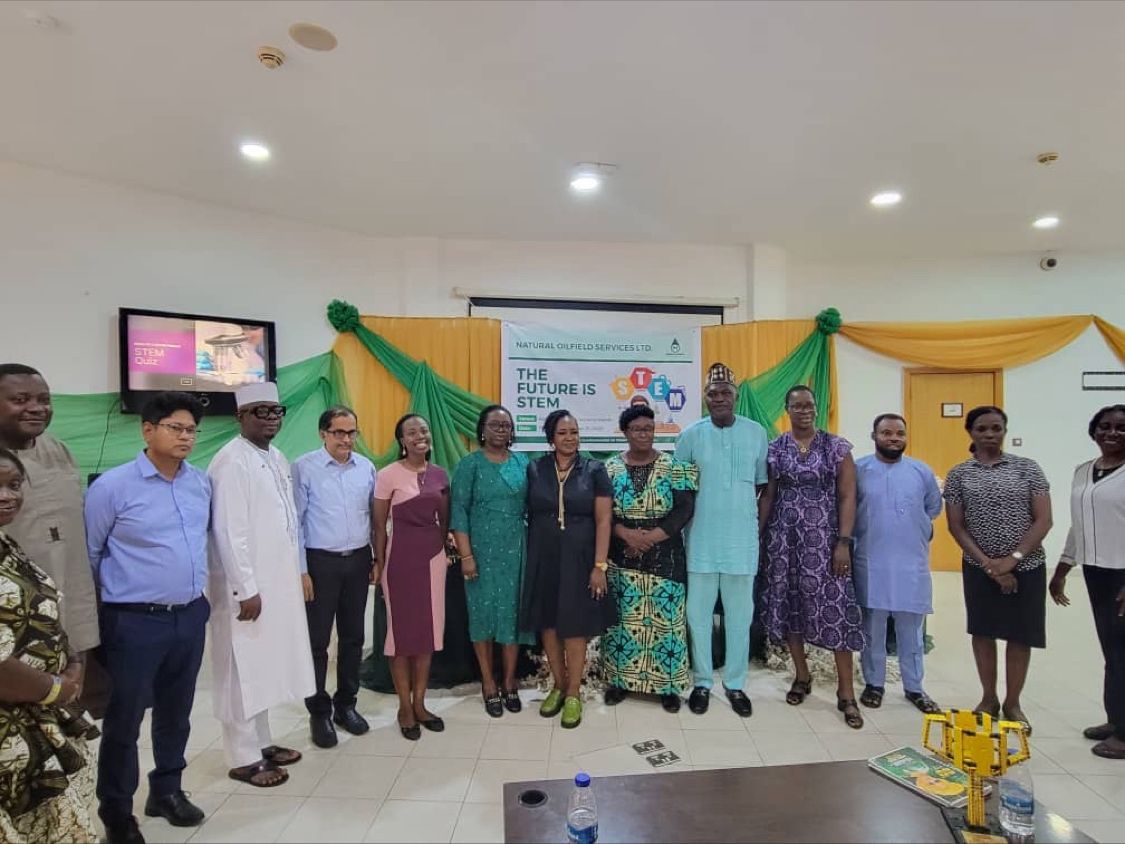
She shared an example of a pilot that changed the government's assumption about digital inclusion itself.
Through the non-profit's community engagement, she realises that beyond internet access, a successful digital skills programme needed to provide people with digital skills, confidence and available opportunities to use the skills.
Digital inclusion wasn't only an infrastructure question, but needed training, mentorship, and continuous support alongside it.
"These insights helped strengthen the focus on digital capacity building, citizen awareness, and inclusive technology programmes within government planning and implementation," she notes.
Kayode-Bolarinwa's interview with Asaase Radio highlighted how her non-profit has rolled out similar programmes for SMEs and entrepreneurs, women and marginalised residents, and youths by leveraging technology as an enabler of the digital economy.
"That is how technology stops being abstract and becomes a force for community development," she said in the interview.
Managing conflicts of interest
While her dual role provides that feedback loop, Kayode-Bolarinwa shares more about how she ensures both roles don't overlap and create conflicts of interest.
"Government resources are never used for the organisation, and any possible conflict of interest is
properly managed," she says, underlining the principles that guide here being transparency, integrity and accountability.
The non-profit also does not act on government instructions, but develops its own views based on the evidence from community engagement and research.
According to her, the distinction allows the non-profit to support the government when the initiatives are working and making progress, but challenge the government by providing honest and constructive recommendations when improvements are needed.
What success means
Not just getting a policy adopted, Kayode-Bolarinwa measures the success of the non-profit through other indicators that "help [them] understand whether [their] work is creating meaningful and lasting impact."
These indicators include the number of people trained, the number of communities reached, citizen participation and feedback received, increased use of digital government services, growing participation from women and young people in technology programmes, newer partnerships formed, as well as time and cost savings achieved by testing ideas before large-scale implementation.
For her, piloting through the non-profit isn't about going straight to government rollout, but also making it cheaper especially given the limited state budget.
On non-profit's advocacy to the government, she advises non-profits to understand how the government works, back every position with evidence, build relationships without losing independence, and bring solutions instead of just problems.
"Finally, be patient and consistent. Real policy change takes time, but organisations that provide credible evidence, work collaboratively, and stay focused on public impact can make a significant difference in improving governance," she says.