
Nopiyanti, Lead Tribe West Java Data Ecosystem, Jabar Digital Service, Indonesia
Meet the Women in GovTech 2025.
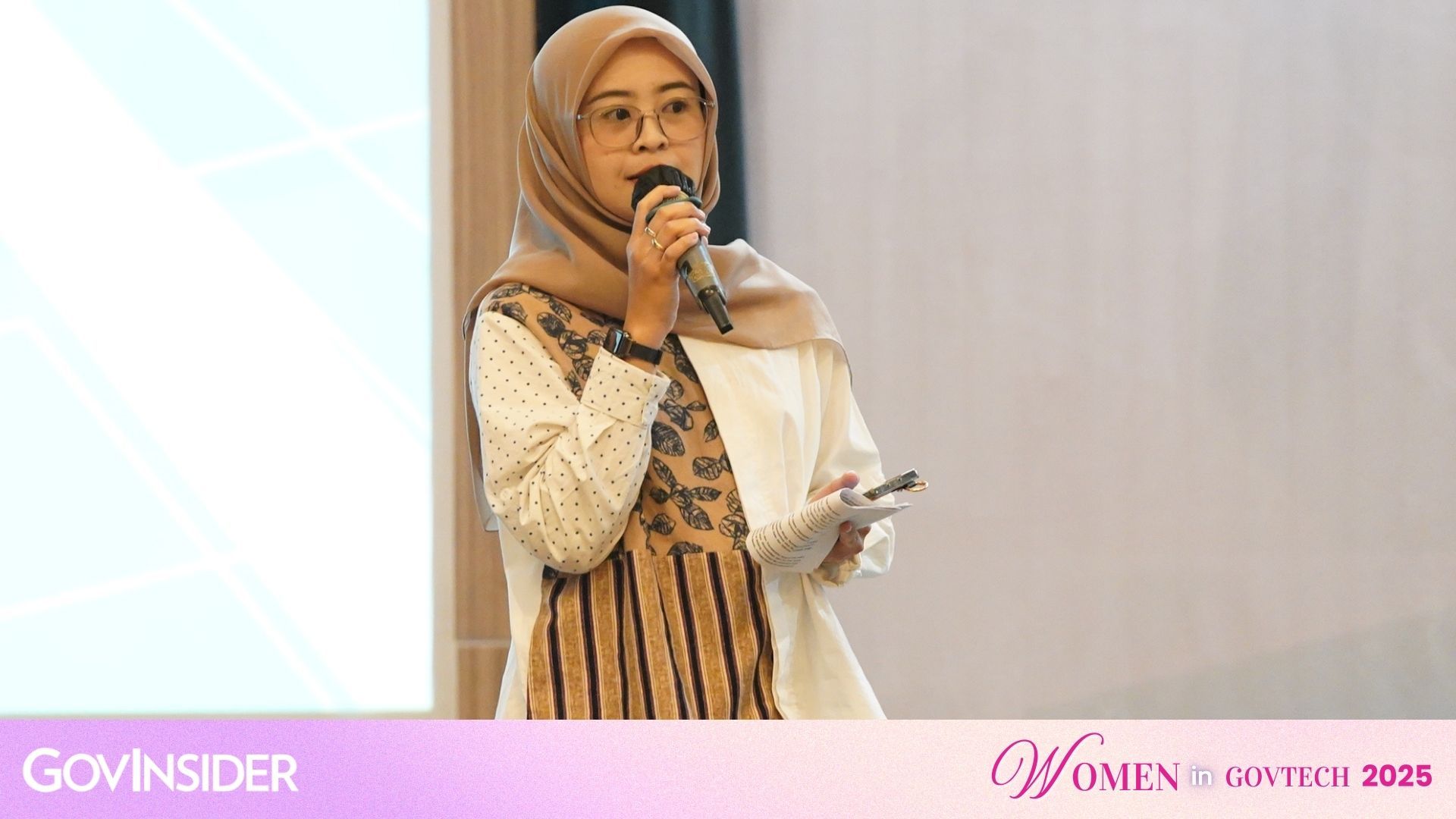
Nopiyanti, Lead Tribe West Java Data Ecosystem, Jabar Digital Service, Indonesia, shares her journey. Image: Jabar Digital Service
1. How do you use your role to ensure that technology and policy are truly inclusive?
Inclusive means ensuring that every citizen, government unit, and stakeholder can access, understand, and utilise data with ease.
I ensure inclusivity through three key approaches:
- User-centred design. Ensuring that the features within One Data, Open Data, and One Map can be used by all regional and city government offices, as well as by the public, regardless of their level of digital literacy.
- Standardisation and interoperability. Ensuring that all data in West Java adheres to consistent standards, metadata, references, and interoperability so that services are not only easy to use but also accurate and well-targeted.
- Capacity-building and empowerment. Through the “Jawara Data” (Data Champions) programme, along with training and support for regional and city government offices, we aim to ensure that all institutions have equal capability to manage, share, and utilise data.
Through this approach, the West Java Data Ecosystem can truly be accessed by all groups.
2. What’s a moment in your career when you saw firsthand how technology or a new policy changed a citizen’s life for the better?
When requests for government data were still processed manually – using physical letters, long waits, and frequent miscommunication – data access was slow and inefficient.
This situation changed with the introduction of the West Java Data Ecosystem. Datasets can now be accessed quickly through One Data, public information is available via Open Data, and thematic maps can be viewed directly through One Map.
Many citizens, students, and researchers have shared testimonials that this improved access has significantly accelerated their work.
That was the moment I truly saw how good data governance can create real improvements in people’s lives.
3. What was the most impactful project you worked on this year, and how did you measure its success in building trust and serving the needs of the public?
The most impactful project I worked on this year was strengthening the West Java Executive Dashboard as part of the West Java Data Ecosystem. This dashboard supports decision-making for our leaders – from the governor and regional secretary to heads of government offices – enabling policies to be made more quickly, accurately, and with measurable outcomes.
Our tribe’s role is to ensure that every figure shown on the dashboard is genuinely trustworthy. This can only be achieved by reinforcing the data foundation through the Core Data Platform, standardising datasets and metadata, ensuring interoperability, and improving data quality across all government units. In other words, the dashboard is not merely a set of attractive visualisations, but a representation of an integrated data system.
This year we also expanded dashboard access to districts/cities, sub-districts, and even villages. The registration and verification process is designed to be secure yet simple, enabling government officials at all levels to benefit equally from data. This is a crucial step towards equalising public service quality across West Java.
4. What was one unexpected lesson you learned this year about designing for real people?
The most important lesson I learned is that building a data ecosystem requires alignment between technology, governance, and organisational culture.
Every component of the ecosystem reinforces one another. Dashboards present the final output, but One Data ensures the standards, Open Data safeguards transparency, and One Map provides spatial context.
This year taught me that digital transformation can only succeed if every part of the ecosystem moves together, disciplined, consistent, and collaborative.
To subscribe to the GovInsider bulletin, click here.
5. We hear a lot about AI. What's a practical example of how AI can be used to make government services more inclusive and trustworthy?
AI can make government services more inclusive by widening access for citizens and assisting those with different needs.
For leaders, AI provides faster, more consistent, and less biased analysis and recommendations, enabling more accurate and trustworthy decision-making.
With proper and transparent implementation, AI becomes an essential enabler for responsive and reliable public services.
6. How are you preparing for the next wave of change in the public sector? What new skill, approach, or technology are you most excited to explore in the coming year?
I prepare by deepening my understanding of data governance and data quality management, as the technical decisions I make directly affect how data is presented and used by many government units.
I also strengthen adaptive leadership to manage changes within a team, handling diverse responsibilities.
Next year, I look forward to smarter data collaboration and automation tools – especially those that can speed up data updating, facilitate cross-agency coordination, and accelerate the process of turning data into insights for leaders.
7. What advice do you have for public sector innovators who want to build a career focused on serving all citizens?
Nurture a strong willingness to learn and a sincere intention to contribute. Working in government requires patience and the ability to understand different perspectives, yet the impact you create can be significant.
Spend time understanding citizens’ needs and how institutions operate. Use creativity and technical skills to make services simpler and more accessible.
Most importantly, always uphold integrity and trust – these are the foundations of any meaningful innovation in the public sector.
8. Who inspires you to build a more inclusive and trustworthy public sector?
As a digital public service developer, I learn a great deal from frontline service officers who interact directly with citizens. Seeing how they respond to daily public needs helps me understand that digital services must be simple, clear, and truly impactful.
They provide me with practical insights that are invaluable in designing more inclusive and trustworthy services.
9. If you had an unlimited budget, what would your dream project be?
I would build a data collaboration centre that brings together data from various government institutions, academics, and partner organisations into one secure and easy-to-use platform.
My goal is simple: to ensure that data can be used more widely to support more accurate policymaking and deliver faster, more accessible public services.
10. Outside tech, what excites you the most?
Outside technology, I am particularly interested in the education sector.
My background as a teacher gives me firsthand insight into how education can change a person’s life opportunities. I continue to follow education issues because improving learning quality is, for me, a fundamental pillar of societal progress.