
Pang Seng Juan, Senior Cybersecurity Consultant at the National Cyber Incident Response Centre, Cyber Security Agency of Singapore
Meet the young public sector officials in the inaugural Young & Official Report 2026.
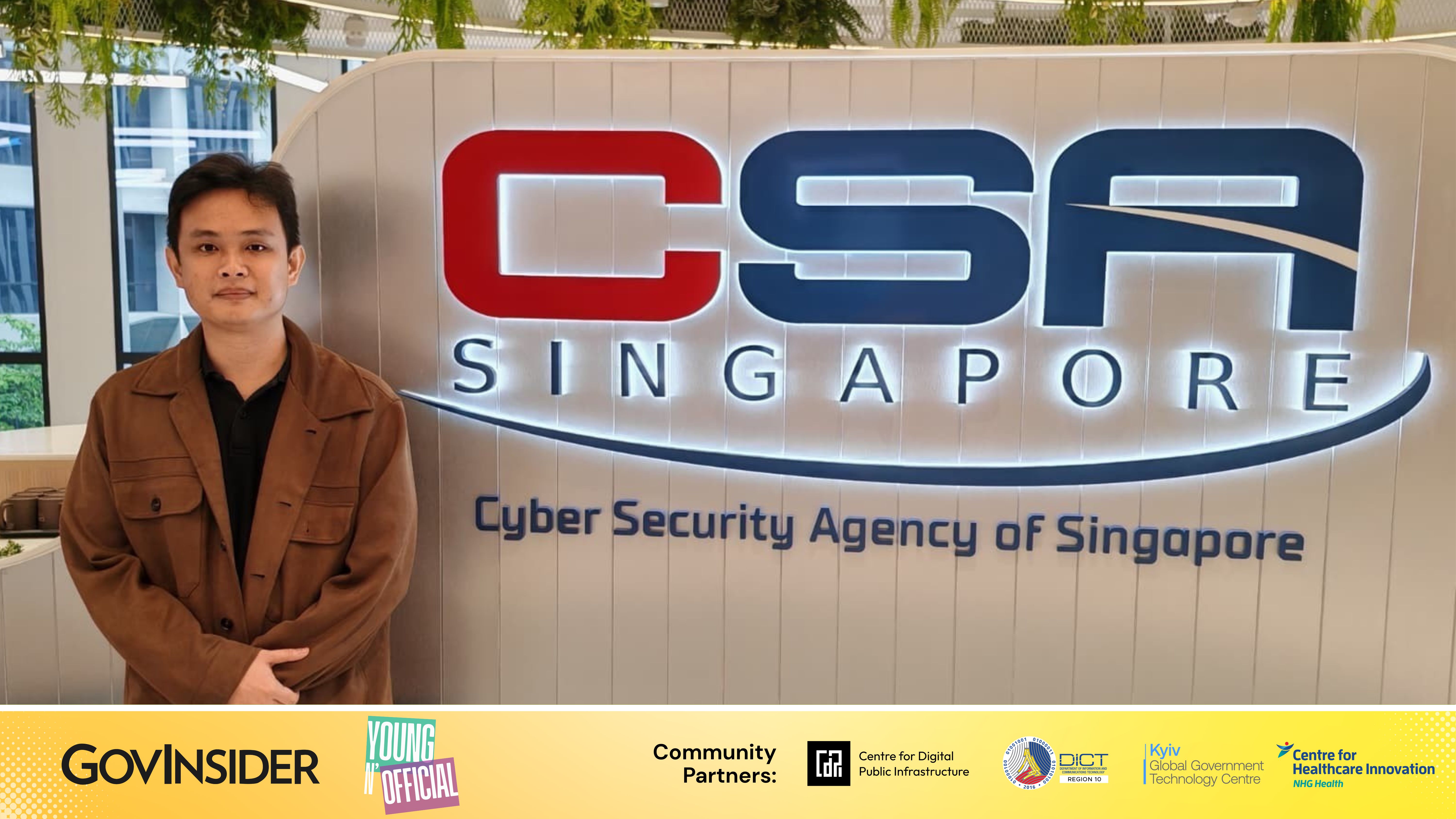
Pang Seng Juan, Senior Cybersecurity Consultant at the National Cyber Incident Response Centre, Cyber Security Agency of Singapore. Image: CSA
1) What does public service mean to you? Can you share more about your role in the public sector?
To me, the purpose of the public service can be encapsulated in one key factor: To serve the greater good of the public.
This is especially true when it comes down to our line of work in the Cyber Security Agency of Singapore (CSA), which is to respond to cyber incidents and keep Singapore’s cyberspace safe.
I serve as an Incident Responder in CSA, where I respond to cyber intrusions that occur in Singapore’s cyberspace.
This role provides me with a sense of fulfilment as I can contribute to our country’s cyber defence while pursuing my passion for Cyber Security.
2) Tell us about a project you championed. What impact did it have on the community?
One of the key operations I was involved in was Operation CYBER GUARDIAN, where I developed multiple innovative detection strategies to identify infected systems more quickly and accurately.
A key part of this involved reverse-engineering multiple malicious tools deployed by the threat actor. This not only improved operational efficiency but also gave our stakeholders the assurance they needed to make timely decisions during the operation.
3) As a young professional, how has your unique background or perspective allowed you to identify a solution that others in your organisation might have overlooked?
I always believed that to understand how a cyber intrusion unfolded as an Incident Responder, we must put ourselves in the position of an attacker.
This has always been my guiding principle when I pursued my passion.
Before joining CSA’s National Cyber Incident Response Centre, I invested time in acquiring knowledge of Offensive Security and Penetration Testing.
This allowed me to apply an attacker’s mindset to dealing with a cyber incident, which grants me another angle on how the incident unfolded and might be different from how officers in other roles might address the issue.
4) What is your personal strategy for maintaining your creative energy when faced with bureaucracy?
Having the right mindset matters. To me, there is a reason for bureaucracy.
If I have a creative idea and bureaucracy presents a roadblock, I will take a step back and re-evaluate the entire issue. It helps to appreciate the reason for bureaucracy, which exists mostly for the purposes of ensuring accountability, stability, or, more importantly, security.
Having an open mindset will allow me to find a balance between creative energy and keeping what is necessary for public service to function impartially.
5) If you had just one area to invest in to accelerate transformation in the public sector (regulation, technology, talent, etc.), which one would you choose and why?
I believe that technology is worth investing in. By equipping the public sector with the right technology, it can be a powerful force multiplier for talent to drive regulatory and technological work.
For example, the entire artificial intelligence (AI) transformation around the world has driven capability development across both the public and private sectors worldwide. Technologies such as AI can replace humans in doing repetitive tasks. However, individuals need to add on what AI could not fully replicate, such as creativity and accountability.
6) What is your greatest ambition as you grow in your public service career?
My greatest ambition is to bring cybersecurity in Singapore to greater heights, such as improving our capabilities in handling cyber intrusions from both the technological and operational perspectives.
7) What is a “universal value” that connects everyone in your department – from interns to directors – and how do you use that to drive collaboration?
One universal value that I believe resonates among people in my department is the drive to always improve our skill sets, be it hard or soft skills.
This is evident in the recent AI transformation around the world, where I saw our team explore opportunities for adopting AI to augment CSA’s capabilities in Incident Response.
We can use this need for improvement as a core driver to push technical competency and operational effectiveness to the next level.
8) What is the best piece of advice you’ve got for the next generation of public servants?
To always strive for self-improvement, and to give yourself the time and space to grow.
As long as you have the drive and are committed to the mission, you will make a difference no matter where you serve.
9) What is a myth you wish to debunk about young public servants?
There is a myth that public servants are only good at administrative processes and paperwork, no matter whether they are young or old.
I wish to debunk this as I have seen multiple talented individuals, especially younger ones, who contributed their efforts to CSA’s mission.
From Incident Responders to Penetration Testers, all of them are talented individuals whom I have the privilege of knowing.
10) Write a letter to your future self in 2035. Please keep it within 200 words.
Good day, I hope that you are doing well in 2035, and I certainly hope you have made a difference in all these years leading up to 2035.
The latest revolution is the adoption of AI into our daily lives. Who knows what might shake up the world till then. No matter what technological changes are up ahead, I hope you are ready for them.
Never forget the drive you had when you were young, the hunger to do better. And most importantly, do not forget all the friends and bosses who brought you to where you are today. While we continue towards the end goal, remember to slow down and appreciate the journey.
In 2035 and beyond, let’s continue to play a part in defending Singapore’s cyberspace.