
Pearlyn Chee, Senior Staff Nurse, Community Health (Population Health), NHG Health, Singapore
Meet the young public sector officials in the inaugural Young & Official Report 2026.
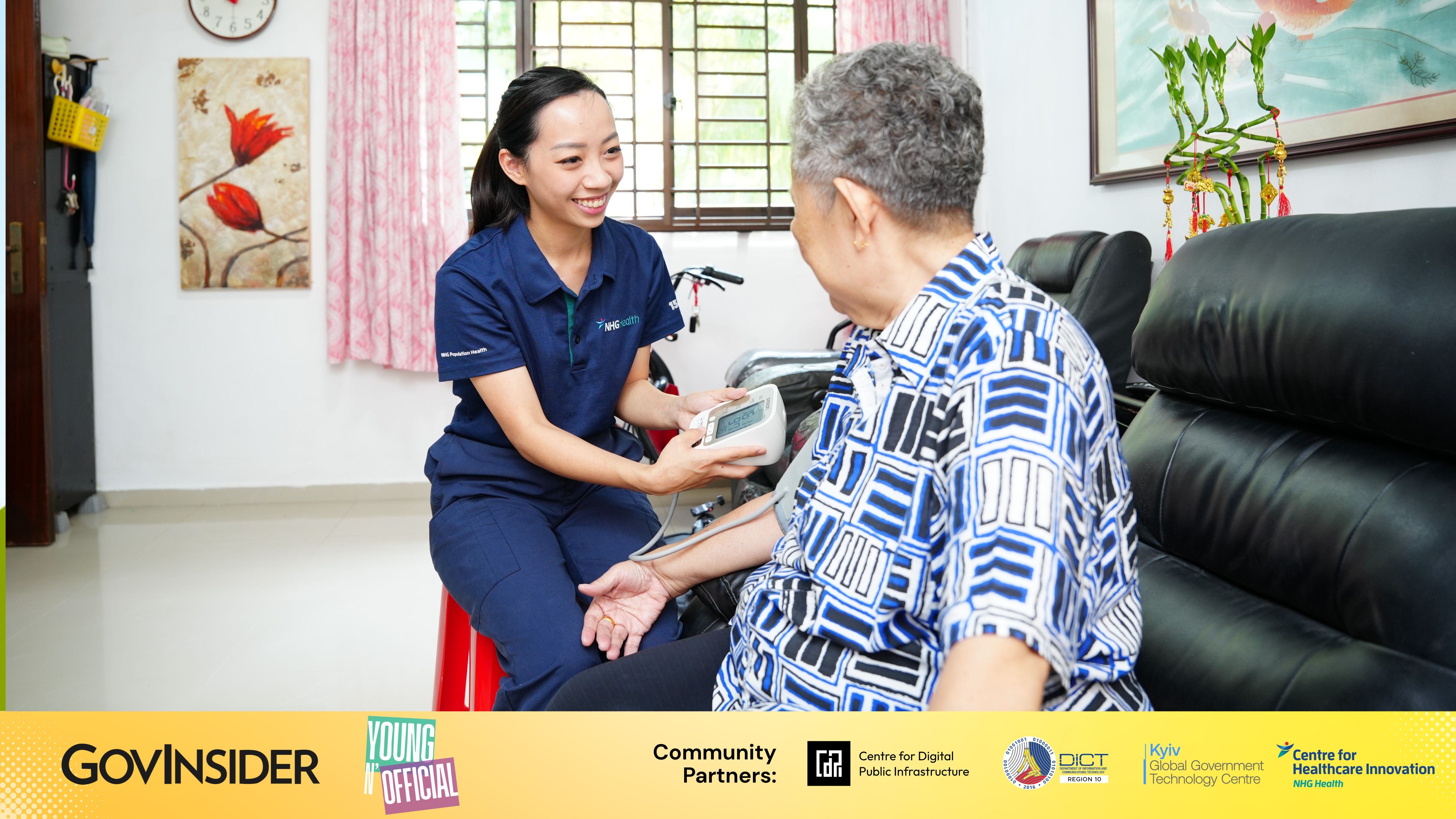
Pearlyn Chee, Senior Staff Nurse, Community Health (Population Health), NHG Health, Singapore. Image: NHG Health.
1) What does public service mean to you? Can you share more about your role in the public sector?
My role as a community nurse within the NHG Community Health team is unique in that I serve as a bridge between acute hospital care and community or step-down services.
Rather than focusing solely on a diagnosis, I support residents across their care journey. Care is no longer confined to hospital wards; it extends into the neighbourhoods where residents live, recover, and age.
Whether I am delivering complex clinical care in the home or leading services at a community health post, my purpose is to ensure healthcare remains continuous and integrated, supporting residents as a steady presence in their daily lives rather than as a series of fragmented encounters.
2) Tell us about a project you championed. What impact did it have on the community?
I piloted a blood pressure and diabetes education workshop at our community health posts in partnership with Active Ageing Centres.
This initiative was designed to reach residents who might otherwise fall through the cracks of the healthcare system, translating clinical knowledge into accessible preventive health education.
The programme focused on empowering residents to better manage their chronic conditions through self‑monitoring, basic interpretation of readings, and clear escalation guidance on when to seek medical attention.
By strengthening residents’ confidence and health literacy, the initiative helped to reduce unnecessary hospital readmissions.
More importantly, it fostered a culture of proactive health management within the community, strengthened trust between residents and health and social care providers, and reinforced the social support needed for residents to age in place.
3) As a young professional, how has your unique background or perspective allowed you to identify a solution that others in your organisation might have overlooked?
Having the opportunity to be trained in both the acute and community settings has given me a frontline view of the gaps that often emerge once residents return home.
While discharge plans may be clinically sound, they do not always align with the realities of a resident’s daily environment, social context, or available support.
This perspective led me to advocate for a transdisciplinary competency model within our care teams, one where nurses are equipped to assess social determinants alongside clinical needs.
I identified the need for more personalised transitional roadmaps that incorporate residents’ psychosocial environments.
This ensures care plans are practical, sustainable, and relevant beyond the hospital setting. By shifting from a purely clinical lens to a holistic, person‑centred approach, we are better able to tailor preventive strategies and support residents in managing their health more effectively in the community.
4) What is your personal strategy for maintaining your creative energy when faced with bureaucracy?
I believe in taking action and leading by example.
While administrative processes are essential safeguards for quality and accountability, I consciously balance them by focusing on the direct impact of care on residents and communities.
I encourage my peers to view bureaucracy as a work‑design challenge rather than a barrier, shifting our thinking to “How can we better refine workflows to give more space for relationship-based care?”
Being able to witness a resident age in place successfully definitely provides a strong sense of purpose that far outweighs the hurdles we may face administratively. Our purpose and focus are always to put our patients' care and well-being first.
5) If you had just one area to invest in to accelerate transformation in the public sector (regulation, technology, talent, etc.), which one would you choose and why?
It would be in talent and the development of transdisciplinary capabilities. Sustainable transformation depends on a future‑ready workforce that can confidently navigate the space between hospital and home.
By upskilling nurses in population health management and community leadership, we enable them to function as anchors of Communities of Care. Investing in people allows us to scale organisational efforts more effectively, balancing cost pressures while delivering higher‑quality, person‑centred care that supports residents across different stages of life.
6) What is your greatest ambition as you grow in your public service career?
My ambition is to lead the evolution of nursing to become a powerhouse in population health.
I envision a future where every neighbourhood is a thriving Community of Care, supported by nurses who are as comfortable in a resident’s living room as they are in a well-equipped ward. I aspire to forge ahead to explore integrated care models that eliminate silos between social and medical services, aiming to add years of healthy life to our residents
7) What is a “universal value” that connects everyone in your department – from interns to directors – and how do you use that to drive collaboration?
A shared commitment to collective responsibility unites everyone in our Community Health teams. We work as one alliance across hospitals, polyclinics, and community partners, guided by the understanding that no single discipline or organisation can meet residents’ needs alone.
This shared mindset allows us to view the resident’s care journey through a common lens. By prioritising collective outcomes over individual departmental goals, we can collaborate more effectively and deliver a seamless, borderless care experience, one that follows residents across settings and supports them consistently wherever they go.
8) What is the best piece of advice you’ve got for the next generation of public servants?
We think like a citizen but lead like a system thinker.
As much as technical expertise lays our foundation, our true strength lies in building bridges and embracing the mindset of nursing beyond nurses.
Looking past an individual entity to the whole community ecosystem. We must be courageous to break institutional silos and move from merely providing services to enhancing community resilience.
Stay grounded in contributing to a resident’s last mile, yet strategically steer the community towards prevention. You are an essential contributor to our nation’s lifelong wellness and prosperity.
9) What is a myth you wish to debunk about the young generation?
A common myth is that we are interested only in disruption for its own sake, or that we lack the experience to steward change responsibly.
In reality, many of us are deeply committed to thoughtful, evolutionary excellence. We respect clinical traditions while possessing the agility to evolve them.
Our frontline roles – particularly in community settings – give us a grounded perspective on how policies translate into real‑world experiences. This perspective allows us to identify gaps from multiple viewpoints and build trusted relationships that anchor care more effectively within the community.
10) Write a letter to your future self in 2035. Please keep it within 200 words.
Dear Self,
I hope that by 2035, the efforts we have seeded in the community have become a thriving, self-sustaining ecosystem. I hope you look back not only at your own achievements, but also at the growth of the peers and nurses you have mentored.
Seeing them lead with the same ground-up empathy and clinical wisdom we championed and advocated in Community Health.
I hope you have remained a dedicated steward of the mission, finding your greatest fulfilment in serving the community.
Whether you are still on the ground or supporting the system from a different lens, our focus remains steadfast in achieving evolutionary excellence.
I hope you are proud to have played a small and faithful part in our patient care.
Stay humble, stay selfless, and continue to invest in the next generation, for their success is our greatest contribution.