
Preparing Singapore’s next generation of AI leaders
By Workato
On the sidelines of the World of Workato event, GovInsider speaks with Workato’s Senior Vice President & General Manager, APAC, June Lee, on the gaps that Singapore needed to fill to ensure its global AI hub standing.

To create a sustainable ecosystem of talent, Workato’s Senior Vice President & General Manager, APAC, June Lee says that AI skills development needs to focus on empowering public servants to work alongside AI, and not just to implement AI. Image: Canva
In Singapore, there is currently a capacity gap between the nation’s ambition and delivery in artificial intelligence (AI) skills.
In July, Singapore’s Minister for Digital Development and Information, Josephine Teo, said the country needs a larger number of competent AI users than earlier estimated to ensure continuing innovation.
Despite Singapore’s status as a regional leader in Asia Pacific in AI adoption and skills development (ranking first in the AI Maturity Index), the shortage of AI talent remains a challenge.
According to Workato’s Senior Vice President & General Manager, APAC, June Lee, this AI skills gap is due to the shift from execution to intelligence augmentation.
Previously, the automation era demanded talent who could implement and manage rules-based systems for repetitive, predictable tasks with clear instructions, says Lee.
But the AI skills gap today is fundamentally different.
“It's about finding professionals who can strategically orchestrate AI systems to handle complex, dynamic problems that require continuous learning and adaptation,” she explains.
She highlighted the dual challenge of both the depth of skillsets and time needed to develop such capabilities.
"Developing AI strategic thinking capabilities requires years due to the need for advanced technical knowledge in data science, machine learning, and neural networks, combined with the higher-level thinking to manage unpredictable, evolving AI outcomes,” she adds.
For the public sector, this talent bottleneck slows down the deployment of AI for policymaking and citizen service delivery.
To subscribe to the GovInsider bulletin, click here.
Bridging the gap
Since 2022, Workato has partnered with institutes of higher learning (IHLs) in Singapore to provide industry-relevant engagement and training opportunities for students and mid-career professionals in the field of automation.
“The AI Institute Alliance was a natural next step of these efforts, creating pathways for the next generation of AI talents to drive meaningful impact across enterprises,” she adds.
The initiative trains students and educators with advanced enterprise-level automation skills, complemented by certification to help them achieve greater professional impact. Workato also facilitates direct industry connections between the IHLs and leading businesses in automation.
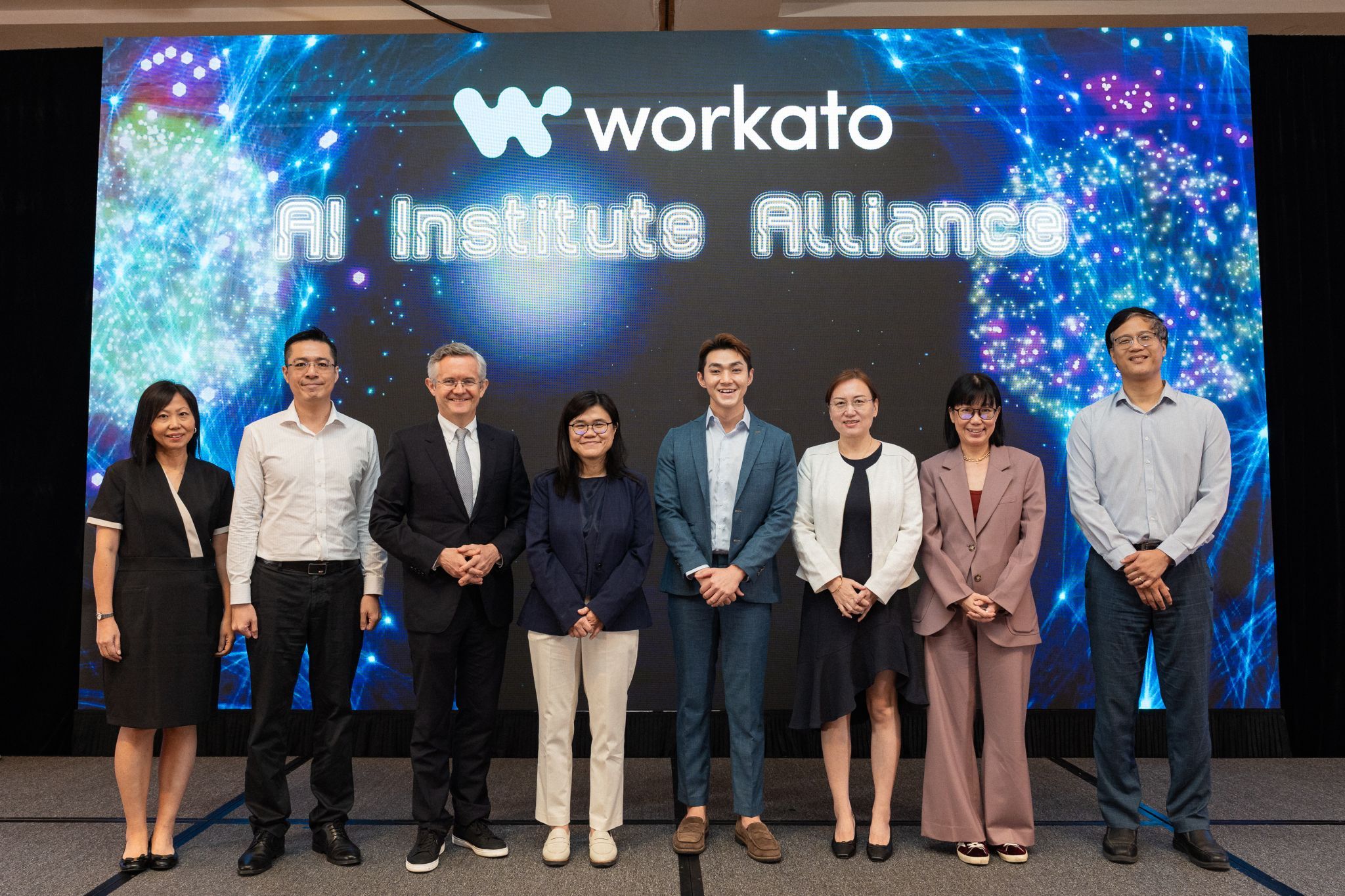
She notes that deep domain expertise was a key capacity raised by Workato’s public sector customers.
While AI acts as a skilled apprentice, it still requires knowledgeable experts to direct it, validate its output, and ensure decisions align with broader organisational strategies.
“At its core, the AI Institute Alliance aims to cultivate a new generation of tech leaders, professionals who not only understand AI but can also shape, supervise, and align it with organisational strategy, ethics, and long-term goals,” says Lee.
Public service as the benchmark of AI skills
To create a sustainable ecosystem of talent, Lee says that the next wave of skills development needs to focus on empowering public servants to work alongside AI, and not just to implement AI.
This means equipping non-technical individuals with the confidence and skills to integrate AI into their work.
For example, Workato supported IMDA’s Human Capital Cluster (HCC) and the Digital Transformation Office (DTO) to improve the latter’s daily work, from handling emails and administrative tasks to managing scholarship programmes, cutting down response times significantly.
“We help agencies identify operational pain points where AI agents enhance workflows, ensuring the workforce collaborates with technology rather than feels replaced, while matching each department's technical maturity level,” Lee says.
Beyond direct implementation, Workato also fosters AI literacy through experiential learning, Lee adds.
Workato is collaborating with government agencies on initiatives, like the Work Revolution National Developer Challenge, to encourage non-technical individuals to get hands-on experience creating practical automation and AI solutions.
Leading the AI charge
Public sector leaders also play a pivotal role in shaping organisational policies that balance technology with human expertise, Lee says.
“We prepare leaders to ensure balanced AI training that integrates technical capabilities with enhanced problem-solving, creativity, and strategic thinking skills.”
This allows employees to focus on higher-level policy and service delivery.
Human judgment remains vital in public sector decision-making because the nuanced needs of citizens and policy implications cannot be automated.
At the same time, Lee recognises that public sector leaders must balance innovation with public trust and accountability.
Workato’s governance-first approach emphasises robust frameworks that address data privacy, ethical use, and systemic transparency from the outset.
Lee points to knowledge search as a key challenge, noting that public agencies operate with complex legacy systems and data silos.
Since critical information is fragmented across emails and various document repositories, employees struggle to locate and access the necessary data.
“Our training focuses on creating cohesive and common data platforms that enable advanced technologies like AI Agents, giving them comprehensive access to relevant enterprise knowledge while maintaining security and compliance standards.
“Most importantly, we prepare professionals to understand that successful integration creates the foundation for transformative AI applications. Once robust integration and data platforms are operational, agencies can truly embark on agentic AI use cases,” Lee explains.

Lee encourages leaders to build organisational trust by being transparent about AI's impact on job security and evolving requirements.
This includes creating collaborative forums where employees contribute to how AI is applied, recognising that frontline officers often best understand operational challenges and citizen needs.
Workato’s event focused on real-world AI agent applications operating at scale, exploring how enterprises can accelerate into the agentic era where autonomous systems, governance and integration shape the future of work.
Through hands-on activities like the AI Builder, System Shaper, and Experience Maker workshops, attendees learnt to build, deploy, and operate AI agents relevant to public sector challenges.
“Our goal is to lower the barrier and reduce hesitance around AI adoption, empowering attendees with both the technical knowledge and strategic confidence to champion AI initiatives within their agencies and drive meaningful digital transformation in Singapore's public sector,” Lee says.