
Prof Dildora Mukhammedieva, Department of Software Engineering, Tashkent University of Information Technologies, Uzbekistan
By James Yau
Meet the Women in GovTech 2025.
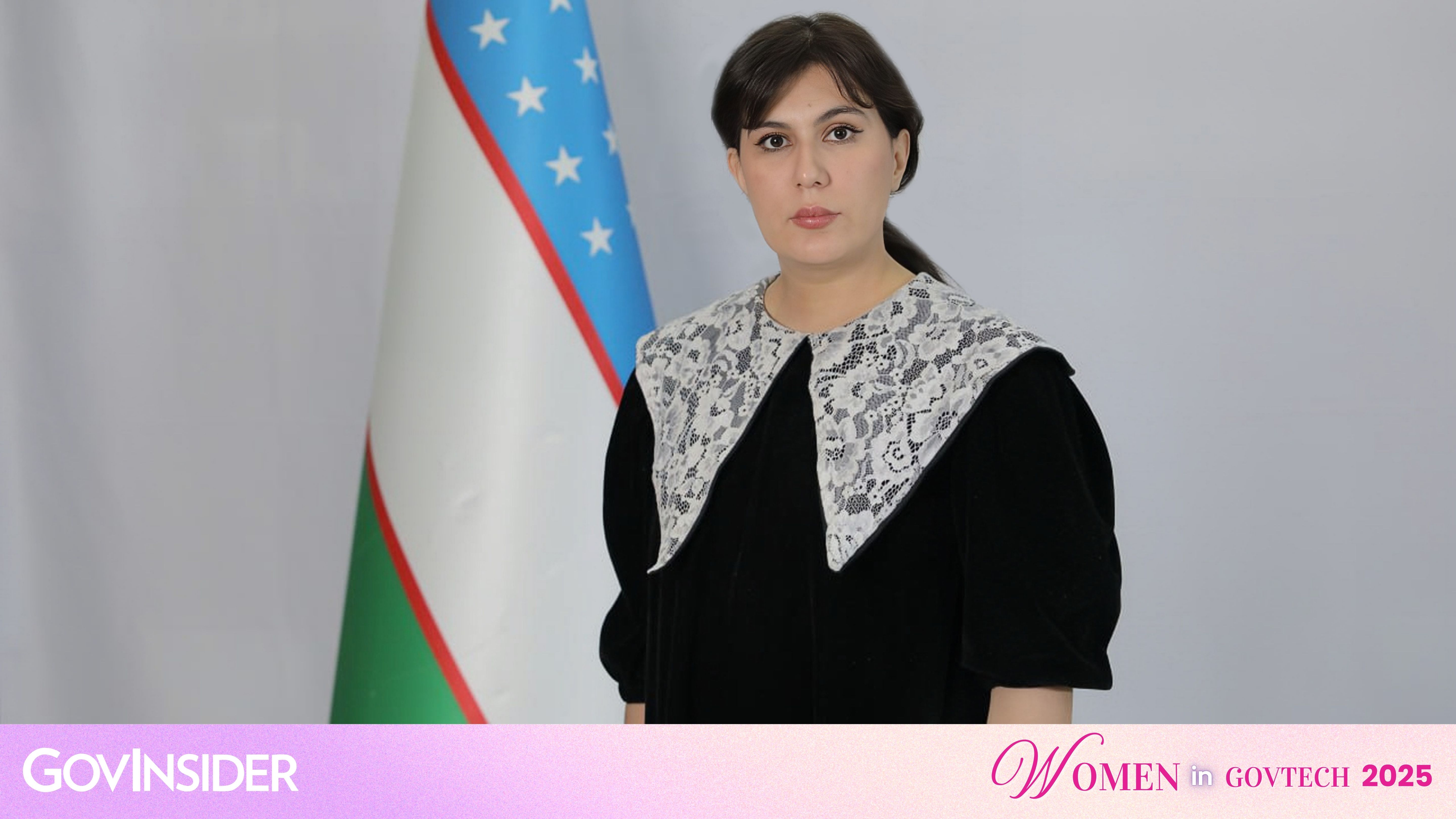
Prof Dildora Mukhammedieva, Department of Software Engineering, Tashkent University of Information Technologies, shares about her journey. Image: Prof Dildora Mukhammedieva
1) How do you use your role to ensure that technology and policy are truly inclusive?
As a researcher and lecturer at the Tashkent University of Information Technologies, I lead a national project on early breast cancer detection using artificial intelligence. My main goal is to make advanced medical technologies accessible to every woman in Uzbekistan, including those in remote regions.
Inclusivity for me means ensuring that diagnostic tools, algorithms, and data policies consider all social groups - not just those in large urban hospitals.
We are currently developing an AI system that can analyse mammographic images with minimal hardware requirements, enabling rural clinics to use it without expensive infrastructure.
2) What’s a moment in your career when you saw firsthand how technology or a new policy changed a citizen’s life for the better?
During our pilot testing phase, one woman in her mid-30s was diagnosed at an early stage of breast cancer thanks to our AI system. Traditional screening would not have detected it so soon.
Her successful treatment reaffirmed why this project matters - technology truly has the power to save lives when applied ethically and inclusively.
3) What was the most impactful project you worked on this year, and how did you measure its success in building trust and serving the needs of the public?
The most impactful project this year has been the AI-based early breast cancer detection system, funded by the Uzbekistan “Olima” Grant Program with a budget of 1 billion UZS. Our team of twelve young female researchers achieved a diagnostic accuracy of 97 per cent, validated through clinical image datasets.
The project’s success was measured not only through technical precision but also through its social impact - the number of women screened, regional hospitals participating, and awareness campaigns we launched in cooperation with local healthcare authorities.
Building public trust means transparency in how our AI makes decisions and continuous collaboration with medical professionals.
4) What was one unexpected lesson you learned this year about designing for real people? This can be about a specific project or a broader lesson about your work.
I learned that technology adoption is not only about algorithms but also about empathy. Many patients feel anxious about “machines deciding their health.” We had to design our interface and communication materials carefully - to explain results in understandable, human language.
This experience reminded me that inclusivity begins with emotional understanding, not just data design.
5) We hear a lot about AI. What's a practical example of how AI can be used to make government services more inclusive and trustworthy?
AI can act as a bridge between limited human resources and the growing demand for social services. For example, our diagnostic system can assist doctors in regional clinics, ensuring that women in small towns receive the same quality of healthcare as those in Tashkent.
Similarly, AI could be used to detect early signs of other diseases, optimize hospital resource allocation, or even translate medical information into Uzbek, Russian, and Karakalpak languages automatically - making healthcare communication more equitable.
To subscribe to the GovInsider bulletin, click here.
6) How are you preparing for the next wave of change in the public sector? What new skill, approach, or technology are you most excited to explore in the coming year?
We are now focusing on expanding the use of artificial intelligence and big data analytics in healthcare to make diagnostics faster, more accurate, and more accessible for everyone. Our next step is to create cloud-based medical platforms that allow hospitals and clinics across Uzbekistan to share and analyse anonymised diagnostic data securely.
Personally, I’m excited to deepen my expertise in machine learning model optimisation and explainable AI, to make algorithms more transparent and trustworthy.
I also plan to continue mentoring young female researchers and promoting AI education for medical professionals, so that technology becomes a natural and ethical part of public healthcare.
7) What advice do you have for public sector innovators who want to build a career focused on serving all citizens?
Start with empathy, and let data follow. Understand people’s real problems - especially those who are often unheard. Work transparently, and never treat innovation as a privilege of a few.
True digital transformation in the public sector must serve inclusivity, ethics, and long-term social benefit above all else.
8) Who inspires you to build a more inclusive and trustworthy public sector?
My greatest inspiration is my mother. She is an incredible hard worker - truly a role model for dedication and perseverance. She never stops improving herself and recently was recognised among the Top 30 most influential people in the field of Artificial Intelligence.
Watching her balance humanity, intelligence, and discipline taught me that success is not about recognition, but about continuous service to others. Her example drives me to lead projects that unite compassion with innovation.
9) If you had an unlimited budget, what would your dream project be?
My dream project would focus on supporting children in the Tashkent hospice - providing them with not only medical care but also emotional and educational support through technology and community programs.
I would also invest in global research to develop an effective vaccine against cancer, so that future generations could live in a world where this disease no longer exists. Combining compassion with science is, to me, the highest form of innovation.
10) Outside tech, what excites you the most?
I am deeply passionate about science, teaching, and mentoring. I have successfully supervised five PhD students, publish regularly in Scopus-indexed journals, and currently teach at three universities.
Beyond academia, I also work as a private tutor, helping young people discover their potential in mathematics and programming. Education is my lifelong calling - it allows me to share knowledge, inspire others, and continue learning myself.