
Prof Yeong Wai Yee, School of Mechanical & Aerospace Engineering, Nanyang Technological University (NTU), Singapore
Meet the Women in GovTech 2025
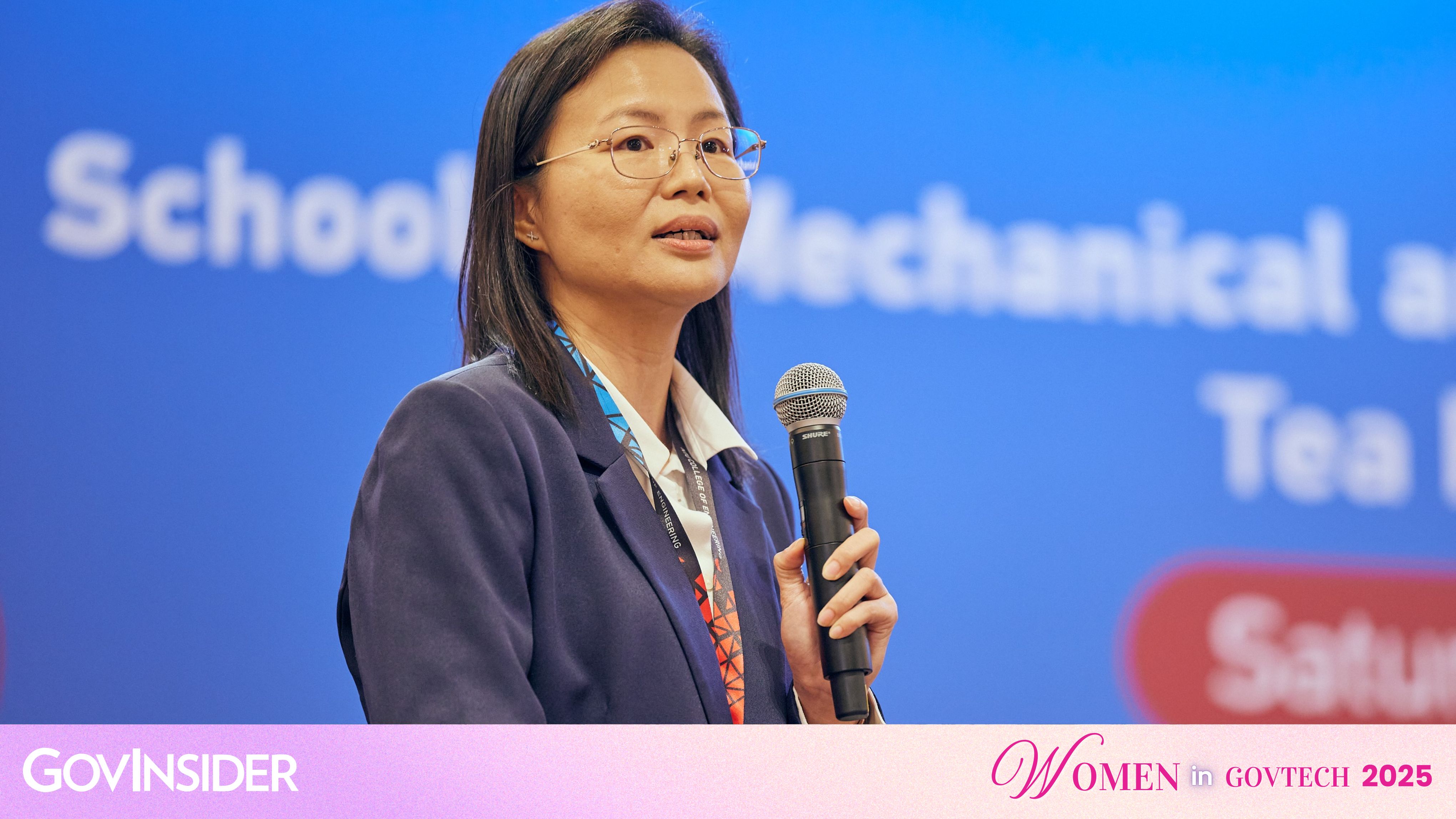
Prof Yeong Wai Yee, School of Mechanical & Aerospace Engineering, Nanyang Technological University, Singapore, shares her journey. Image: NTU Singapore.
1) How do you use your role to ensure that technology and policy are truly inclusive?
As a professor and chair of the School of Mechanical & Aerospace Engineering at Nanyang Technological University, Singapore (NTU Singapore), we prepare our students to be the next generation of tech builders and practitioners.
To be truly inclusive means diversity must start at the point when a policy or solution is first being formulated.
In this respect, we must train our students to be technically competent, coupled with an inclusive worldview, so that they are able to contribute significantly to an inclusive society.
2) What’s a moment in your career when you saw firsthand how technology or a new policy changed a citizen’s life for the better?
A recent example involved cyborg cockroaches from Singapore sent to Myanmar to assist with search-and-rescue efforts in the wake of an earthquake.
This high-tech project was developed by NTU in a long-term collaboration with the Home Team Science & Technology Agency (HTX).
Such technologies represent a step towards a safer future for all.
3) What was the most impactful project you worked on this year, and how did you measure its success in building trust and serving the needs of the public?
In 2025, we organised a meeting where we brought together the chairs and deans of mechanical engineering from seven top universities across Asia to meet in Singapore.
This gave us a platform to co-create new initiatives in science and technology focused on Asia.
We also deepened our understanding of multi-faceted cultures in the region and their impact on our students and scientists.
Efforts like this allow us to build trust and develop new technologies that serve the needs of societies.
4) What was one unexpected lesson you learned this year about designing for real people? This can be about a specific project or a broader lesson about your work.
In education programmes we conduct at NTU, we now place a refreshed commitment to offer service learning alongside skills-building programmes to our students.
In designing our school’s service-learning programme, I learnt that every one of us has our own aspirations, expectations and understanding of society.
We need to be able to understand one another, to provide meaningful and sustainable services to the public and society.
In addition, it is not always a one-sided relationship where only those who are being served benefit from the service.
In fact, in many cases, those who serve are also learners who gain from the experience.
5) We hear a lot about AI. What's a practical example of how AI can be used to make government services more inclusive and trustworthy?
I am particularly interested in using artificial intelligence (AI) for education – not just for pursuing the conventional definition of academic excellence, but also as a tool to help us maximise the potential of every single child or student.
We can create a more inclusive education environment and achieve customised outcomes for students, as well as allow them to recognise and realise their core strengths with the help of AI educational tools.
This will truly lay down the foundations of inclusiveness for our society.
6) How are you preparing for the next wave of change in the public sector? What new skill, approach, or technology are you most excited to explore in the coming year?
As Singapore becomes a super-aged society, we need more automation and robotics technologies for our society and industries.
This is why we launched dedicated undergraduate and master’s programmes in robotics in 2025 to meet the demands of the future.
In addition, I believe that the next peak in manufacturing will be driven by smart systems and intelligent design, in which industrial AI, 3D printing and generative design will be merged into a collaborative network of advanced manufacturing technologies.
I am excited to create new connectivity between these key technological areas.
7) What advice do you have for public sector innovators who want to build a career focused on serving all citizens?
My biggest advice is: don’t “label” people in datasets or technologies.
When developing new solutions or technologies, we tend to place a label on certain types of characteristics or groups of people to quickly and easily describe them collectively.
Such labelling may be needed as a project’s design requires it, or if the labelling is a standard practice to improve operational efficiency.
To subscribe to the GovInsider bulletin, click here.
In the age of AI, this is even more critical as we always need to label our datasets.
But my advice is to always think about what such labels mean to the people being labelled. This is because some labels can perpetuate harmful stereotypes that can divide or exclude some groups of people.
8) Who inspires you to build a more inclusive and trustworthy public sector?
The Pioneer Generation of Singapore inspires me!
They rose above many challenges to build an advanced society from almost nothing.
If they can do such a great job with little to no resources, there is no reason for us not to build on their success and hold society to higher standards of inclusiveness and trustworthiness.
9) If you had an unlimited budget, what would your dream project be?
As a scientist, I conduct research on new 3D bioprinting technology for tissue engineering.
If I had an unlimited budget, I would develop a range of lab-grown tissues mimicking animal tissues that could fully replace the use of animals in testing biomaterials, drugs or cosmetic compounds.
Currently, my team is working on creating bionic, artificially engineered tissues and bioelectronic systems.
By using electricity to stimulate these tissues and detecting what’s happening in them, we aim to help the tissues grow, develop and mature over time while monitoring their progress.
10) Outside tech, what excites you the most?
I enjoy learning about history and art from different cultures.
Every time I go to a new place, I will visit museums to get a crash course on the local history and art.
Ancient craft and production technologies are most fascinating!