
Queena Tan, Assistant Manager, Patient Experience Office, Khoo Teck Puat Hospital, NHG Health, Singapore
Meet the young public sector officials in the inaugural Young & Official Report 2026.
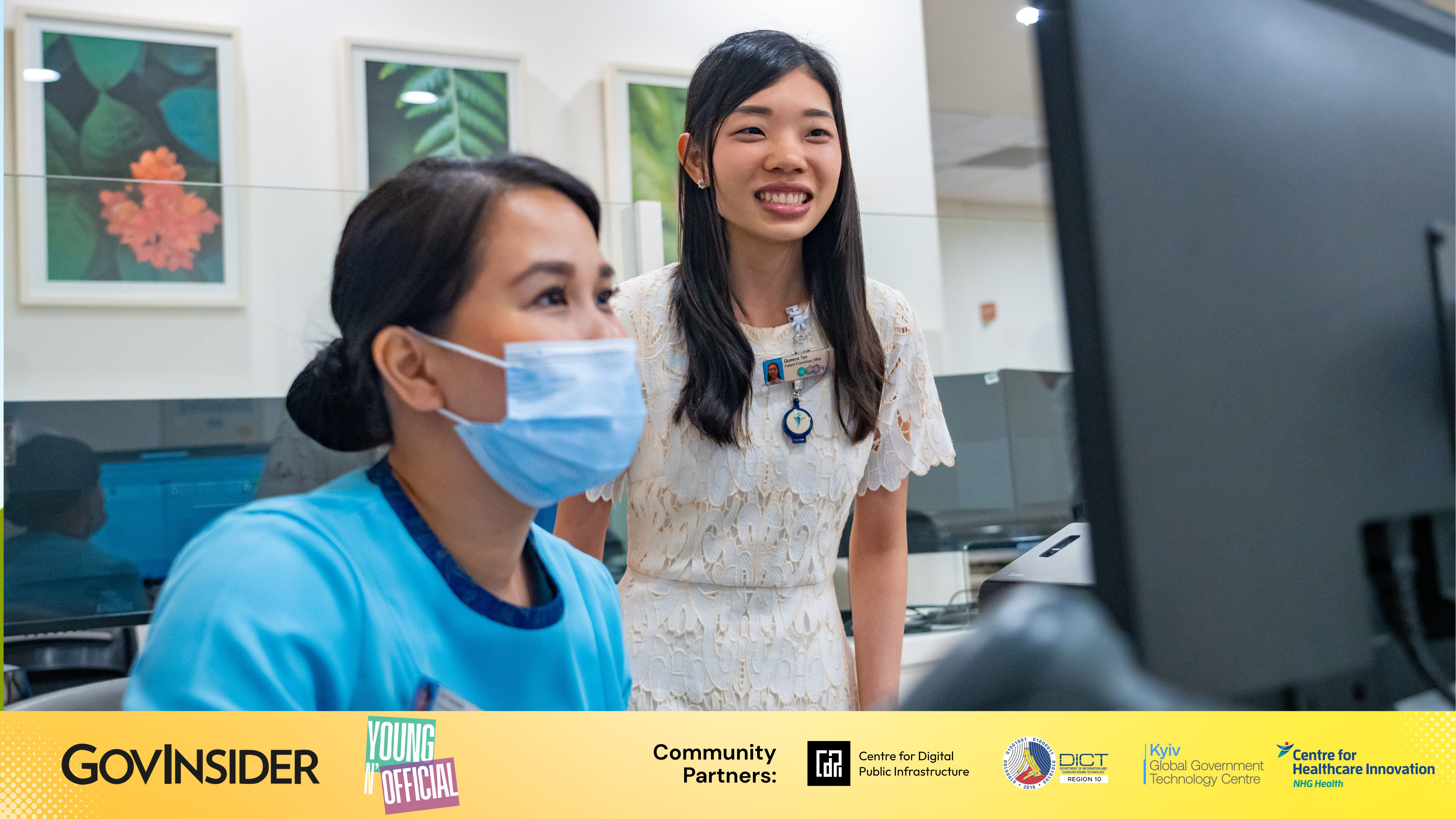
Queena Tan, Assistant Manager, Patient Experience Office, Khoo Teck Puat Hospital, NHG Health, Singapore. Image: NHG Health.
1) What does public service mean to you? Can you share more about your role in the public sector?
Public service, to me, is about serving people in meaningful and lasting ways, with a focus on long-term impact on the community.
I work in a public healthcare institution within the Patient Experience Office, where I support patient experience and service excellence.
While my role is often seen as managing patient feedback, it extends far beyond that. I serve as a bridge between healthcare providers, patients, and their families, facilitating communication, aligning perspectives, and working towards better care outcomes.
A key part of my work is driving the Khoo Tech Puat Hospital (KTPH) & Yishun Community Hospital (YCH) L.O.V.E Service Philosophy, which guides how we care for patients and partners: Listening to Understand, Offering Help Proactively, Value-Adding with Wisdom, and Engaging with Empathy.
Patients often come from places of anxiety and uncertainty, while healthcare professionals approach situations through clinical lenses.
By bridging these perspectives, I help ensure that care is not only clinically sound but also compassionate and human-centred - and that both patients and staff feel genuinely heard.
2) Tell us about a project you championed. What impact did it have on the community?
I championed a two-part initiative to embed the KTPH & YCH L.O.V.E Service Philosophy across healthcare teams.
I developed the training materials for a staff e-learning module to establish a shared understanding of the L.O.V.E Service Philosophy and its principles:
-
Listen to Understand – being patient-centric by actively hearing feedback
-
Offer Help Proactively – anticipating needs and responding promptly
-
Value-Add with Wisdom – prioritising quality and safety through teamwork
-
Engage with Empathy – building relationships through compassionate care
This was followed by facilitating in-person discussions across different staff groups.
To date, over 200 staff have attended the session. The sessions focused on dialogue – encouraging colleagues to better understand one another’s roles, perspectives, and contributions along the care journey. This helped translate the philosophy into everyday behaviours.
The initiative strengthened team cohesion, deepened cross-disciplinary understanding, and reinforced how small actions in communication can significantly improve patient experience.
Ultimately, it contributed to a more consistent and compassionate standard of care.
3) As a young professional, how has your unique background or perspective allowed you to identify a solution that others in your organisations might have overlooked?
In the Patient Experience Office, I hear directly from patients about their experiences while working closely with healthcare teams across departments.
This dual exposure provides a perspective that bridges both care delivery and patient experience. By connecting these insights, I can identify opportunities that may otherwise be overlooked and propose solutions that balance patient needs with operational realities.
Grounded in the L.O.V.E Service Philosophy, this allows me to contribute ideas that are empathetic, practical, and aligned with delivering better care.
4) What is your personal strategy for maintaining your creative energy when faced with bureaucracy?
It starts with mindset. I remind myself why I do this work and who I ultimately serve.
I also engage colleagues across different departments, as diverse perspectives often spark new ideas and challenge conventional thinking.
Finally, I view constraints as opportunities to think more creatively. This helps me stay purposeful and energised, even within structured environments.
5) If you had just one area to invest in to accelerate transformation in the public sector (regulation, technology, talent, etc.), which one would you choose and why?
If I had to choose one area, it would be talent.
People are our core assets who form teams, deliver expertise, and bring compassion into care. When staff feel supported and valued, they are better able to care for both themselves and their patients.
Investing in people strengthens resilience and enables organisations to consistently deliver high-quality, empathetic care guided by philosophies such as L.O.V.E.
6) What is your greatest ambition as you grow in your public service career?
My ambition is to build strong, united teams that recognise the value of their work and the impact they create.
I hope to empower teams to deliver purposeful, compassionate care while continuously improving how we serve.
Ultimately, I aspire to contribute to a trusted healthcare system where teams find meaning in their work and communities feel genuinely cared for.
7) What is a “universal value” that connects everyone in your department – from interns to directors – and how do you use that to drive collaboration?
A shared passion for healthcare and a genuine desire to serve others connect everyone in my department.
The L.O.V.E Service Philosophy reinforces this shared purpose by guiding how we interact with patients and one another. It anchors us during challenges and shapes how we collaborate.
By celebrating achievements and supporting one another, we build a culture where teams work constructively through differences and continuously raise the standard of care.
8) What is the best piece of advice you’ve got for the next generation of public servants?
Stay grounded in your purpose – it will sustain you through inevitable challenges and moments of doubt.
At the same time, remain open and reflective.
Be willing to listen, learn, unlearn, and adapt. Public service is constantly evolving, and continuous learning enables us to serve more meaningfully.
9) What is a myth you wish to debunk about young public servants?
A common myth is that young public servants are passive.
In reality, many are purpose-driven, creative, and deeply committed to serving the community, bringing fresh perspectives and energy to the public sector.
10) Write a letter to your future self in 2035. Please keep it within 200 words.
Dear 2035 Queena,
How quickly time has passed.
You have come so far and experienced things you once thought beyond your reach. The doubts you once had have become achievements, and the challenges that felt insurmountable are now part of the story you carry with pride.
Thank you for holding on to your passion and your heart to serve, while bringing joy and harmony to those around you. Even when the impact of your work feels unseen, remember that your contributions have touched lives—both within the community and among your colleagues.
Keep going. Stay grounded, stay humble, and continue to shine.
With love,
2026 Queena.