
Quek Li Qin, Principal Physiotherapist, Tan Tock Seng Hospital, NHG Health, Singapore
Meet the young public sector officials in the inaugural Young & Official Report 2026.
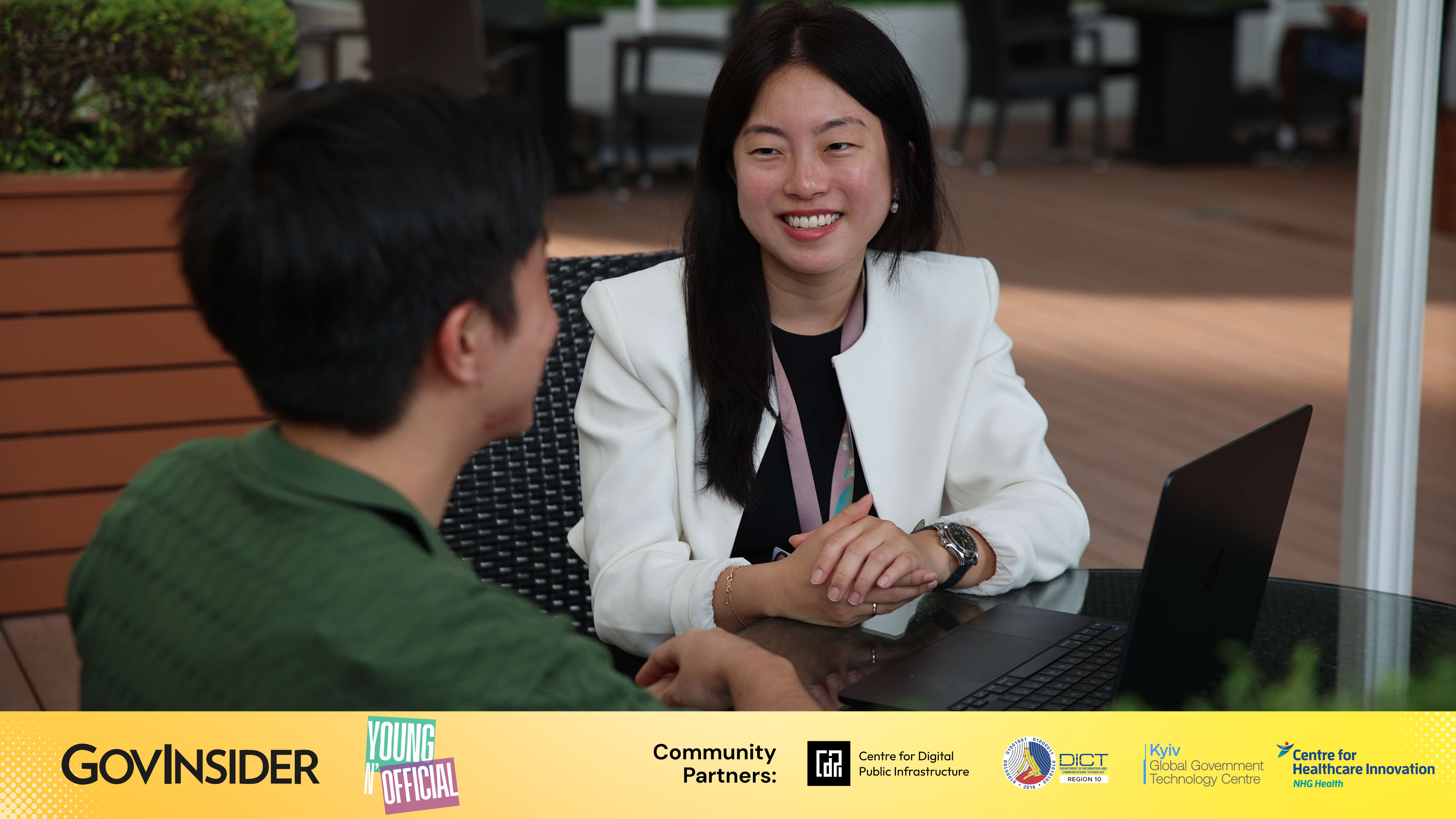
Quek Li Qin, Principal Physiotherapist, Tan Tock Seng Hospital, NHG Health, Singapore. Image: NHG Health.
1) What does public service mean to you? Can you share more about your role in the public sector?
Public service, to me, is a calling and a responsibility entrusted to those who choose to serve. It is about caring for our people and stewarding systems that support the population across different stages of life.
My years at Dunman High School, grounded in the ethos of To Care, To Serve, To Lead, shaped my values early on and instilled a strong sense of purpose. Entering public service was, therefore, the most natural choice.
Healthcare is one of the most tangible expressions of public service, touching every individual from womb to tomb. Over the past decade in public healthcare, my journey has spanned the Singapore Ministry of Health (MOH), NHG Health and Tan Tock Seng Hospital (TTSH).
The secondment to MOH exposed me to policy work, allowing me to appreciate how national policies can shape frontline practice.
This perspective was further strengthened in my current role as a Clinical Management Fellow, where I hold a dual role combining clinical practice and organisational planning.
As a practising geriatric physiotherapist and a contributor to hospital‑level planning and value‑based care initiatives, I seek to translate frontline realities into system‑level decisions. These experiences have deepened my commitment to public service and to serving the population well.
2) Tell us about a project you championed. What impact did it have on the community?
I was closely involved in the institutional rollout of the Choosing Wisely programme, working with both care and operations teams to promote responsible stewardship of healthcare resources.
At a time when healthcare costs are rising rapidly, this initiative came at a critical inflexion point to re‑examine entrenched practices and reduce low‑value care.
By doing so, resources could be redirected to patients with greater needs, improving access and sustainability for the wider community.
Embarking our teams on the Choosing Wisely journey helped shift mindsets towards value‑based decision‑making, ensuring that patients across the population receive the right care, at the right time and in the right setting while safeguarding the public healthcare system for future generations.
3) As a young professional, how has your unique background or perspective allowed you to identify a solution that others in your organisation might have overlooked?
Given my dual role, I see myself as a bridge between clinical perspectives and operational priorities.
I am able to identify synergies across both and translate them into a shared language that resonates across roles. In an increasingly resource‑constrained environment, shaped by geopolitical uncertainties, there is a growing need to balance responsible stewardship of finite resources with the delivery of appropriate, value‑based care.
Ensuring that this narrative reaches even the most junior frontline staff is therefore critical. My role allows me to tailor communication and framing to different stakeholder groups, helping to align perspectives and bring teams onto the same page.
4) What is your personal strategy for maintaining your creative energy when faced with bureaucracy?
At a fireside chat, the former EDB Chairman, Philip Yeo, shared principles that strongly resonate with how I maintain creative energy amid bureaucracy.
As officers, we should break rules only when they become barriers, and never for personal gain. It is important to have the moral courage to keep asking why, especially in organisations that thrive on structure.
We must also be brave enough to challenge sacred cows. Finally, I am not discouraged by hearing “no”; instead, I examine the reasons behind the refusal and use them as a starting point for better solutions.
5) If you had just one area to invest in to accelerate transformation in the public sector (regulation, technology, talent, etc.), which one would you choose and why?
If I had to choose one area to invest in, it would be talent.
A sharing by Prof Herman Aguinis on talent management prompted deeper reflection. Investing in talent means developing more agile human resource (HR) practices that can identify young talent early and integrate them meaningfully with experienced staff. It also requires rethinking how we manage meaningful retention.
In public healthcare, I have seen capable individuals leave for the private sector. We need to examine how to remain competitive so that those who care about Singapore can continue serving.
Finally, we must design systems that recognise and reward high performance without compromising public service values - reinforcing both individual excellence and collective performance.
6) What is your greatest ambition as you grow in your public service career?
My greatest ambition is to influence and facilitate stronger cross‑agency collaboration, leveraging both my professional expertise and personal networks.
Coming from a healthcare background, I have seen firsthand how social and economic factors affect health outcomes at a population level.
These determinants cannot be addressed by any single agency alone. Only by positioning population health as a shared responsibility across the public service can we achieve greater collective impact.
I hope to help embed health more integrally into policy and operational thinking across agencies, so that we move from merely extending lifespan to truly enabling healthspan for our population.
7) What is a “universal value” that connects everyone in your department – from interns to directors – and how do you use that to drive collaboration?
At NHG Health’s TTSH, a universal value that cuts across units and departments is our mission of excellence with compassion.
This value resonates with everyone because it emphasises compassion not only for the patients and populations we serve, but also for our colleagues and workforce. When we are anchored in compassion, we move beyond individual departmental key performance indicators (KPIs) and narrow priorities.
Instead, we are better able to empathise with one another, understand shared constraints, and collaborate meaningfully. This common grounding enables us to work across boundaries and align our efforts to achieve outcomes that truly matter.
8) What is the best piece of advice you’ve got for the next generation of public servants?
Always act with integrity.
Do the right thing, even when it is the hard thing. When you are anchored in the right values, you are less likely to drift or be swept away by strong currents, especially amid an increasingly tumultuous geopolitical environment. Ultimately, public service demands moral clarity.
May we all have the moral fibre to consistently choose what is right.
9) What is a myth you wish to debunk about young public servants?
A myth I wish to debunk is that youth is a disadvantage.
As Singapore's Coordinating Minister for National Security and Minister for Home Affairs, K. Shanmugam, once said when he became the youngest MP, youth is not a handicap.
Young officers are not inherently rash, nor is youth synonymous with folly. Instead, youth bring fresh perspectives, new ways of thinking, and the courage to question assumptions.
When combined with sound values and guidance, these perspectives can enrich policy discussions and strengthen decision‑making. Young public servants, working alongside experienced colleagues, can contribute meaningfully to building more resilient and forward‑looking public institutions.
10) Write a letter to your future self in 2035. Please keep it within 200 words.
Dear 2035 Rae,
You would have marked more than two decades in public service.
I hope you are still anchored strongly in integrity and a deep sense of service to the population. I hope the public system you serve in continues to value excellence with compassion.
May your work have grown beyond healthcare, influencing policies and partnerships across agencies that shape health. May you have helped bridge silos, translating different languages and priorities into a shared purpose.
I hope you remained brave enough to question sacred cows, patient enough to navigate bureaucracy, and humble enough to keep asking why. Above all, may you have invested in people - developing young talent, learning from experienced ones, and building teams that value both individual excellence and collective outcomes.
If the currents became strong, I hope you stayed grounded in your values and continued to do the right thing, even when it was hard.
With conviction,
2025 Rae