
Sabina Huseynova, Advisor to the Director, DOST Digital Innovations Center, Azerbaijan
By James Yau
Meet the Women in GovTech 2025.
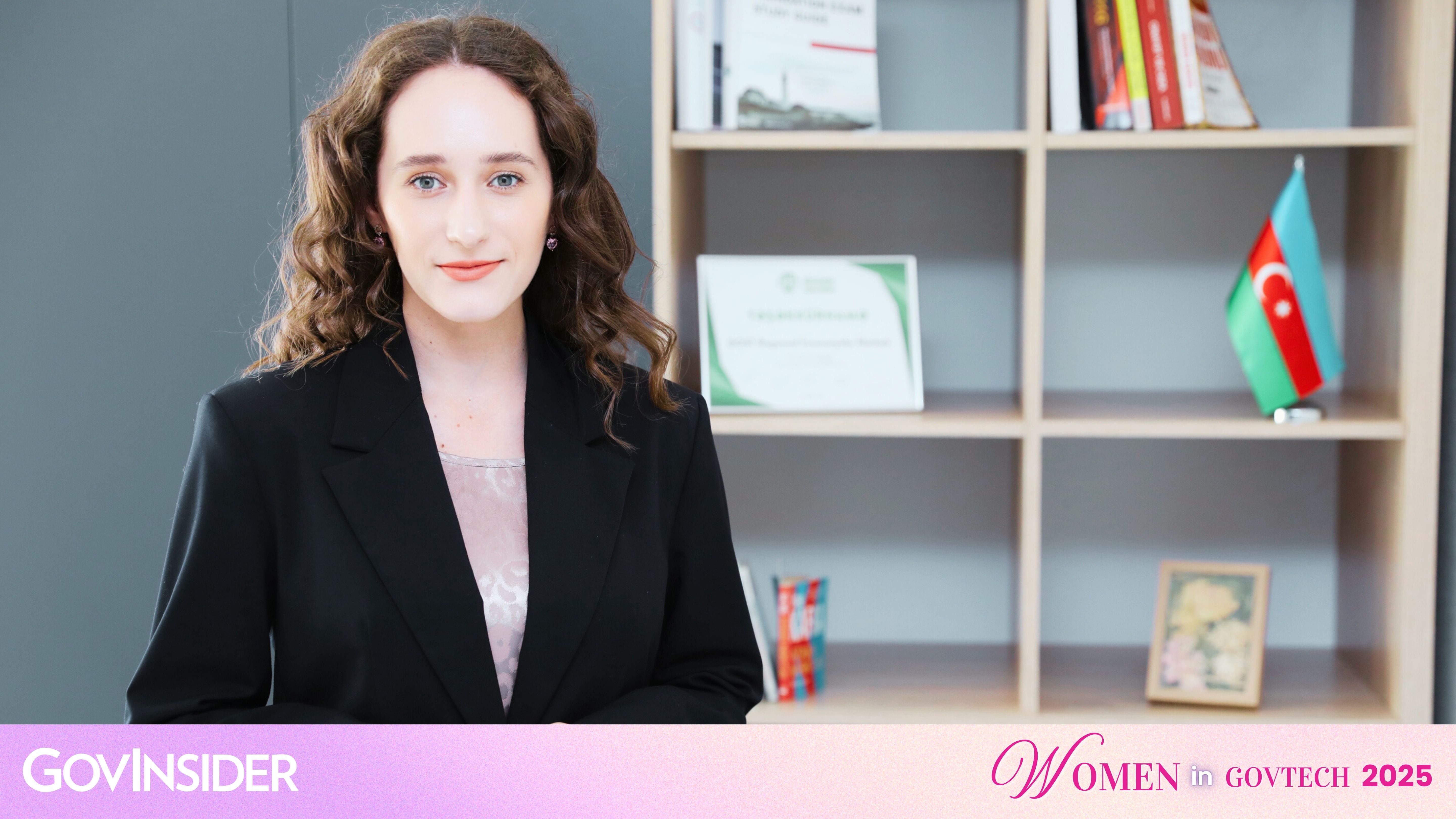
Sabina Huseynova, Advisor to the Director, DOST Digital Innovations Center, shares about her journey. Image: Sabina Huseynova
1) How do you use your role to ensure that technology and policy are truly inclusive?
Within the institution driving social services digitalisation, as an Advisor to the Director, I lead efforts to integrate international best practices with a deep understanding of local needs.
By analysing our country’s social processes - labour, employment, disability, rehabilitation, social payments, insurance, and social services - and critically evaluating global solutions, I identify and adapt the digital components most relevant to our society.
By keeping an eye on emerging technologies worldwide, I help ensure the institution stays current and empowers teams to improve services in ways that are accessible, inclusive, and meaningful. In this way, I bridge innovation with real world outcomes.
2) What’s a moment in your career when you saw firsthand how technology or a new policy changed a citizen’s life for the better?
Since 2024, employment contracts in our country have been fully digitised, allowing both employers and employees to sign them electronically through a user-friendly mobile application. This shift has significantly simplified the employment process and stands as a clear example of our progress in digital transformation.
Citizens can now sign contracts securely, track their status in real time, download copies, and view all amendments - including what was changed, when, and by whom - without ever needing to handle paperwork or visit HR offices.
It has made the entire experience faster, more transparent, and far more accessible for everyone.
3) What was the most impactful project you worked on this year, and how did you measure its success in building trust and serving the needs of the public?
Our institution recently launched the updated "e-Social” portal, a unified platform where citizens can access all essential social information - such as pension capital monitoring, pension and wage calculators, e-references, e-application tracking, and more.
e-Social is a groundbreaking, government-backed platform that brings together 159 labour, employment, social protection, and social security services of Azerbaijan into a single, accessible hub. By leveraging technologies like AI, Open Data, and Big Data, it provides a seamless, user-centered experience - especially for the elderly, persons with disabilities, and those who rely on care services.
For the first time, citizens have direct control and full transparency over their personal data, setting a new standard for trust and accountability in government services.
The updated portal features a modern, intuitive design and has already reached 2.6 million users, including citizens up to 92 years old. Its success is evident in high engagement, improved accessibility, and growing public confidence in digital government services that truly serve people.
4) What was one unexpected lesson you learned this year about designing for real people? This can be about a specific project or a broader lesson about your work.
One key lesson I’ve learned is that upgrading systems or introducing new services should always start with real human needs, not the latest trends.
Before adding any feature, it’s important to ask: Do people truly need this, and will it make a difference in their lives? This mindset ensures that every improvement serves a meaningful purpose.
Innovation isn’t about racing to adopt AI or new technologies first - it’s about understanding where these tools can genuinely help people.
Designing for real people means staying grounded in their experiences, listening to their challenges, and creating solutions that truly improve their daily lives.
5) We hear a lot about AI. What's a practical example of how AI can be used to make government services more inclusive and trustworthy?
A strong example is using AI in the disability assessment process. Behind every assessment, there’s a real person - someone waiting for recognition, support, and dignity. AI can help make this process faster, fairer, and more consistent.
Instead of people having to go through long and often stressful evaluations, AI can analyse existing medical and social data to help identify their needs more accurately. It doesn’t replace human judgment - it supports it, ensuring that no one is overlooked because of where they live or who reviews their case.
When technology is used with empathy and transparency, it not only improves efficiency - it helps people feel seen, understood, and treated fairly, and that’s where true trust in public services begins.
To subscribe to the GovInsider bulletin, click here.
6) How are you preparing for the next wave of change in the public sector? What new skill, approach, or technology are you most excited to explore in the coming year?
One of the biggest challenges with AI and data in the public sector is separating fact from noise. With so much information, it’s easy to be misled. That’s why focusing on clean, reliable data - ensuring that the insights guiding decisions are trustworthy and meaningful.
It’s not just about using AI; it’s about building systems people can trust, so technology helps rather than confuses, and supports better outcomes for everyone.
7) What advice do you have for public sector innovators who want to build a career focused on serving all citizens?
Collaboration is the key. Whether in day-to-day service delivery or during the implementation of large-scale projects, effective cooperation determines success.
“Sharing experience” should never be seen as a weakness - it’s about collaborating rather than competing. Sometimes people forget that the fundamental purpose of public service is to improve citizens’ lives, not to showcase individual achievements.
You may design an excellent project, but if it isn’t aligned with other institutions, stakeholders, or teams, it will face delays or lose its impact. Building trust, openness, and teamwork across organisations is what truly ensures that innovation serves everyone and creates lasting public value.
8) Who inspires you to build a more inclusive and trustworthy public sector?
I’m inspired by older adults who face real challenges in adapting to new technologies but persist until they succeed. Their joy when they achieve even small milestones reminds me of the importance of building accessible, inclusive public services.
For example, my grandmother once asked me, “My friend told me I can see my pension capital online. How?”
I installed our “e-Social” app for her and patiently guided her through how to navigate it. After several attempts, mistakes, and follow-up questions, she now uses it entirely on her own - and has even explored other apps since.
Witnessing her confidence and independence reinforced for me why it’s crucial to design public services that are user-friendly, trustworthy, and empowering for everyone.
9) If you had an unlimited budget, what would your dream project be?
If we had an unlimited budget, our dream project would be to create a fully inclusive, data-driven public service ecosystem.
Imagine a system where every citizen’s needs - from social support to healthcare to employment services - are proactively identified and met, without anyone falling through the cracks.
We would combine AI and human-centred design to make services faster, fairer, and more personalised, while ensuring transparency and trust at every step.
The goal wouldn’t just be efficiency - it would be to help people feel seen, supported, and empowered, so that public services truly improve lives in a meaningful way.
10) Outside tech, what excites you the most?
Because of the nature of my work, I’m especially excited by learning new skills.
Every day brings new challenges and opportunities, and exploring something completely different - whether it’s a language, a craft, or a hands-on project - keeps my curiosity alive and helps me approach problems more creatively.