
Saw Sern Ning, Assistant Nurse Clinician, National University Hospital, Singapore
Meet the young public sector officials in the inaugural Young & Official Report 2026.
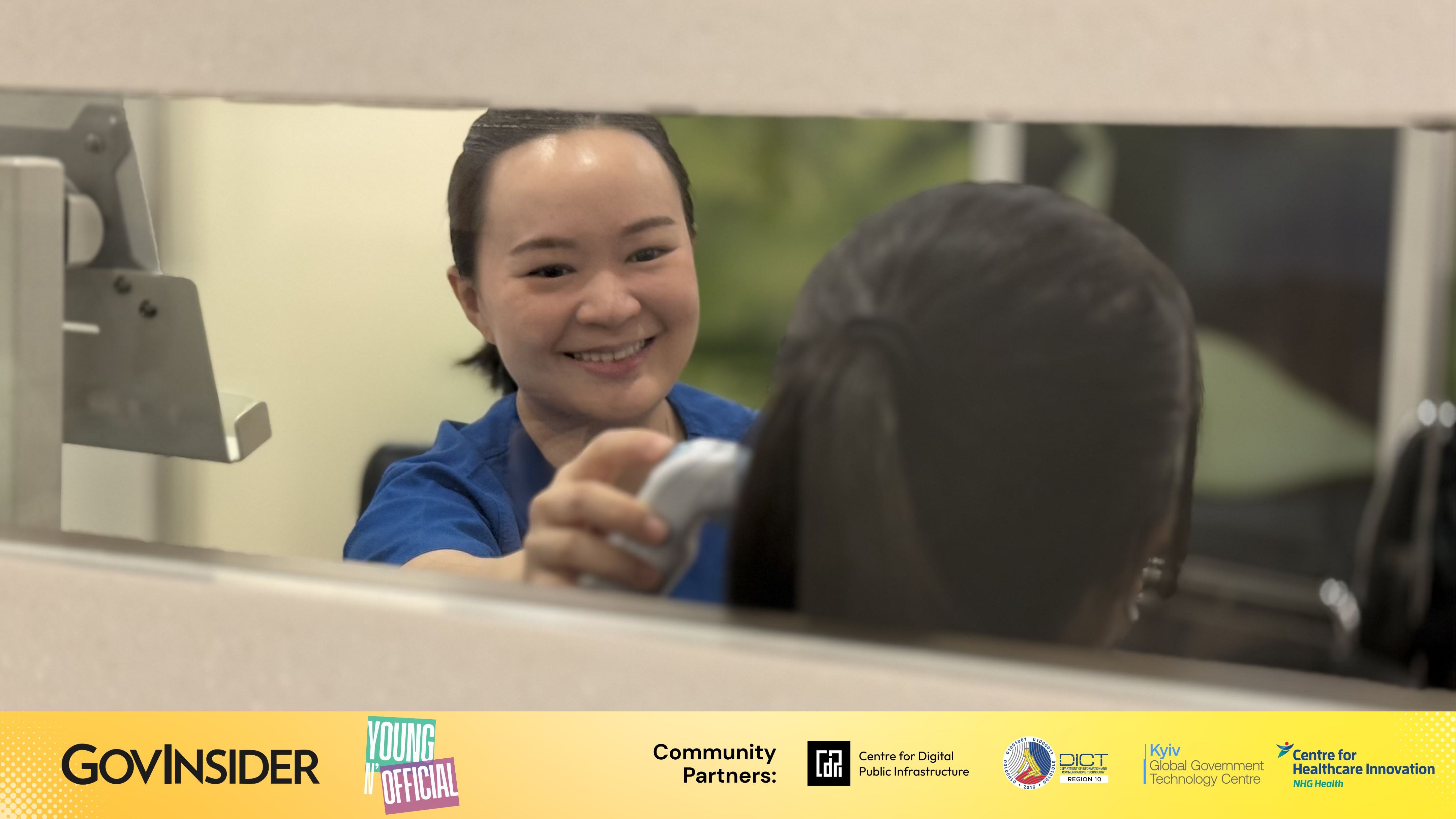
Saw Sern Ning, Assistant Nurse Clinician, National University Hospital, Singapore. Image NUHS
1) What does public service mean to you? Can you share more about your role in the public sector?
To me, public service is about serving the community with purpose through meaningful everyday actions. In healthcare, this means caring for patients with empathy, ensuring their safety, and doing what I can to make their experience feel a little safer, more reassuring, and more humane.
As an Assistant Nurse Clinician at NUH, I am primarily involved in direct patient care, supporting patients and their families through their healthcare journey. I also have the opportunity to contribute as part of the Nursing Innovation Committee, where I share ideas and support initiatives that aim to improve workflows and patient care.
These experiences have helped me appreciate how even small improvements on the ground can make a real difference over time.
2) Tell us about a project you championed. What impact did it have on the community?
One project I led focused on improving cast care education for patients in the Emergency Medicine Department (EMD). Previously, education relied mainly on pamphlets, which patients might misplace or find difficult to understand or revisit once they returned home.
Through observing this gap, I realised that many patients still had questions after discharge, but did not always have an easy way to revisit what had been explained. To address this, I worked with the team to develop a patient education video that could complement existing materials. The video was designed to be simple, accessible, and reassuring, so that patients and caregivers could feel more supported when caring for a cast at home.
By making the video accessible online, patients are able to revisit the information at their own pace after discharge, especially if uncertainties arise. This also supports caregivers who may not have been present during the initial explanation.
While the solution was practical, it met a real need for patients and families in a simple but meaningful way. It reminded me that innovation does not always have to be complex — sometimes it is about making care easier to understand, easier to access, and a little less overwhelming for the people we serve.
3) As a young professional, how has your unique background allowed you to identify a solution that others in your organisations might have overlooked?
Being a frontline nurse allows me to see challenges in day-to-day operations quite closely. Over time, through learning experiences and exposure to design thinking, I have become more conscious of why processes are done a certain way and how they could be improved.
This has helped me to slow down and look at problems from different perspectives, especially from the patient and frontline staff point of view. Instead of focusing only on completing tasks, I pay close attention to where patients or staff may experience friction, uncertainty, or unnecessary complexity in everyday workflows.
I may not always have all the answers, but I have learned that thoughtful questions are often where improvement begins.
When something does not feel clear or works less well than it could, I try to reflect on why that is and share those observations with the team. I have also come to appreciate how much I can learn from listening to others’ experiences and perspectives.
4) What is your personal strategy for maintaining your creative energy?
In healthcare, processes and structures are important for safety and consistency, so I see these constraints as important guardrails that challenge us to improve thoughtfully. Rather than seeing them as barriers, I try to view them as boundaries within which we can still make meaningful improvements.
I focus on identifying small, practical changes that can be implemented safely within existing systems. This helps me stay encouraged, as even incremental improvements can meaningfully strengthen patient care and staff experience over time.
To maintain my creative energy, I try to stay curious and reflective in my daily work — noticing where things feel inefficient, confusing, or harder than they need to be, and asking myself why. I also find it helpful to learn from colleagues and hear different perspectives, because many meaningful ideas come from shared experiences rather than individual effort.
What keeps me going is remembering the people behind the work - the patients we care for, the families supporting them, and the colleagues working alongside us. Keeping that in mind helps me stay motivated, even when progress is gradual.
5) If you had just one area to invest in to accelerate transformation in the public sector (regulation, technology, talent, etc.), which one would you choose and why?
If I had to choose one area, I would invest in people — especially in helping frontline staff feel more confident to share ideas and take ownership of improvement.
From my experience, many staff already notice gaps or inefficiencies in their daily work, but may hesitate to speak up or be unsure how to take ideas forward. With the right support, encouragement, and simple frameworks, these frontline insights can lead to practical improvements with real impact.
Building this confidence is important because those closest to the work often have the best understanding of what can be improved. Even small changes, when supported and sustained, can have a positive impact on both patient care and staff experience.
Over time, I think this helps to create a culture where innovation becomes part of the culture of everyday care, rather than something that only happens at larger organisational levels.
6) What is your greatest ambition as you grow in your public service career?
I hope to grow into a nurse who not only provides safe and compassionate care but also helps make care better for the people around me.
While providing safe and compassionate care is always the priority, I also hope to become someone who notices gaps in everyday practice and reflects on how things could be done better. To me, even small improvements in workflows or patient education matter because they can make the experience of care better for patients, families, and staff over time.
I also hope to continue learning and developing the confidence to share ideas, while staying open to feedback and different perspectives. Being part of teams that value collaboration and continuous improvement is something I would like to contribute to as well.
In the longer term, I hope to support others in doing the same — helping to build an environment where people feel safe to speak up, share ideas, and learn together, so that improving care feels like something we all take part in.
7) What is a “universal value” that connects everyone in your department – from interns to directors – and how do you use that to drive collaboration?
A value that connects everyone is a shared commitment to doing what is best for our patients. When we keep that shared purpose at the centre, it becomes easier to have honest conversations, work through differences, and move forward together.
8) What is the best piece of advice you’ve got for the next generation of public servants?
One piece of advice that has stayed with me is to stay curious, keep learning, and remain open to growth.
Over time, I have come to realise that even small questions or observations can be the starting point for meaningful improvement, so it is important not to overlook them.
9) What is a myth you wish to debunk about young public servants?
A common misconception is that young public servants are not ready to contribute meaningfully. In my experience, many are willing to learn, take responsibility, and do their part. With trust, guidance, and opportunity, they can contribute meaningfully and help shape the future of public service.
10) Write a letter to your future self in 2035. Please keep it within 200 words.
Dear Future Me,
I hope you stay curious, grounded, and continue finding meaningful ways to improve care. Keep questioning, keep learning, and keep encouraging others as you grow.
Let innovation remain part of your everyday work, and I hope you never lose sight of the meaning and privilege of caring for others.
With hope,
Your younger self