
Shi Kui, Assistant Nurse Clinician, Institute of Mental Health, NHG Health, Singapore
Meet the young public sector officials in the inaugural Young & Official Report 2026.
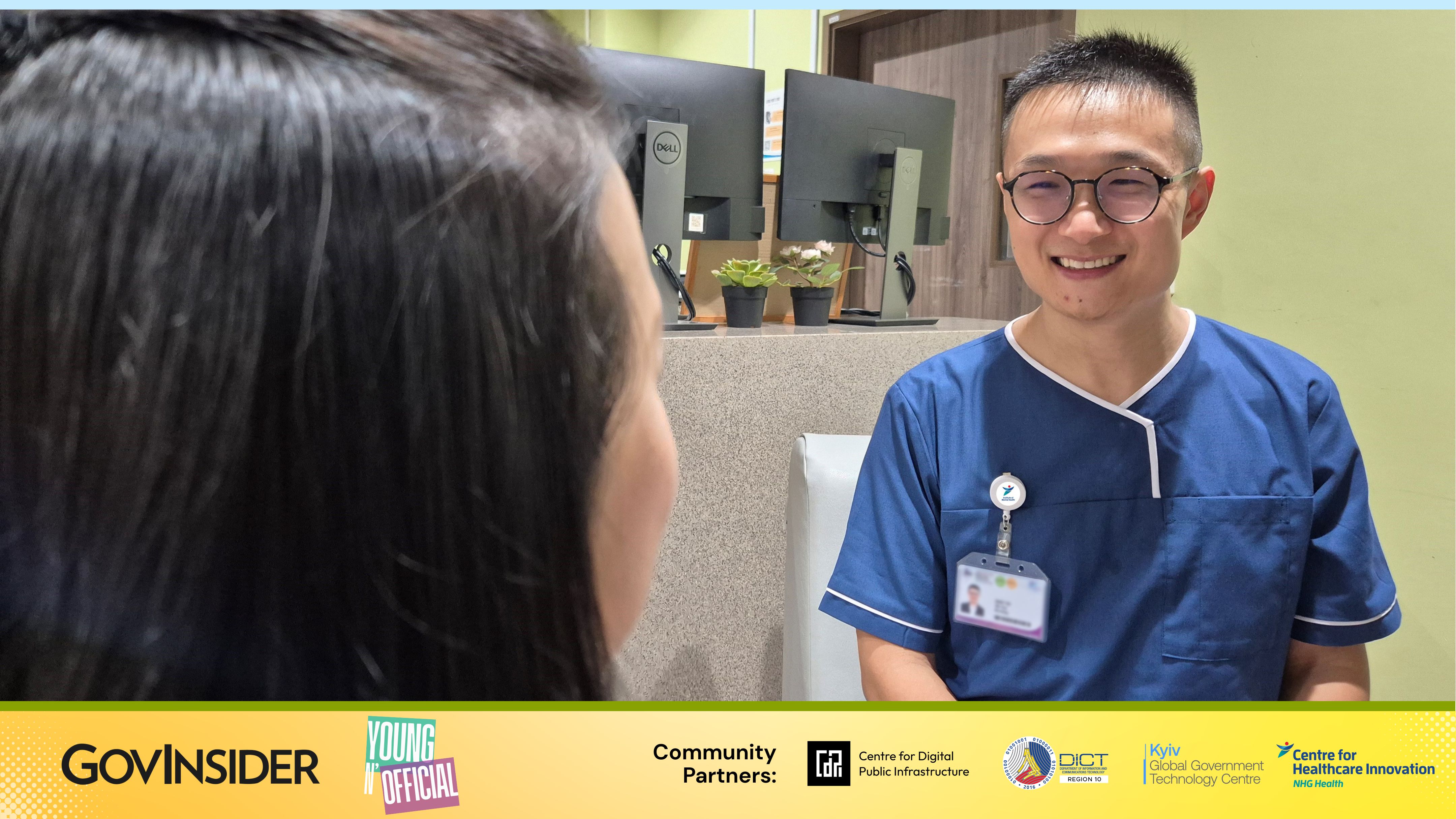
Shi Kui, Assistant Nurse Clinician, Institute of Mental Health, NHG Health, Singapore. Image: NHG Health
1) What does public service mean to you? Can you share more about your role in the public sector?
Public service means strengthening the healthcare system by ensuring that care delivery is safe, efficient, and responsive to patient needs.
I am a Covering Nurse Clinician at the Institute of Mental Health (IMH), where I combine clinical practice with healthcare IT, electronic medical record (EMR) design, innovation, and digital transformation.
I see nurses having an indispensable role as critical frontline innovators and technology partners.
Working at the intersection of patient experience and system processes, I collaborate with multidisciplinary teams to translate frontline insights into practical solutions.
This includes contributing to clinical systems, artificial intelligence (AI)-enabled tools, and workflow technologies that are grounded in real-world clinical practice to enhance patient safety and reduce manual burden.
As a Nursing Informatics Champion, I bridge nursing and clinical systems/technology by gathering pain points from daily practice, translating them into actionable requirements, supporting user testing and coaching my peers so that digital changes are adopted safely and consistently.
2) Tell us about a project you championed. What impact did it have on the community?
One impactful project is the Smart Dressing Moisture Indicator.
It integrates a colour-changing moisture sensor into standard wound dressings, so that nurses can assess dressing saturation objectively without manual inspections.
Designed collaboratively with wound care nurses and materials engineers, the solution is low-cost, scalable, and clinically practical.
It cuts down unnecessary dressing changes and generates time savings of up to 1.5 nursing hours per shift. It also lowers consumable costs and improves infection prevention through early intervention.
I also championed the WI Chatbot on PAIR by OGP - a digital tool designed to improve information accessibility for frontline nurses facing frequent interruptions and time pressure when searching for accurate, up-to-date clinical or operational information.
The chatbot centralised commonly requested resources into a single, easily accessible platform, reducing workflow friction and cognitive load.
With faster access to information, nurses can devote more time to direct patient care.
This tool enhances staff experience and care delivery efficiency.
I also use the electronic medical record (EMR) to simplify nursing workflows.
Working with stakeholders, I refine documentation templates and key information displays, so nurses spend less time on repeated entries and can find what they need more quickly during handovers and patient reviews.
Together, these projects demonstrate that frontline-driven innovation can create tangible improvements across the healthcare system.
3) As a young professional, how has your unique background or perspective allowed you to identify a solution that others in your organisation might have overlooked?
My clinical background allows me to recognise challenges - such as duplicated checks, fragmented information access, and workflow interruptions - and reframe them as design problems rather than personal inefficiencies.
By translating lived nursing experiences into clear operational and technical requirements, I help surface solutions that are practical, adoptable, and aligned with how care is delivered on the ground.
4) What is your personal strategy for maintaining your creative energy when faced with bureaucracy?
I focus on making incremental, visible progress. Large system changes take time, so I prioritise pilot projects, prototypes, and small-scale initiatives that can demonstrate value early.
Being on the ground doing clinical care also sustains my momentum as I can see how even modest improvements reduce workload or improve patient experience.
5) If you had just one area to invest in to accelerate transformation in the public sector (regulation, technology, talent, etc.), which one would you choose and why?
I would invest in frontline-led healthcare technology design.
Technology delivers real value only when it is shaped by those who use it daily.
Empowering nurses to co-design digital solutions results in higher adoption, better outcomes, and sustainable transformation.
When frontline perspectives are embedded early, innovation becomes a genuine enabler of care rather than an added burden on the system.
6) What is your greatest ambition as you grow in your public service career?
My ambition is to grow as a clinical innovation leader who bridges nursing practice, healthcare systems, and technology.
I aim to remain grounded in clinical work while influencing how innovation is developed, implemented, and scaled across the public healthcare system - ensuring solutions are safe, equitable, and responsive to both patient and workforce needs.
7) What is a “universal value” that connects everyone in your department – from interns to directors – and how do you use that to drive collaboration?
A universal value that connects everyone in my department is patient safety and nursing quality. Regardless of role or seniority, there is a shared commitment to delivering care that is safe, respectful, and person-centred.
In fact, this value is a common anchor when working across disciplines - whether engaging clinicians, IT teams, or engineers.
By framing innovation discussions around how a solution improves patient safety, reduces staff risk, or enhances care quality, I align diverse stakeholders around a shared purpose.
This shared value helps bridge hierarchical and functional boundaries, enabling collaboration and collective ownership of change.
8) What is the best piece of advice you’ve got for the next generation of public servants?
Do not underestimate the influence of your frontline perspective. Nurses see the healthcare system at its most operational level, and that insight is invaluable.
Start with the problems you encounter daily, speak up with clarity, and focus on small, achievable changes that could improve patient care or staff workflows.
Public healthcare needs nurses who are curious, reflective, and willing to shape systems—not just work within them.
9) What is a myth you wish to debunk about young public servants?
A common myth is that young nurses lack the experience or influence to meaningfully shape healthcare systems.
In reality, many young nurses are already leading innovation projects, championing digital tools, improving workflows, and driving quality and safety improvements - often alongside full clinical responsibilities and without formal authority.
With trust, mentorship, and opportunity, young nurses are not just the future of healthcare; they are active contributors to transformation today.
10) Write a letter to your future self in 2035.
Dear Shi Kui,
If you are reading this in 2035, I hope you have not forgotten why you chose this path.
I hope you remain grounded in nursing—not just by title, but in mindset.
May patient well-being continue to anchor your decisions, even as your responsibilities grow. I hope you still remember the wards, the handovers, and the quiet moments when care mattered most.
I hope you dared to question systems that no longer serve well and had the patience to rebuild them with intention.
I hope that you have stayed true to the belief that technology should never replace compassion but should amplify it.
By now, I hope you have shaped healthcare, building systems and cultures that elevate frontline voices. May nurses be recognised not only as users of technology, but as co‑designers, innovators, and leaders of transformation.
I hope you mentored generously, knowing your greatest legacy lies in the people you developed. Above all, I hope you stayed true to your values - choosing integrity over convenience, impact over visibility, and remembering that small, thoughtful changes can make healthcare safer and kinder.
Keep going. Keep listening. Keep building systems that care.
Shi Kui (2026)