
Singapore strengthens electricity capacity through new grid projects and bilateral cooperations
By Sol Gonzalez
Singapore signed bilateral agreements with New Zealand and France to cooperate on electricity market regulation and low-carbon energy technologies, alongside increased funding for projects to strengthen grid resilience.
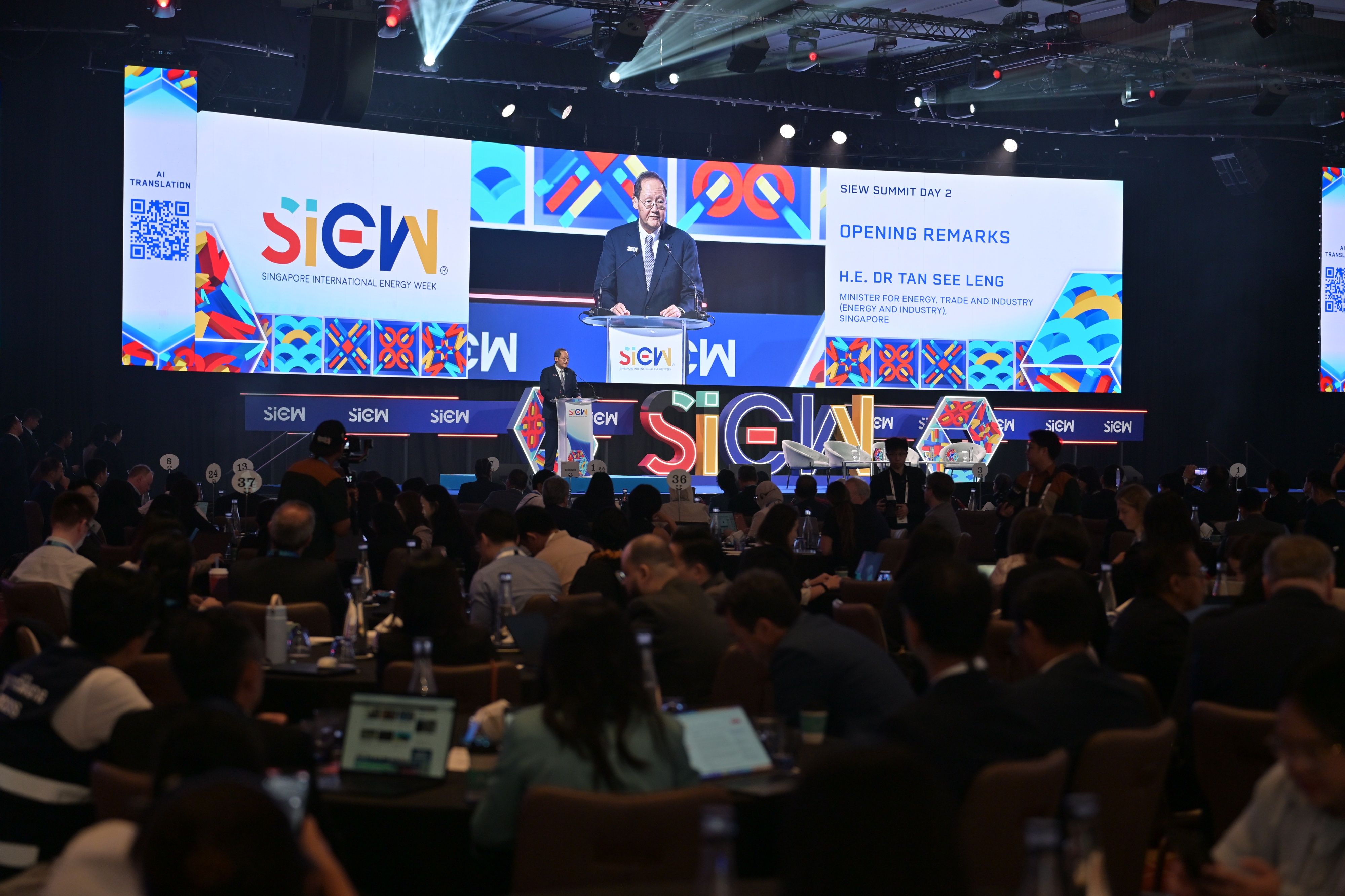
Several announcements were launched at Singapore’s International Energy Week (SIEW) 2026 which showed Singapore's goal and commitment of delivering reliable power and moving towards low-carbon energy. Image: SIEW.
The Energy Market Authority of Singapore (EMA) awarded S$14.9 million worth of grants totalling S$14.9 million to four industry projects to develop and test solutions for Singapore’s electricity grid.
The projects covered improving the maintenance and operation of grid infrastructure, managing the growing number of distributed energy sources, supporting systems stability, and harnessing distributed resources to contribute to grid operations.
The Advanced Energy and Decarbonisation Office will oversee the four projects, as part of its broader portfolio of research and development (R&D) and innovation projects under the Decarbonisation Grand Challenge.
According to EMA’s Chief Executive Puah Kok Keong, these projects aimed to better prepare the grid for future needs.
They were announced at Singapore’s International Energy Week (SIEW) 2026, which opened on October 26 with a lecture on Singapore’s energy journey.
Alongside this announcement, SIEW also saw the signing of bilateral agreements with New Zealand and France that support Singapore’s goal of delivering reliable power and moving towards low-carbon energy.
Strengthening capabilities for decarbonisation
EMA and New Zealand’s Electricity Authority (Te Mana Hiko) signed a memorandum of understanding (MOU) to deepen cooperation on electricity market regulation and transition to a low-carbon energy future.
Both agencies will pursue training, joint research, workshops and knowledge sharing around the planning and regulation of electricity markets, alongside the integration of low-carbon energy technologies.
With a high share of renewable energy, New Zealand’s experience in managing an electricity system was deemed helpful for Singapore as the latter pursues the decarbonisation of its power sector, EMA noted in a statement.
“Electricity systems are experiencing an unprecedented change driven by rising demand and the shift to clean sources of energy.
“The more we collaborate, share expertise and learn from others’ experiences, the better equipped we are to shape regulatory settings that support a resilient electricity system and meet consumers’ evolving needs,” said Electricity Authority’s Deputy Chair, Erik Westergaard.
The partnership also explores opportunities for high-level dialogues and cooperation at regional and international platforms, including the Association of Southeast Asian Nations (ASEAN) and SIEW.
Learning from regional interconnectivity
Along the lines of sharing knowledge and best practices around regional interconnectivity, EMA and the French Energy Regulator (CRE) signed an MOU at SIEW 2026.
The partnership wants to tap into France’s experience in cross-border electricity interconnections and Europe’s integrated electricity markets.
So, the agreement provides opportunities for both Singapore and France to share insights on the regulatory frameworks around energy and gas markets, cross-border electricity connectivity, and pursuit of low-carbon energy technologies.
“At a time when the global energy transition demands innovation and agility, such partnerships are a cornerstone of progress,” said CRE’s Chairperson, Emmanuelle Wargon.
EMA’s Puah noted that this cooperation builds on the Comprehensive Strategic Partnership between Singapore and France signed in 2025.
“As Singapore continues to advance our energy transition and deepen regional interconnectivity, exchanges with international partners are important in supporting our efforts to develop a secure, resilient and sustainable energy system,” he said.
Similar to the agreement with New Zealand, this partnership will also include practical exchanges with technical cooperation through training, and study visits, as well as high-level dialogues and collaborations.