
Skills-first approach the way forward to talent development in Malaysia
By Sol Gonzalez
Malaysia’s TalentCorp COO, Siva Kumeren Narayan says AI and other technology innovations are an opportunity to upskill the country’s workforce.
-1755770650859.jpg)
TalentCorp's Siva Kumeren notes the importance of cross-sector collaboration among governments, industries and institutions to tackle emerging technologies' impact on the workforce, going for a skills-driven approach. Image: TalentCorp.
While artificial intelligence (AI) could contribute up to 18 per cent of the ASEAN region’s gross domestic product (GDP) by 2030, these advancements could also impact 72 per cent of current job skills in the same period.
In a presentation exploring AI and Jobs: Navigating Displacement, Policy & Shared Responsibility at the ASEAN AI Malaysia Summit 2025, Talent Corporation (TalentCorp) Group Chief Operating Officer, Siva Kumeren, shared that a skills-first approach could help to mitigate this problem and help in reskilling the workforce.
TalentCorp is a national agency under Malaysia’s Ministry of Human Resources that attracts, nurtures, and retains talents to support the country’s journey to become a global talent hub.
In a discussion with GovInsider at the sidelines of the summit, Kumeren talks about adopting a skills-first approach to talent development, where skills are prioritised over titles or degrees.
Focussing on skills sets can help people assess their capabilities and identify areas for up- or re-skilling to pivot their careers if their roles are likely to be impacted by AI, he says.
He expands on the work of MyMAHIR Future Skills Talent Council (FSTC) – an industry-driven initiative aimed at transforming national reskilling priorities and preparing talents for future roles, particularly in the AI era.
To subscribe to the GovInsider bulletin, click here.
Preparing for future roles
“It’s critical for us to prop the directive correctly now, to understand where Malaysia is in terms of the impact of AI into the organisations and the workforce here,” says Kuemeren.
To this end, TalentCorp ran an Impact Study on how AI, digitalisation, and the green economy affect the local workforce, be it by creating new job roles or rendering other roles more vulnerable.
That’s how the MyMAHIR platform emerged.
The website enables users to evaluate and enhance their skills and explore opportunities for potential career changes in the future, with the objective of ensuring the workforce remains relevant and adaptable.
“Why is this important?
“Because 620,000 jobs will be affected, people need to know how to look at new opportunities for themselves, which area they need to drive towards, and how to rebuild their career or move to a career that is better for them. And it's critical because [job shifts] will become a government and social issue,” explains Kumeren.
Take for example a Lab Technician in the medical devices industry, identified as a “highly impacted” role.
A user with that current role can access MyMAHIR to see the areas for upskilling that could help the person to continue working in the sector doing a more high-demand role. Alternatively, the platform could suggest moving on to other sectors with new-acquired transferable skills.
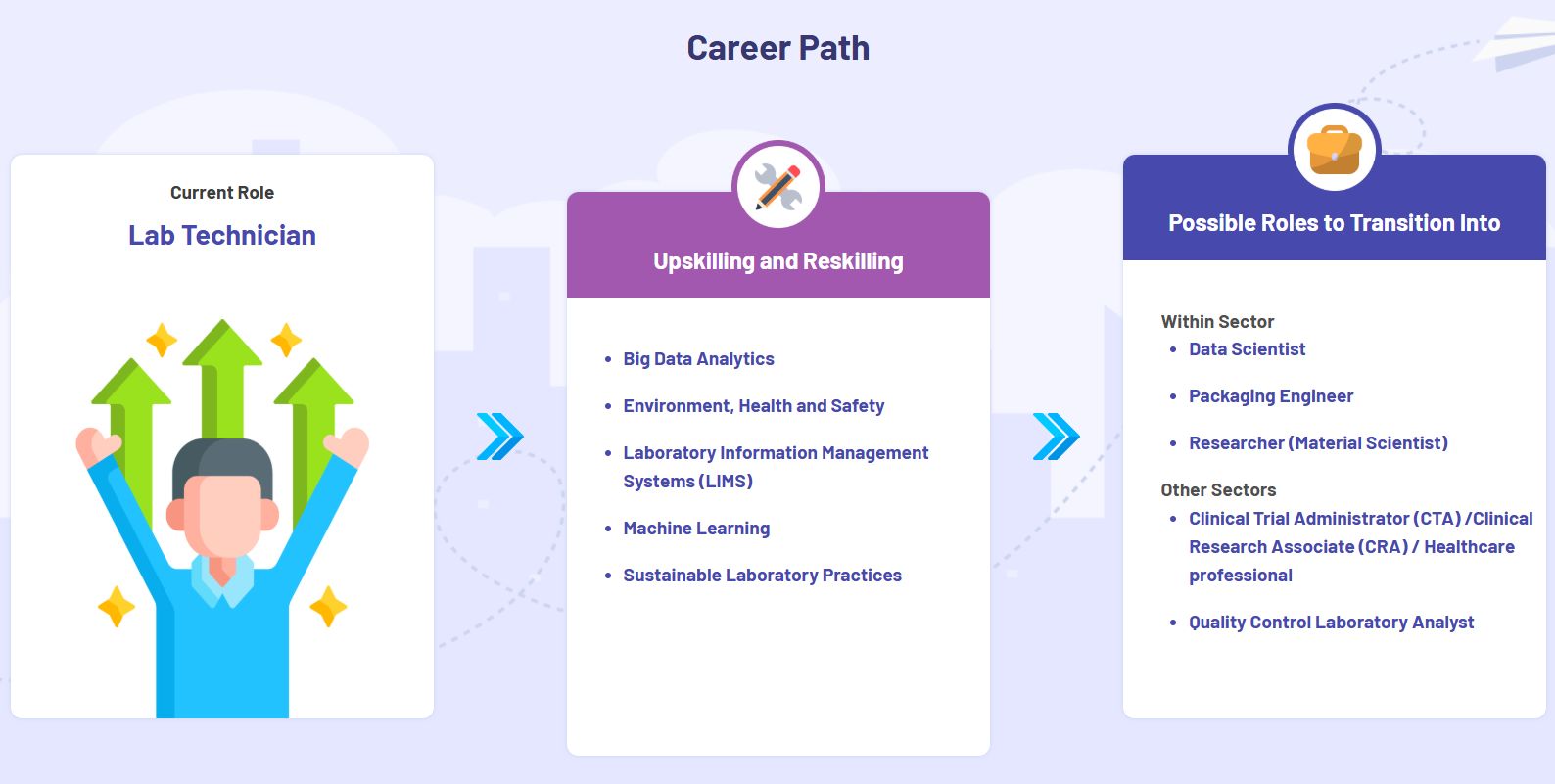
“Of course, this comes together with job coaching, mentoring, or whatever you need to upgrade yourself. But most important is that it gives you direction. You now know that you have other things to do,” says Kumeren.
Following the first phase of the impact study and building up on the learnings that future skills talent development will be essential for the future of work, came the decision to adopt a sector-focused and industry-driven Future Skills Talent Council (FSTC), he shares.
Learning from the source: the industry input
The FSTC initiative responds to two problem statements: Malaysia’s underemployment (36 per cent) and youth unemployment (10.2 per cent).
“Underemployment means that the education level is not commensurate with the work that they’re doing. They may be a degree holder for four years but work in semi-skilled environments because that’s where the job demand is,” he explains.
He adds that a contributing factor to these two problems is that the youth are studying without knowing what the opportunities available in the workforce are.
“That’s why we took a conscious approach - who knows best what are the jobs required in the industry? It is the industry itself.”
Rather than following trends or attempting to predict future needs, the FSTC gathers industry leaders into a council by sector to ask them what their talent requirements, competency levels, and job roles are.
The FSTC then works with the industries to figure out the best training methods required to fulfil their requirements, based on the capabilities and the number of people they can appoint, shares Kumeren.
Graduates and jobseekers can then apply to these training programmes following a profiling assessment.
This demand-driven approach ensures that the candidates who emerge from the upskilling programmes are equipped with the sector’s capabilities to obtain a job placement.
Kumeren notes that they have managed to ensure 100 per cent guaranteed employment for the individuals going through the FSTC.
“Here, the industries in each sector told me how many people they want, and they approved the training provider who can fulfil the job. So, all this comes together, and the only thing we need to ensure, from a government perspective, is to get the supply there.”
Thus far the FSTC has 2,336 candidates approved for training on 66 programmes across 16 sectors, and they are targeting to double the number for next year.
“We are confident, because it’s a proven model. We are not worried about the churn of unemployment, because we get a steady pipeline that addresses the gap,” he adds.
To subscribe to the GovInsider bulletin, click here.
Moving past the obstacles
Talking about the challenges in rolling out upskilling in the digital era, Kumeren says that there are two segments to consider: the industry and the government.
“For the industry, the biggest problem will be the ability to commit to upskill and reskill a resource. The biggest fear often is, once I upskill and reskill you, what assures me that you'll be working for me for the next two years?”
That’s where the government can help to cushion that, Kumeren says.
“Introduce concepts of individual skills, crediting, allowing them to adopt and change at their pace, because lifelong learning is an institutional requirement,” he adds.
“The government must introduce continuous learning security for individuals going forward. And I think what's important is for government to consciously embed AI and digital tech at the point of entry of any government offices and reskill and upskill all government offices in that level.”
As a closing thought, he calls to embrace the change that comes with digitalisation – looking at it as an opportunity for a country to move forward, rather than as a threat.