
Wong Sook Huey, Public Sector Lead, Microsoft Singapore
Meet the Women in GovTech 2025.
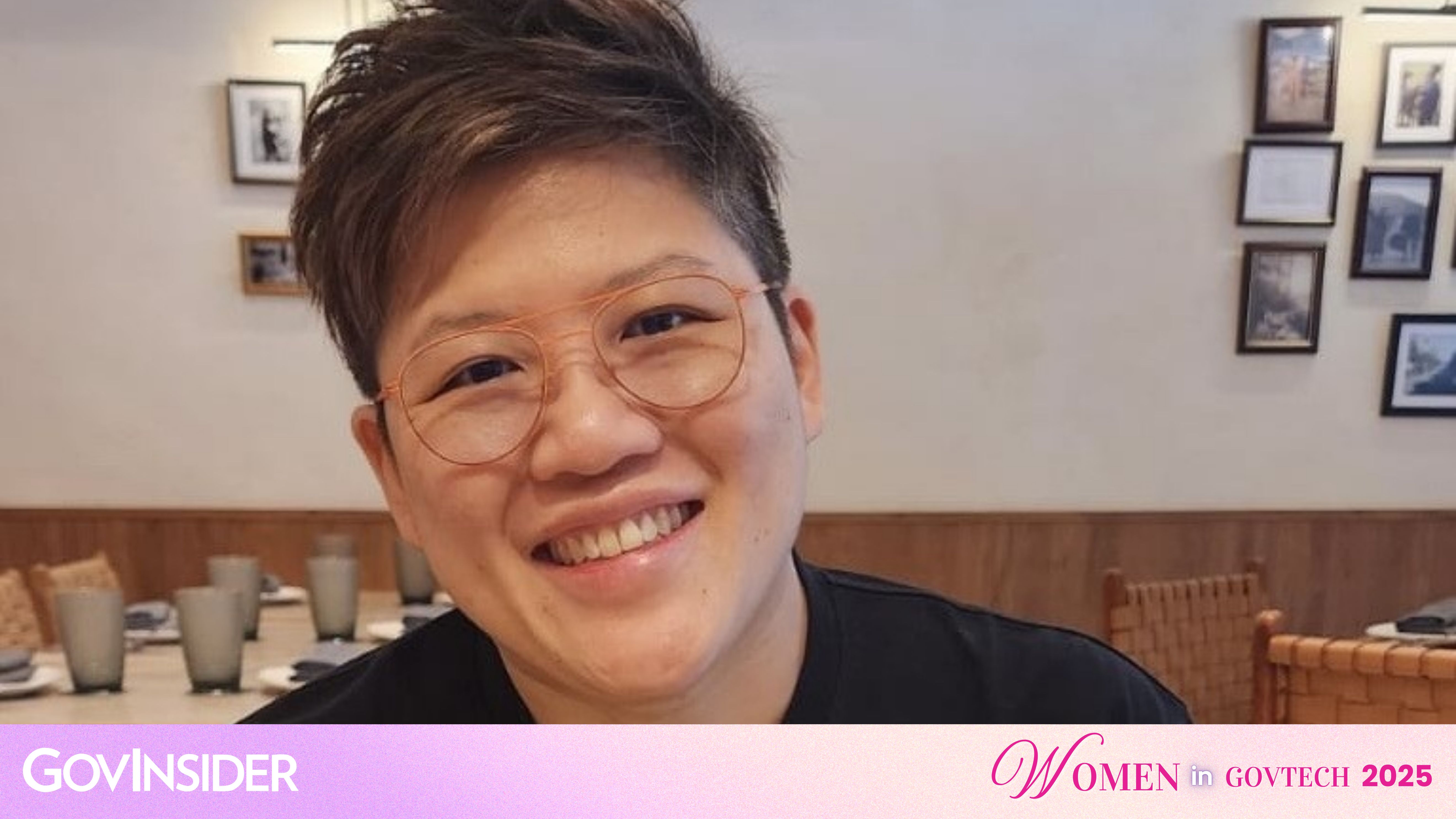
Sook Huey Wong, Public Sector Lead, Microsoft Singapore shares her journey. Image: Sook Huey Wong.
1) How do you use your role to ensure that technology and policy are truly inclusive?
In my role, I lead efforts to make technology and policy inclusive by influencing government strategies and providing constructive feedback to ensure frameworks address diverse needs.
This includes advocating for responsible artificial intelligence (AI) principles, data sovereignty, cybersecurity and accessibility standards in national digital initiatives.
For example, our teams actively participate in programmes like Singapore’s anti-scam initiative, leveraging technology to protect vulnerable groups such as seniors from fraud.
My team empowers business stakeholders, end users, and IT operations through innovative solutions like Microsoft 365 Copilot, AI, and advanced data platforms, combined with targeted upskilling programmes.
These initiatives enable self-service capabilities, boost productivity, and introduce new, efficient ways of working.
Beyond organisational impact, we collaborate with public agencies to strengthen Women in Tech communities and partner with private entities to create accessibility solutions - such as adaptive technologies and AI-driven captioning - that allow persons with disabilities to fully participate in the digital economy.
Looking ahead, I focus on scaling these programmes nationally to ensure inclusivity is embedded in every layer of digital transformation.
2) What’s a moment in your career when you saw firsthand how technology or a new policy changed a citizen’s life for the better?
I have always been passionate about public safety because it shows how technology can quietly transform lives.
In Singapore, we often overlook the critical role technology plays in keeping citizens safe—from enabling real-time situational awareness for officers on the ground to ensuring rapid incident response.
One powerful example was when citizens gained the ability to call emergency hotlines and stream live video to operations centres, providing responders with an immediate situational picture.
This capability became personal for me when my father suffered a medical emergency.
Thanks to seamless communication and dispatch technologies, paramedics arrived at our home in under 15 minutes and quickly transported him to the hospital. That experience reinforced how life-saving these innovations can be.
Another moment that stood out was seeing how passport-free immigration clearance transformed travel for thousands of citizens, reducing stress and wait times.
Today, facial recognition for hospital visitation adds another layer of convenience and security, allowing families to visit loved ones without cumbersome processes. These advancements may seem routine, but they profoundly impact daily life by making safety, accessibility, and trust effortless.
3) What was the most impactful project you worked on this year, and how did you measure its success in building trust and serving the needs of the public?
One of the most impactful projects this year was driving readiness for Microsoft 365 Copilot adoption across Singapore’s public sector.
This initiative went far beyond technology deployment - it was about building trust and ensuring inclusivity.
-
Impact: Pilot programmes delivered measurable productivity gains for civil servants, reducing time spent on routine tasks and enabling more strategic work.
-
Inclusivity: We conducted targeted training for diverse user groups—from policy officers to frontline staff - ensuring equitable access to AI capabilities and fostering confidence in responsible AI practices.
Another notable project was NoteBuddy, developed by SingHealth, leveraging Microsoft AI and cloud services.
NoteBuddy is a generative AI (GenAI)-powered documentation solution that supports healthcare professionals during consultations.
Its standout capability is transcribing and summarising clinician-patient conversations in four languages - English, Mandarin, Malay, and Tamil - into accurate clinical notes using customised prompts.
This innovation significantly reduces administrative workload, improves the quality of doctor-patient interactions, and enables clinicians to focus on understanding and addressing patient concerns.
By streamlining documentation workflows, NoteBuddy enhances patient experience and strengthens trust in digital healthcare innovation.
4) What was one unexpected lesson you learned this year about designing for real people? This can be about a specific project or a broader lesson about your work.
The biggest lesson was that simplicity often beats sophistication. While advanced features excite technologists, real users value clarity and ease of use.
During accessibility workshops, we learned that multilingual support and intuitive navigation mattered more than complex AI-driven personalisation.
Designing for real people means stepping into their daily realities - what feels “basic” to us can be transformative for them.
5) We hear a lot about AI. What's a practical example of how AI can be used to make government services more inclusive and trustworthy?
AI can play a transformative role in making government services more inclusive and trustworthy by addressing language and accessibility barriers.
In Singapore - a multi-racial society with an ageing population that includes many dialect-speaking and non-English-speaking citizens - AI-powered real-time translation and captioning can be a game-changer.
For example, emergency call centre operators can use AI to instantly understand callers who speak in dialects or other languages, enabling them to request help without friction.
This capability ensures that vulnerable populations receive timely assistance during critical situations.
Beyond emergency response, these same groups are often most susceptible to scams. AI can also strengthen anti-scam initiatives by detecting suspicious patterns in communication and alerting authorities proactively, protecting citizens from fraud.
Accessibility extends further: speech-to-text and text-to-speech technologies can assist visually impaired users in completing forms or interacting with digital services independently.
Intelligent chatbots with multilingual capabilities can guide citizens through complex processes like healthcare enrollment or tax filing, reducing errors and improving confidence in digital platforms.
When combined with responsible AI principles - fairness, transparency, and accountability - these solutions build trust while ensuring no citizen is excluded from essential services. Ultimately, AI is not just about efficiency; it’s about equity.
To subscribe to the GovInsider bulletin, click here.
By embedding inclusivity into design and governance, governments can create a digital ecosystem where every citizen, regardless of language, ability, or digital literacy, can access services seamlessly and securely.
6) How are you preparing for the next wave of change in the public sector? What new skill, approach, or technology are you most excited to explore in the coming year?
We are preparing for the next wave of change in the public sector by investing heavily in continuous learning - not just for our internal teams, but also for government agencies and ecosystem partners.
Transformation at scale requires more than technology; it demands a workforce equipped with the skills and mindset to embrace innovation responsibly.
One area I’m particularly excited about is agentic AI, the next evolution beyond GenAI.
Unlike traditional AI models that respond to prompts, agentic AI can autonomously execute workflows, orchestrate complex tasks, and adapt dynamically to changing conditions.
This capability will fundamentally reshape how public services operate - moving from reactive processes to proactive, personalised citizen experiences.
Imagine government services that anticipate needs, streamline approvals, and deliver assistance before a citizen even asks - all while maintaining strict compliance with responsible AI principles and content safety requirements.
Our approach combines innovation with governance. We are embedding ethical frameworks, transparency, and security into every deployment to ensure trust remains the cornerstone of digital transformation.
By doing so, we aim to create a future where technology not only accelerates efficiency but also strengthens public confidence in government services. This is more than a technical shift - it’s a cultural evolution that will redefine how citizens interact with their government.
7) What advice do you have for public sector innovators who want to build a career focused on serving all citizens?
My advice to public sector innovators is simple: start with empathy, not technology. Don’t chase trends blindly or adopt the latest tools just for the sake of innovation.
Instead, take the time to understand the realities of citizens’ lives and the challenges faced by frontline workers. True impact begins when you design solutions that solve real problems in practical, meaningful ways.
Often, success comes from simplicity.
Focus on addressing fundamental issues first - those that remove friction and improve everyday experiences - before tackling complex, large-scale transformations. A small improvement in accessibility or responsiveness can have a bigger impact on trust and inclusion than an advanced feature that few can use.
Finally, remember that innovation in the public sector isn’t about deploying cutting-edge technology; it’s about creating solutions that are practical, inclusive, and trusted.
Build with transparency, prioritise equity, and measure success by the difference you make in people’s lives—not by the number of tools implemented.
8) Who inspires you to build a more inclusive and trustworthy public sector?
I draw inspiration from leaders and communities who put people at the centre of digital transformation - treating inclusion and trust as core design principles, not afterthoughts.
In Singapore’s public sector, visionaries who champion responsible AI and accessibility as the foundation of public service set the benchmark for meaningful impact.
Seeing agencies embrace accessibility standards and robust AI governance motivates me to push further so that technology empowers every citizen, regardless of ability or background.
I’m energised by community networks and grassroots advocates whose diverse perspectives make systems fairer and more resilient, and equally moved by frontline professionals and caregivers whose daily realities demand practical, safe, multilingual, and accessible solutions - alongside citizens who should never have to fight for equitable access to essential services.
Together, these examples reinforce my belief that trust and inclusivity are foundational to a public sector that serves everyone with fairness and transparency - and they drive my commitment to shaping solutions that ensure no one is left behind.
9) If you had an unlimited budget, what would your dream project be?
My dream project would be to build a National Care Connect Platform - an AI-powered system that integrates accessibility, multilingual support, and adaptive services for every citizen, while connecting the right help to the right person.
This platform would leverage agentic AI to proactively assist seniors, persons with disabilities, and underserved communities, ensuring equitable access to healthcare, education, and essential government services.
Imagine an elderly citizen interacting with an AI agent in their native dialect to request personalised assistance, or a person with disabilities navigating public spaces confidently through AI-powered guidance.
Vulnerable citizens who fall outside standard government aid programs could receive tailored support, bridging gaps that traditional systems often miss. The platform would also provide real-time translation, voice-enabled services, and predictive assistance to anticipate needs before they arise.
This initiative would not only transform service delivery but set a global benchmark for inclusive, citizen-centric governance - where technology restores dignity, empowers independence, and ensures no one is left behind.
10) Outside tech, what excites you the most?
I’m energised by opportunities to connect with people and hear their real-life stories - experiences that shape perspectives and spark meaningful conversations.
Nothing compares to a relaxed setting with great food and authentic dialogue.
Beyond that, I’m passionate about creating solutions for social causes where technology and creativity intersect to make a tangible difference.
One initiative I truly valued was supporting Smart Barrier-Free Access with the Disabled People’s Association, which helps wheelchair users navigate public spaces and alerts government agencies to areas that remain inaccessible despite being intended as barrier-free. Seeing technology drive real-world impact for inclusivity was deeply rewarding.
Travel also excites me - it’s a chance to immerse myself in diverse cultures, appreciate unique forms of creativity, and gain fresh perspectives.
Exposure to different ways of thinking fuels my curiosity and continuous learning, which I find both inspiring and essential for growth.