
Stellah Rotich, Chief Officer ICT, County Government of Bomet, Kenya
By James Yau
Meet the Women in GovTech 2025.
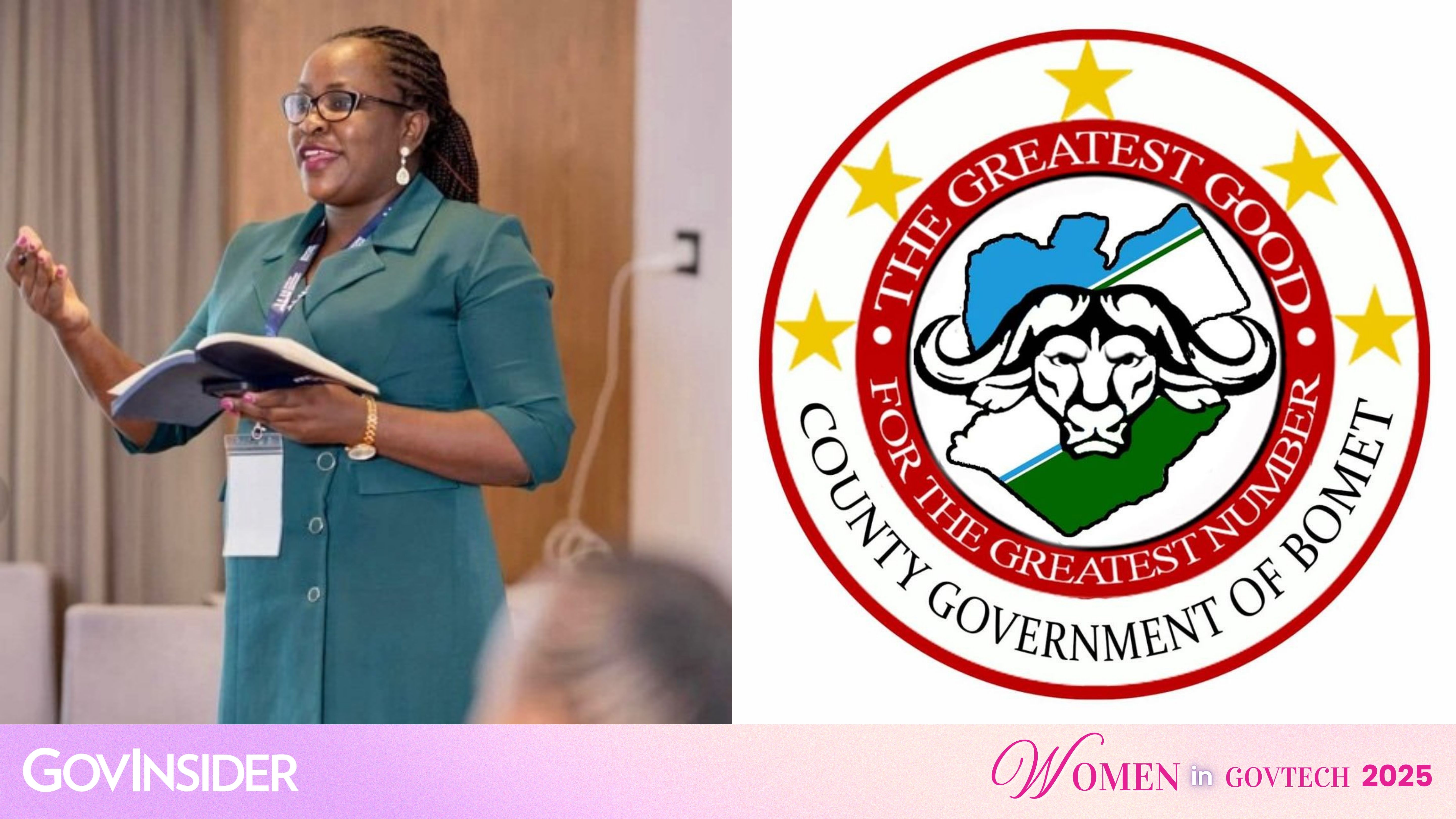
Stellah Rotich, Chief Officer ICT, County Government of Bomet, shares about her journey. Image: Stellah Rotich
1) How do you use your role to ensure that technology and policy are truly inclusive?
I use my role to ensure that technology and policy are truly inclusive by focusing on people and process improvements first. Throughout my career in government and the private sector, I have learned that technology only works when it is designed around the real needs and challenges of the people who use it.
In my current role as Chief Officer ICT at the County Government of Bomet, I lead digital transformation initiatives that directly affect citizens, the county staff, and service providers.
When introducing or upgrading systems such as revenue collection, health, procurement, and agriculture systems which we are in process of automating, I ensure they are simple to use, accessible, and practical, especially for users with low digital skills, limited internet access, or basic devices. This includes supporting mobile solutions, easy user interfaces and even alternative processes for those who do not have access to technology.
I actively involve stakeholders at every stage of technology design, development and policy implementation. This means engaging end users, technical teams, and the executive all the time to understand how services are currently delivered and where people experience challenges.
I led mapping the AS-IS and TO-BE processes with the technical teams and redesign processes so that technology is applicable. This approach ensures that digital systems work for everyone, not just technically skilled users.
From a policy perspective, I am focusing now on developing ICT policies, standards, and governance structures that promote fairness, transparency, data protection, and accountability. These policies ensure that digital systems are secure, interoperable, and aligned with national priorities while still responding to local community needs.
I strongly believe that inclusive technology must also build local capacity. This is why I support training, mentorship, and knowledge transfer initiatives that empower young people, women, and public servants to confidently use and manage digital systems.
I also prioritise sustainability and long-term impact. Inclusive technology is not a one-time project; it requires continuous improvement. I promote feedback mechanisms, regular system reviews, and change management to ensure policies and systems evolve as user needs change.
Overall, I use my role to ensure technology and policy are truly inclusive by designing solutions that are easy to access, simple to use, fair, and focused on real public value.
By combining technical expertise, policy understanding, and strong stakeholder engagement, I ensure digital transformation improves lives, strengthens trust in public institutions, and leaves no one behind. Sometimes these processes can be slow, but I ensure that we comply in aligning policy and technology.
2) What’s a moment in your career when you saw firsthand how technology or a new policy changed a citizen’s life for the better?
One moment in my career that clearly showed me how technology and policy can change a citizen’s life for the better was when I led the automation of assigned manual processes that allowed citizens to pay for government services remotely, without having to physically visit offices. Before this change, many citizens were required to travel long distances, queue for hours, and sometimes take time off work just to make a payment or complete a simple government transaction.
For people living far way, this meant additional transport costs, lost income, and significant inconvenience. The system was not only inefficient but also unfair to citizens who could not easily access government offices.
Working as a Business Analyst and later in a leadership role, I helped redesign the payment process by introducing digital and mobile-based payment options that enabled citizens to pay for services from anywhere in the world. This involved reviewing existing policies, re-engineering processes, integrating secure payment platforms, and ensuring the system worked reliably.
I remember feedback from landowners, business owners and individuals who said that, for the first time, they could complete payments while at work or at home, without traveling to Nairobi.
One citizen shared that what used to take an entire day now took only a few minutes on their phone to get invoices and pay. For them, this meant saving money, time, and stress, and being able to focus on their business and family.
This experience reinforced for me that technology is not just about systems, it is about removing barriers. By aligning policy, process, and technology, we made Nairobi County Government services more accessible, more transparent, and more respectful of citizens’ time.
It remains a powerful reminder of how digital solutions can directly improve people’s everyday lives.
3) What was the most impactful project you worked on this year, and how did you measure its success in building trust and serving the needs of the public?
The most impactful project I worked on this year is BometPay, the county’s integrated revenue collection system, which is designed to make it easier, more transparent, and more trustworthy for citizens to access and pay for county services.
This system is still a work in progress, before this the county has had challenges of fragmented multiple systems and manual processes. As the lead for this initiative, my focus was not just on technology, but on restoring public confidence by making payments simple, verifiable, and accessible.
BometPay allows citizens and businesses to pay for county services through secure digital channels without physically visiting county offices. This reduces travel costs, waiting time, and opportunities for errors or informal payments.
A key part of the project still in progress is the self-service citizen module, which will allow users to independently view bills, initiate payments, download receipts, and track their transactions online or via mobile devices.
I measured the project’s success using both technical and public value indicators. On the service delivery side, we tracked increased adoption of mobile payments, reduced queues at county revenue offices, and faster transaction processing times.
On the governance side, we monitored improved revenue traceability, real time reporting through integrated dashboards, and clearer audit trails, which are critical for accountability and trust. Citizen and staff feedback has been important in this development journey. Early feedback has shown increased confidence in the system.
Although BometPay is still evolving, especially with the upcoming self-service module, it already demonstrates how well designed digital public infrastructure can serve citizens better and build trust in government. For me, its impact lies in shifting the relationship between citizens and the county.
4) What was one unexpected lesson you learned this year about designing for real people? This can be about a specific project or a broader lesson about your work.
One unexpected lesson I learned this year about designing for real people is that good technology can still fail if change management starts too late. I realised that successful digital solutions are not only about building the right system but about aligning with people’s realities long before implementation begins.
While leading ICT projects across multiple, I learned that most users of government systems are not in ICT. They work in finance, health, education, agriculture, revenue, cooperatives or administration, and their daily priorities are service delivery, deadlines, and compliance not technology.
Even well-designed systems can feel disruptive if they are introduced without fully understanding these competing priorities. I learned that ICT must engage departments early to understand how a new system will affect their work and address what they fear most which is uncertainty that comes with automation.
When ICT leads with technical efficiency alone, resistance naturally follows. But when ICT aligns solutions to departmental goals such as faster service delivery, easier reporting, or reduced manual work, users become partners rather than obstacles.
This experience taught me that designing for real people means listening earlier, explaining better, and aligning first. Change management is not an afterthought; it is part of design. When users feel heard and see how technology supports their own objectives, adoption improves and systems deliver real value.
5) We hear a lot about AI. What's a practical example of how AI can be used to make government services more inclusive and trustworthy?
A practical way AI can be used to make government services more inclusive and trustworthy is by helping government become data-driven in planning, resource allocation, and budgeting. In many governments, planning and budget decisions are still based on historical spending, manual reports, or incomplete data.
This often means that communities with the greatest needs such as rural areas or marginalized groups might be underfunded simply because their needs are not well captured in the data. AI can change this by analysing large volumes of data from multiple sources, such as service usage records, population data, revenue trends, health and education statistics, and even geographic information.
AI models can be used to predict demand for services like healthcare, agricultural support, or social programs across different constituencies and wards. This allows government to allocate budgets based on real and projected needs rather than assumptions.
AI also improves inclusion by identifying gaps. It can highlight areas where service uptake is low, signaling barriers such as distance, cost, or lack of awareness. Government can then design targeted interventions for those communities.
AI-supported dashboards and decision tools make planning more transparent. Leaders and the public can see why certain areas receive more funding and how decisions are supported by data.
This reduces perceptions of bias, inefficiency, or political influence. AI can really help government collect and utilize its data, plan better, and spend resources where they are needed most.
To subscribe to the GovInsider bulletin, click here.
6) How are you preparing for the next wave of change in the public sector? What new skill, approach, or technology are you most excited to explore in the coming year?
I am strengthening my understanding of Digital Public Infrastructure (DPI) and practical AI use cases in government. I see DPI as the foundation for scalable, inclusive, and trusted public services, especially in areas such as digital identity, payments, data exchange, and service delivery.
Over the past year, I have focused on learning how governments can move from isolated systems to interoperable platforms that share data securely across departments.
I participated in training and working groups to study AI governance, standards, and policy frameworks that make technology sustainable and citizen-centred. I am looking into how digital solutions, DPI and AI can support counties and national governments to deliver services more efficiently.
I am also exploring how AI can be applied in practical, responsible ways in the public sector. I am interested in AI that supports data driven decision making and use of AI agents to support public services. These cases help government make better decisions using data and improve delivery services.
Beyond technical skills, I am also refining my approach to change leadership. I am investing more time in early stakeholder engagement, policy-technology alignment, and building multidisciplinary teams that include policy makers, technologists, and frontline users.
I believe the next phase of public sector transformation will require leaders who can bridge technology, policy, and people. What excites me most in the coming year is working at the intersection of AI, DPI, and public value.
7) What advice do you have for public sector innovators who want to build a career focused on serving all citizens?
My advice to public sector innovators who want to build a career focused on serving all citizens is to accept that change is hard, but deeply worth it.
Working in the public sector means dealing with complex systems, limited resources, and many stakeholders with different priorities. Progress is often slow, and resistance to change is real.
However, the impact of even small improvements can be massive because public services touch millions of lives. When a system becomes easier to use, faster, or more transparent, it saves citizens time, money, and frustration.
I would encourage innovators to stay grounded in the needs of citizens, not just in technological trends. Spend time understanding how people access services, where they struggle, and what barriers exclude them. Designing for inclusion means simplifying processes, meeting people where they are, and being patient with adoption.
It is also important to build strong partnerships across departments. No meaningful change happens in isolation. Learn to listen, align with existing priorities, and communicate clearly. Trust and collaboration are as important as technical skills.
Finally, be resilient. Public sector transformation is a long journey, not a quick win. There will be setbacks, but the long-term social impact makes the effort worthwhile.
If your goal is service, equity, and public value, the challenges become part of a purpose-driven career that truly makes a difference for all citizens.
8) Who inspires you to build a more inclusive and trustworthy public sector?
Throughout my career, I am inspired by Grace Hopper and Katherine Johnson, two pioneers whose lives demonstrate how excellence and inclusion can transform communities.
Grace Hopper inspires me for her belief that technology should serve people and not be limited to a small technical elite. She challenged rigid systems, simplified complex computing concepts, and pushed for innovation within large institutions.
Her work reminds me that meaningful change in the public sector requires courage to question “how things have always been done” and the persistence to improve systems from within.
Katherine Johnson inspires me through her commitment to accuracy, accountability, and public service. Her work showed how data and mathematical precision can guide critical decisions that affect millions of lives.
Despite working in an environment that did not easily include her, she delivered excellence that earned trust and reshaped institutions. Her story reinforces the importance of evidence-based decision making and integrity in public service.
Together, they inspire me to build a public sector that uses technology and data responsibly, values diverse contributions, and earns citizen trust through competence and transparency. I am also inspired that despite the difficulties I experience in trying to automate, it is always possible to face challenges and still excel in my role.
9) Outside tech, what excites you the most?
Outside of technology, I am most excited by exploring nature while listening to my Kalenjin cultural music. I love traveling to mountains, forests, and lakes, immersing myself in the beauty of the natural world.
Pairing these experiences with the rhythms and melodies of my culture creates a deep sense of connection to both the environment and my roots. It allows me to relax, reflect, and recharge, while appreciating the richness and diversity of life around me.
I also have a strong passion for reading. Books open new worlds, ideas, and perspectives, and I enjoy learning from the stories, knowledge, and experiences of others. I have read several books that have changed how I view the world.
Reading fuels my curiosity, inspires my creativity, and broadens my understanding of people, cultures, and the world. Together, my love for nature, music, and reading keeps me energised, curious, and continually growing both personally and professionally.