
Sun Sun Lim, VP (Partnerships and Engagement); Lee Kong Chian Professor of Communication & Technology, Singapore Management University (SMU)
Meet the Women in GovTech 2025.
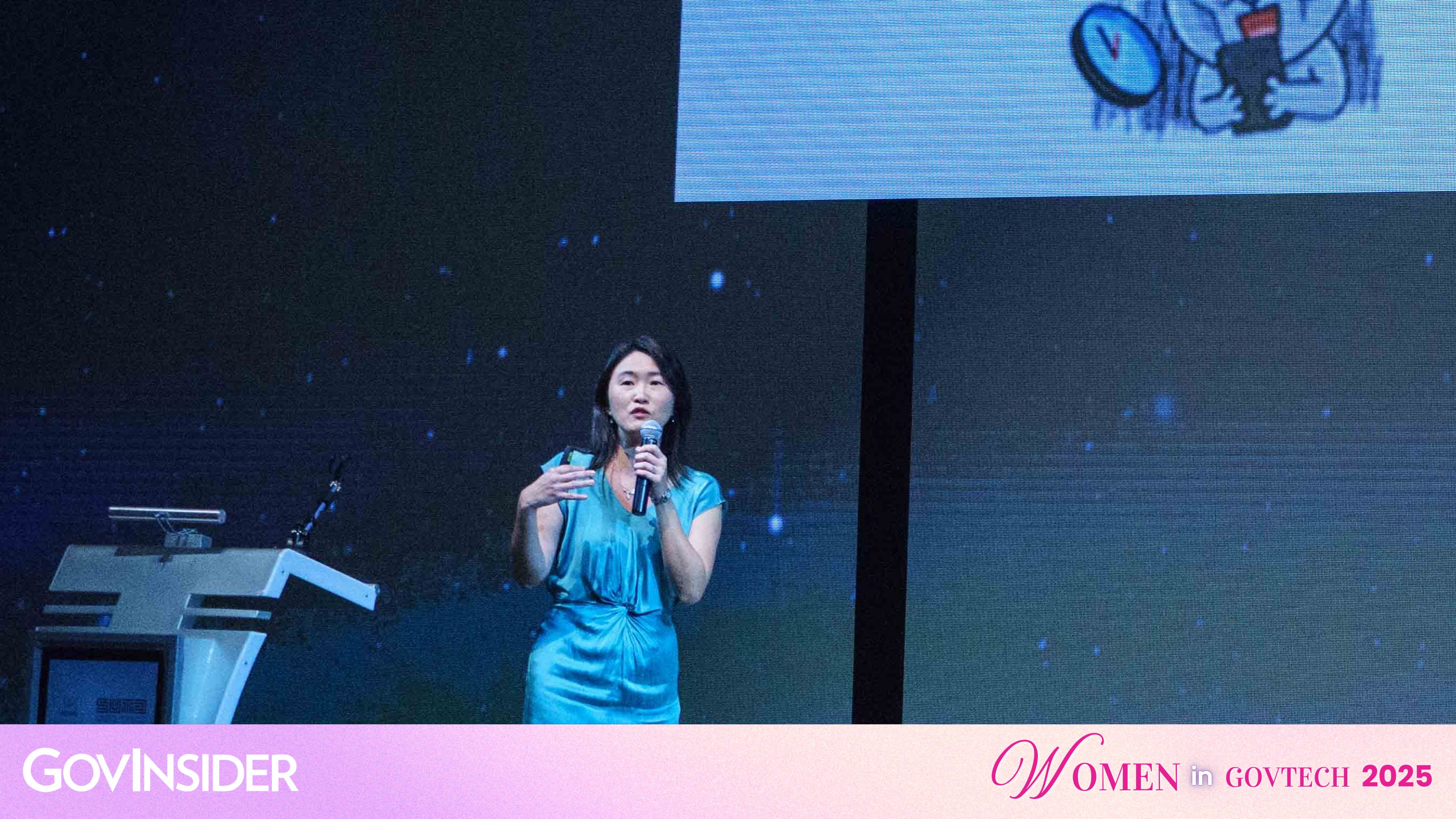
Sun Sun Lim, VP (Partnerships and Engagement); Lee Kong Chian Professor of Communication & Technology, Singapore Management University, Singapore, shares her life's journey. Image: Sun Sun Lim.
1) How do you use your role to ensure that technology and policy are truly inclusive?
I’m privileged to have been an academic for over 20 years, conducting research and teaching on the evolution and social impact of technology.
Currently, I am the Lee Kong Chian Professor of Communication and Technology and Vice President for Partnerships & Engagement at Singapore Management University (SMU).
I have long believed that technology and policy should serve people, not systems.
My academic work focuses on how families, young people and everyday citizens domesticate digital tools; what the future of work looks like; and how issues of AI ethics and digital rights shape our collective future.
During my tenure as a Nominated Member of Parliament from 2018 to 2020, I spoke up for governance of big data, digital-literacy education, and digital rights for children – issues that have grown ever more complex and salient as our society technologises at a rapid clip.
I feel fortunate to serve in capacities where I can bridge academia, public policy, industry and society and forge a community of like-minded people who care about the greater good.
By working with them, I aim to translate research insights into real-world policies and initiatives that advance equity, fairness and inclusivity.
2) What’s a moment in your career when you saw firsthand how technology or a new policy changed a citizen’s life for the better?
Too many!
As an ethnographer, my research has taken me into homes across Asia and into workplaces where I have seen firsthand the potential of technology.
From the mother in Ho Chi Minh City who spoke no English, marvelling at how her toddler could recite the alphabet, to the elderly worker in Singapore who praised the cleaning robot for lightening his load, technology can do so much to improve people’s lives.
I have observed parents and families becoming more aware and confident about how technology can lubricate their lives, but also reckoning with the different challenges it can pose.
I have witnessed organisations harnessing technology for efficiencies but also grappling with the divisions it wrought in their teams.
Ultimately, all innovations, be they technological or social, must be well-grounded in everyday social realities to deliver maximum benefits.
3) What was the most impactful project you worked on this year, and how did you measure its success in building trust and serving the needs of the public?
That would be publishing my latest book Humanising Technology: Reflections on Design, Ethics and Inclusion (World Scientific, 2026), which is a collection of 50 of my opinion editorials that interrogate the multifaceted social impacts of technology.
Drawing from over two decades of research and public engagement, I offer insights into how technology intersects with human values and societal norms through essays organised into five thematic sections: AI Ethics, Design and Big Data, Digital Parenting and Young People, Education and Upskilling, and Social Inclusion.
As an academic, I have been averse to having my research findings sit only in journal articles and academic tomes.
Instead, I have actively sought to communicate my research findings to help the public understand how technological and digital infrastructures influence their lived realities, even as individual users shape the arc of technology.
When people grasp the logics behind interface design, the business models undergirding technology platforms, and the algorithms that select and deliver customised content, they can leverage technology with greater criticality and circumspection.
The book thus addresses a wide range of critical topics, including ethical considerations in AI deployment, responsibilities of designers in drawing insights from big data, challenges of digital parenting in an always-connected world, the imperative of continuous education in the digital age, and the necessity of ensuring that technology serves to include rather than exclude or exploit.
Success for me isn’t just about citations, institutional buy-in or media coverage.
I measure impact in qualitative shifts: seeing educators, parents, policymakers begin to think about fairness, inclusion, and social consequences; seeing demand for transparent, responsible deployment; seeing renewed trust in institutions that use technology.
In other words, building shared understanding and collective ownership over our technologizing world.
4) What was one unexpected lesson you learned this year about designing for real people? This can be about a specific project or a broader lesson about your work.
This would have been the overriding importance of engendering a sense of trust in every transactional product or service.
I gained this realisation from analysing the public outcry over the LTA’s attempt to replace the EZLink card with the SimplyGo system.
Fundamentally, despite all the purported benefits of the new system, it failed to induce in users a sense of trust - trust that the transaction has gone smoothly, trust that you have been charged fairly and trust that your hard-earned money is safely stored for future rides.
Each public transport fare may not involve huge amounts of money, but commuters’ need for that feeling of trust is priceless.
I captured this in my column to very positive feedback, and it is the very first essay in Humanising Technology.
5) We hear a lot about AI. What's a practical example of how AI can be used to make government services more inclusive and trustworthy?
Looking ahead, I believe artificial intelligence (AI) can offer very practical benefits for making government services more inclusive and trustworthy.
For example, AI-driven chatbots or virtual assistants that are thoughtfully built, transparent, and accessible could help residents navigate complex public-service processes (subsidies, education, housing) in multiple languages, 24/7, lowering barriers especially for those less tech-savvy.
Data-driven systems could help identify underserved or vulnerable populations, so policies and social support are allocated equitably and proactively rather than reactively.
But these must be rooted in fairness, accountability and explainability, and subject to robust oversight by humans in the loop.
6) How are you preparing for the next wave of change in the public sector? What new skill, approach, or technology are you most excited to explore in the coming year?
To prepare for the next wave of change in the public sector, I am deepening engagement with AI governance frameworks, encouraging interdisciplinary collaboration (social sciences, law, tech, policy), and promoting lifelong digital-literacy education.
I am most excited about the potential of AI-augmented public service and governance not as a replacement for human judgment, but as a tool that enhances empathy, inclusion and evidence-based policymaking.
7) What advice do you have for public sector innovators who want to build a career focused on serving all citizens?
For public-sector innovators who aspire to serve all citizens, my advice is simple: reflect on the last time you helped your parent, child or colleague with a technology product or service.
What were their struggles and gratifications, and how did design help or hinder them? Through such reflections, you will deepen your empathy for people’s lived experiences, fears and aspirations.
To subscribe to the GovInsider bulletin, click here.
Build bridges across disciplines and sectors because no one has all the answers and always have the humility to recognise that.
Prioritise transparency, fairness and accountability, especially when technology affects people’s opportunities, rights and dignity.
8) Who inspires you to build a more inclusive and trustworthy public sector?
My inspiration comes from many quarters: from frontline civil servants and social workers doing their best for the most vulnerable; from educators and students developing policy and technology innovations to cater to unmet needs; from colleagues in academia and the tech sector who undertake their work with a sense of social responsibility.
Their marriage of technical competence with moral conscience and their passion for ensuring that technology is a force for good motivates me to do more.
9) If you had an unlimited budget, what would your dream project be?
If I had an unlimited budget, I would establish a cross-sector Digital Inclusion & Trust Lab, a living laboratory that brings together government agencies, technologists, social scientists, community organisations, educators and citizens to co-design public services.
Through participatory design, pilot projects, robust evaluation, and public-education programmes, this Lab would aim to demonstrate how digital innovation that is rooted in inclusion, fairness and human-centred values can deliver social good at scale.
10) Outside tech, what excites you the most?
Beyond technology, what excites me most is education and human connection.
I believe in the power of teaching, mentoring, and civic engagement - in empowering people, especially youth and women, to realise their full potential.
For me, building a fairer and more inclusive digital future is inseparable from forging a more connected, enlightened and just society.