
Sustainable goals and public service, Navid Hanif takes it personally
By James Yau
The Assistant Secretary-General for Economic Development United Nations Department of Economic and Social Affairs (UN DESA) shares about his calling to public service and advice for impactful policies.
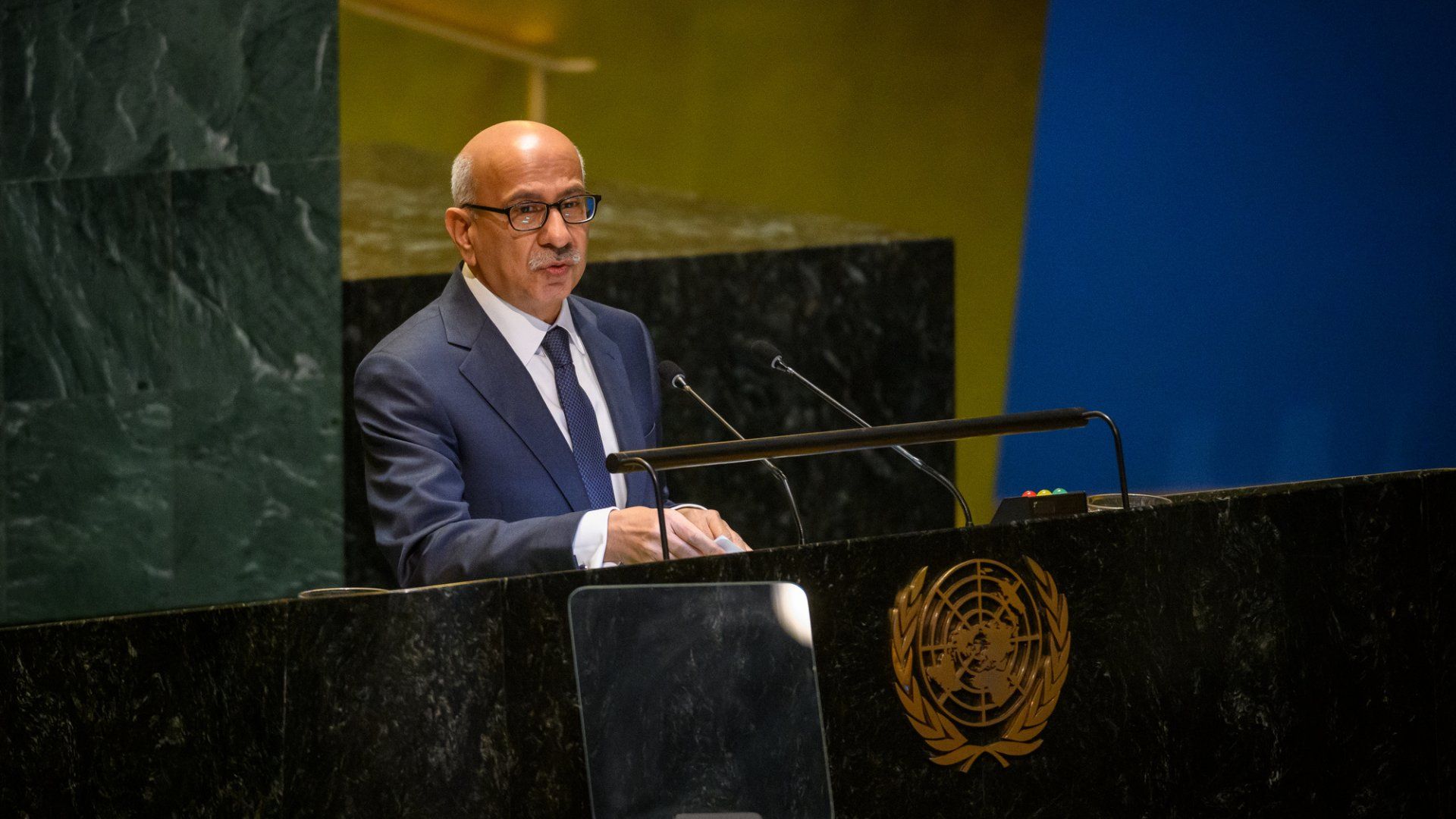
Navid Hanif shares that empowering public servants, recognising their efforts, and investing in institutions are the most powerful ways to build a better future. Image: UN Photo/Loey Felipe
Through his work at United Nations Department of Economic and Social Affairs (UN DESA), Navid Hanif has had the privilege of supporting governments in building more inclusive, responsive, and trusted institutions.
Before assuming the role of Assistant Secretary-General for Economic Development at UN DESA in 2022, Hanif’s involvement with public governance included more than 30 years of experience in national and international civil service, encompassing policy-making, capacity development, and multilateral diplomacy.
Throughout this journey, what constantly comes to Hanif’s mind when thinking about governance is not its rules, nor its systems – but the people that run it.
“Empowering public servants, recognising their efforts, and investing in institutions is, to me, the most powerful way we can build a better future,” he says.
Working at the UN, particularly with UN DESA, has shown him how sound governance can transform lives – by ensuring access to education, healthcare, social protection and other essential public services.
Moreover, it is this very commitment he sees in public servants around the world that has kept him going the past few decades, especially in challenging situations.
“Their dedication is inspiring. Supporting their work – through global cooperation, research and capacity-building – is both a professional calling and a personal mission.”
To subscribe to the GovInsider bulletin, click here.
Policy design and sustainable governance
Hanif says that well-designed and effectively implemented public policy can have a positive impact on the lives of millions of people, marking his belief in the transformative power of effective and inclusive institutions.
He identifies three key links between vision and implementation when public sector initiatives fall short.
First, is not recognising the importance of committed transformational leadership and empowered public servants with new mindsets and capacities.
It takes “empowered, ethical and forward-looking public servants” to turn vision into reality.
“Achieving sustainable development is, thus, not just about crafting the right policies and plans – it is, above all, about public servants. It is about the quality of human resources.”
Second, is the lack of effective, efficient, and responsive institutions.
According to Hanif, empowered individuals need strong institutional arrangements that bring governments closer to people and their needs. Institutions need to be designed to adapt and respond quickly.
Third, is siloed operations and a lack of systems thinking.
He highlights how many governments struggle to manage complex, interconnected issues and to use strategic foresight to anticipate future risks while seizing possible opportunities.
“Coherence between national development plans, budgets and delivery mechanisms, and between national and local governance authorities is essential to implement Sustainable Development Goals (SDGs).”
Therein lies UN DESA’s focus on supporting countries in developing the institutional capacities needed to implement SDGs.
By helping countries align their plans, budgets and delivery mechanisms, fostering coherence across national and local governance, Hanif says that implementation becomes not only possible but practical.
Shifting mindsets
Hanif recognises that embedding sustainable development into public administration starts with a shift in mindset.
“Public servants must see the SDGs not as abstract goals, but as practical principles guiding daily decisions – from how budgets are allocated to how services are delivered,” he explains.
The overarching principle of “leave no one behind” should be at the core of every national development plan, he adds.
Seeing the need for new capacities and trainings to make these principles actionable, UN DESA supports governments with capacity-building programmes, policy toolkits, and foresight methodologies.
“We support member states in promoting new mindsets and competencies, innovation, digital transformation, strategic foresight and data governance, ensuring that the SDGs are integrated across all levels of decision-making, particularly from national to local levels, with a focus on enhancing people’s well-being.”
Aligning goals across ministries, especially in planning, finance and social development then, is critical.
Hanif notes that there is a need to prioritise policy coherence and institutional arrangements that support whole-of-government and whole-of-society approaches.
“Leaders need to create spaces for collaboration, where data is shared, innovation is encouraged and mutual accountability is the norm,” he says.
Beyond the national level, regional cooperation is just as vital – where challenges such as climate change, digital governance and migration transcend national borders.
Regional partnerships serve to amplify national efforts and create more resilient, integrated solutions, he adds.
To this end, UN DESA assists countries in establishing inter-ministerial coordination mechanisms such as integrated national financing frameworks (INFFs) and Voluntary National Reviews (VNRs).
Hanif explains that these mechanisms help break silos and foster a culture of cooperation.
“VNRs could also help to identify areas for regional and sub-regional cooperation. The UN Regional Commissions are working in collaboration with UN DESA to nurture such cooperation.”
He singles strategic areas, leadership, and inclusive governance, as the most important fields of capacity-building that governments should prioritise for the medium to long term.
Strategic areas include new developing new mindsets and creating competencies, systems thinking and strategic foresight, innovation in government for social inclusion, digital transformation for improved services, effective data governance for evidence-based and coherent policymaking, public financial management, and climate-responsive policies and planning.
Leadership development, citizen engagement, and ethics in public service are also critical, he says, as it forms the foundations of trusted, accountable institutions.
Hanif adds that inclusive governance institutions and structures should be implemented at all levels of government to enable whole-of-government and whole-of-society approaches.
“Building effective, accountable institutions is essential for achieving the SDGs - and that requires long-term investment in the values, people and systems of public administration.”
To subscribe to the GovInsider bulletin, click here.
Aim high, stay rooted, find your purpose
Hanif reaffirms that public servants are at the frontline of delivering on national and global commitments – from economic growth to climate resilience.
Sharing his advice for public servants in the region, he urges those working on national and sustainable development to be “ambitious, collaborative and grounded in evidence”.
“Asia is a region of enormous diversity, innovation and immense potential. It has shown to the world that effective and responsive public institutions can make miracles happen.”
With innovative methodologies, networks and technical expertise, he proffers the support of UN DESA to help public officers invest in learning, break down silos within government and engage with communities to cocreate solutions.
Moreover, he notes that advancing the SDGs is not only about policy, “but also about building governance systems and services that serve all people, especially those most vulnerable to being left behind.”
In the context of the SDGs, Hanif adds that the earlier commitment of “leave no one behind” must be reflected in how public services is designed and delivered.
“What’s closest to my heart is ensuring that governments serve people fairly and effectively - especially those who are often unheard or underserved.
“That’s the essence of public service and the heart of the 2030 Agenda.”