The Indian police service officer who started his own citizen movement
From policing to participation, current Inspector General Vikas Vaibhav, who spent five years building Let’s Inspire Bihar, shares why the state’s progress needs citizens, entrepreneurs and the diaspora, not just government.
-1795246748426.jpg)
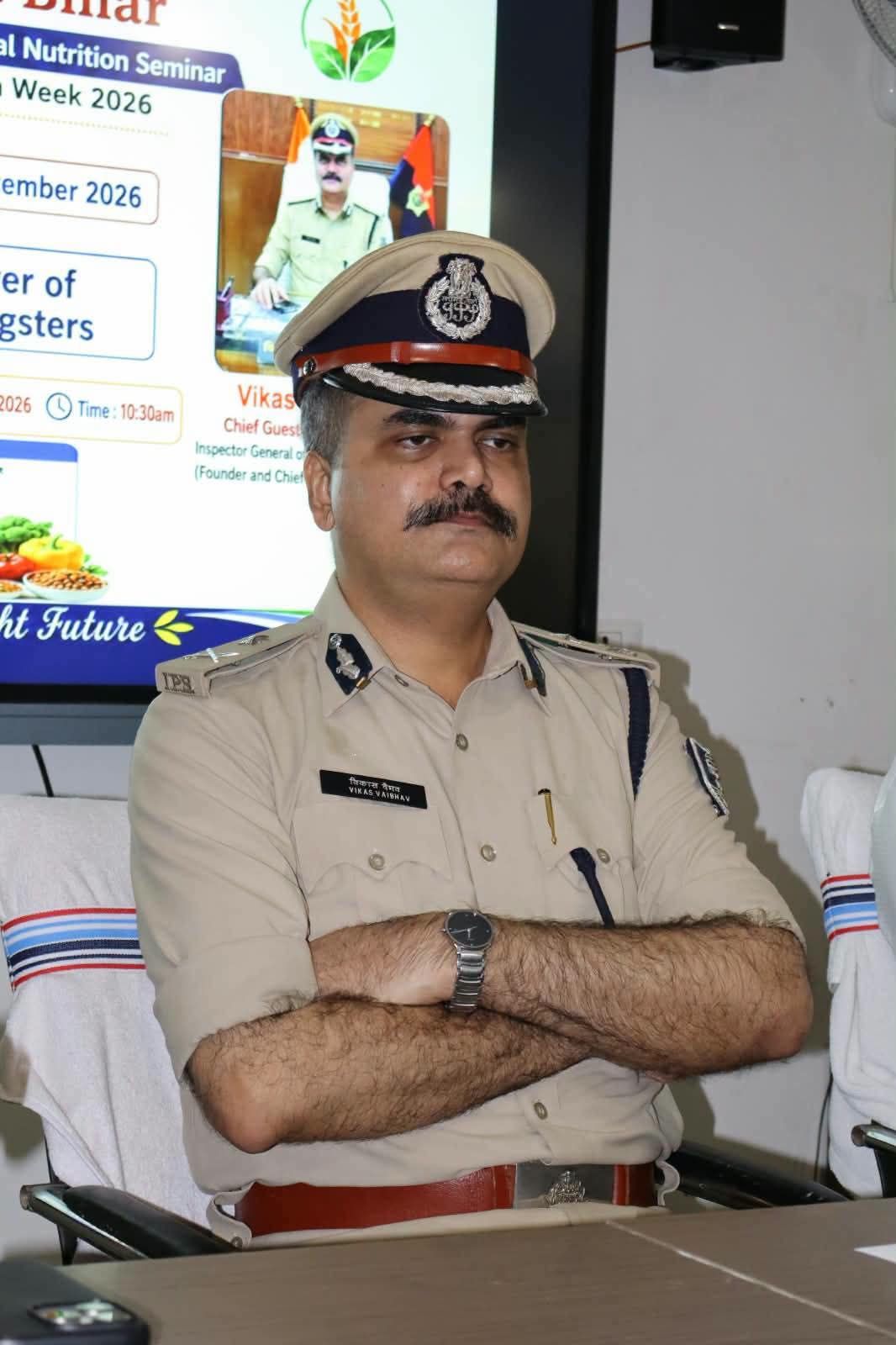
Indian Police Service’s officer, Vikas Vaibhav, started Let’s Inspire Bihar in 2021, which is an initiative to mobilise ordinary citizens to contribute to the growth of the Bihar state. Image: Canva
Indian Police Service’s officer, Vikas Vaibhav, started Let’s Inspire Bihar in 2021, which is an initiative to mobilise ordinary citizens to contribute to the growth of the Bihar state.
Vaibhav’s premise is that public problems cannot be addressed by government intervention alone.
Citizens, entrepreneurs, professionals, and the diaspora need to take an active role in shaping the state’s future.
What began as an appeal to people to give back to their home state has grown into a network of volunteers, education centres, and entrepreneurs.
The initiative connects these groups across geographical boundaries and encourages them to contribute their time, knowledge, resources, and expertise.
Vaibhav is currently the Inspector General of Police at the Magadh Range (a group of five districts, namely Gaya, Aurangabad, Nawada, Jehanabad, and Arwal).
Drawing on the state’s past to shape its future
Speaking to GovInsider, Vaibhav says that he was motivated to start Let’s Inspire Bihar from what he sees as a disconnect between the state’s historical legacy and its present economic circumstances.
The state was once a centre of knowledge, intellectual exchange and cultural influence, with ancient centres of higher learning, like Nalanda and Vikramashila, drawing scholars from across the world.
Yet, it continues to face significant development challenges.
One opportunity he sees is connecting traditions with contemporary research.
Citing an interaction with a former Indian Institutes of Technology (IIT) associate working in artificial intelligence (AI), Vaibhav discusses how the Bihar state’s reputation in yoga and human consciousness (through the Bihar School of Yoga) could offer perspectives for researchers exploring AI and cognition.
He believes that the state’s history can be tapped to allow its people to look beyond differences of identity, language, and ideology to pursue common goals.
“When we discuss development, people often focus on their individual interests rather than shared vision,” he says.
Lessons from community-oriented policing
Vaibhav's approach to citizen mobilisation is influenced by his experience in policing, particularly his earlier assignments in areas affected by extremist activities.
He says that conventional enforcement measures cannot address every challenge, and that lasting change requires communication, transparency, and building trust with local communities.
During his earlier postings, he experimented with approaches that involved engaging directly with villagers, understanding their concerns, and exploring opportunities to improve their economic circumstances.
In one experience, he describes how police personnel moved beyond conventional operations to establish contact with communities that were disconnected from the outside world.
This engagement helped identify local concerns and restore people's confidence in the policing interventions.
Now through Let’s Inspire Bihar, he wanted to empower communities to participate in their own development, instead of treating them merely as recipients of government interventions.
He also emphasises the importance of the public sector to be transparent about the limits of what an institution can deliver.
Clearly communicating these limits helps establish credibility among the people.
This philosophy is reflected in the initiative’s emphasis on voluntary participation and collective ownership.
Building a network of contributors
More than 4.25 lakh (0.425 million) people are connected through the initiative’s WhatsApp groups, which covers different districts and communities.
The network also reaches the Bihari diaspora, with chapters and connections across international locations.
The idea is to give people living outside Bihar state a way to contribute to development activities in their hometowns.
For instance, a professional living in New Jersey who wants to support an educational initiative in their native village can connect through the network of people working on the ground.
According to Vaibhav, around 104 people are now actively contributing to initiatives in their villages or districts, by setting up libraries and providing educational resources to support scholarships and organise medical camps.
Participation does not have to be financial, as alumni can conduct motivational sessions and other professionals can share their expertise.
The initiative is also bringing associations and institutions into the network to mobilise resources and coordinate activities.
This reflects its broader objective to create an ecosystem in which citizens can contribute according to their capabilities rather than depending entirely on government-led programmes. y
Education as entry point for social change
Education is a key area of intervention for Vaidhav’s initiative.
What started with three education centres in 2022 has expanded to multiple locations.
Vaibhav says the initiative currently operates 46 free education centres across 20 districts, catering to more than 3,000 students.
The centres are largely supported by volunteers who contribute their time, mobilise funds, and help manage educational activities.
Beyond improving access to education, he believes students should also develop the skills and capabilities required to become financially independent and contribute to society.
The broader vision is to create opportunities for young people to become entrepreneurs and innovators, instead of limiting their aspirations to conventional employment.
Bihar’s young people have long looked at government jobs and competitive exams as the surest route to a career.
Vaibhav wants entrepreneurship to be seen as an equally viable path, which could create new economic activity within the state, he says.
Creating jobs through local startups
The initiative also engages with entrepreneurs and startups to encourage job creation.
Vaibhav says that the initiative is currently connected with around 600 startups, although the extent of their participation and current operational status needs further examination.
Many of these businesses operate in the services and agriculture sectors.
The native dry fruit of Makhana (fox nuts) offers opportunities for entrepreneurs to develop businesses around processing, packaging, and marketing.
Vaibhav points to a startup making incense sticks that began with a relatively small market in the state, before gradually expanding to international markets like Singapore and Saudi Arabia.
Now, it employs more than 100 people.
Manufacturing is another area of potential. Most startups in the network are service-oriented, but integrated manufacturing facilities could open up more businesses and jobs, he says.
The initiative's longer-term ambition is to encourage at least five startups in every district, with each generating around 100 jobs by 2028.
Achieving this would require more than identifying entrepreneurs. It would involve building local capabilities, improving market access, and creating an environment in which businesses can grow.
A movement beyond one individual
Building a citizen-led initiative has not been without challenges.
Vaibhav recalls that when the initiative began in 2021, he had to personally travel to different districts, engage with people, and explain its objectives, often using weekends when his official responsibilities allowed.
As participation grew, the initiative also attracted scrutiny and different interpretations of its purpose.
Some people questioned whether it was connected to political interests or other agendas.
He says these challenges tested the initiative during its early years, but continued engagement and transparency helped it gain acceptance over time.
Government officials and police personnel have also participated in different activities, including teaching at education centres and supporting community initiatives.
The network has also facilitated more than 300 free medical camps, which according to Vaibhav, have benefited over 60,000 people.
While these activities demonstrate the breadth of participation, the larger test will be whether such voluntary efforts can translate into sustained and measurable development outcomes.
The initiative's success will ultimately depend on its ability to move beyond mobilisation and build sustainable institutions, businesses and community-led programmes, he says.