
This is what an agile public sector agency looks like
By Sol Gonzalez
The one-stop centre for Singapore government’s digital services, ServiceSG, shows how embedding adaptability and agility in its efforts contributes to the success of providing relevant and inclusive services for citizens.
-1779695122139.jpg)
ServiceSG shares how agility is ultimately about closing the distance between government and citizens, not just in philosophy, but in practice, one community at a time. Image: ServiceSG.
Agility means different things for different people.
To an athlete, it means quick and effortless movements.
While in a workplace, agility is less about physical speed, and more about an organisation’s capacity to adapt and respond quickly to emerging needs without losing momentum.
This is the case for ServiceSG, a department within Singapore’s Public Service Division (PSD), which has embraced agility and constantly reimagined citizen services to meet their evolving needs.
The agency's guiding philosophy is simple: rather than expecting citizens to come to the government, the government should meet citizens where they are.
"Rather than waiting for problems to surface, we proactively transform our service delivery philosophy — moving from 'come to us' to 'we'll meet you where you are'," says ServiceSG's Deputy Director (ServiceSG Centre Operations & Planning), Astin Lee, to GovInsider.
Agility is not just about moving fast by starting small — it is also moving “thoughtfully and decisively” when gaps emerge, she says.
The government has traditionally delivered services through physical service centres.
On one hand, rapid advancements in technology means that there is an opportunity to digitalise all services to serve citizens more effectively. On the other hand, the digitalisation of service delivery across the whole of government risks the social exclusion of seniors and others who struggle to transact digitally.
“So how do we reap the systems level productivity benefits of digitalisation while ensuring that those who are digitally less confident can be served effectively with heart?” she notes.
The answer lies in streamlining different agency-centric physical service centres into a network of integrated whole-of-government service centres that enable public officers to provide citizen services, and using video conferencing as an enabler to extend the human interaction with citizens beyond the walls of these physical service centres.
ServiceSG received the Agility Award at the GovInsider’s Festival of Innovation (FOI) Awards 2026 in recognition of its foresight to adapt its services to meet the rising expectations of citizens.
Inclusion and accessibility as starting points
Lee shares that agility shapes ServiceSG’s approach to citizen services in three ways:
- Listening to emerging citizen needs instead of assuming that existing solutions are adequate;
- Experimenting with multiple approaches – across different locations, formats, and channels - rather than betting on a single solution; and
- Embedding continuous learning and adaptation into everything they do, so that every interaction is an opportunity to refine their approach.
Fundamentally, this means moving beyond one-size-fits-all solutions delivered from one fixed place, notes Lee.
Today, ServiceSG serves citizens through physical centres via face to face interactions, video consultations, and peer support networks – a deliberate multi-channel ecosystem designed so that personal preferences and capabilities don’t become barriers to accessing government support.
“By offering multiple modalities for the same services, we ensure that personal preferences and capabilities don't become barriers to accessing government support,” she says.
One of the insights obtained by listening to the community was that seniors trust and learn best from their peers.
That’s how Community Kakis started in 2022. As a peer-to-peer support group, seniors exchange experiences in overcoming digital barriers, as well as render technical support and practical advice to less tech-savvy peers to confidently navigate government’s digital services.
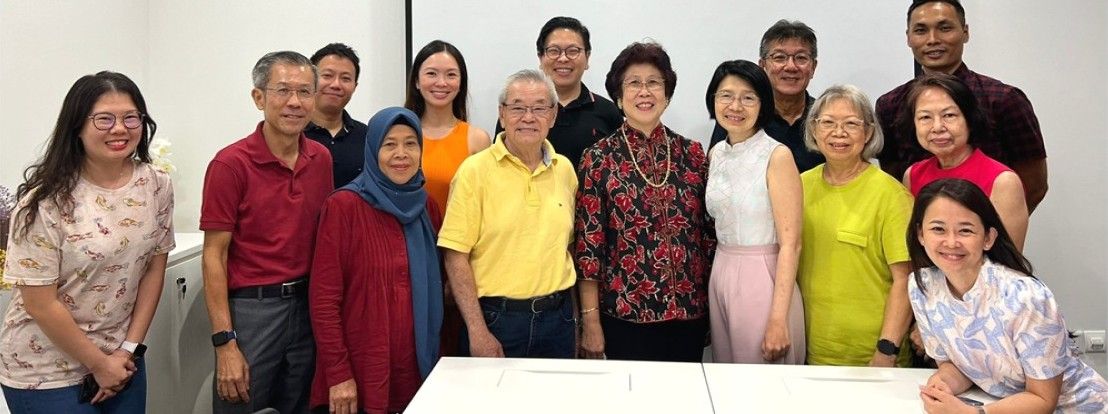
Rather than bringing seniors to a service counter, this initiative brought support directly into their social circles and everyday environments.
The impact was “transformative,” says Lee, as the peer ambassadors understand the unique concerns and communication preferences of their fellow seniors, such as their fear of making mistakes online and preference for step-by-step guidance over quick tutorials.
“We didn't anticipate how quickly Community Kakis who are our senior volunteers would become informal advisors to our service design. They started providing insights not just about digital adoption, but about policy communication, service gaps, and even suggestions for new services based on conversations with their peers,” says Lee.
Community support
Efforts to ensure access to government services for seniors have been continuous, shares Lee.
Recognising that many seniors will become less mobile as the society rapidly ages, ServiceSG in the Community (SITC) was launched in October 2025 — a direct extension of the "meet you where you are" philosophy into practice.
Rather than building new infrastructure, ServiceSG leveraged existing community networks and partnerships to increase the reach and impact of its services to citizens.
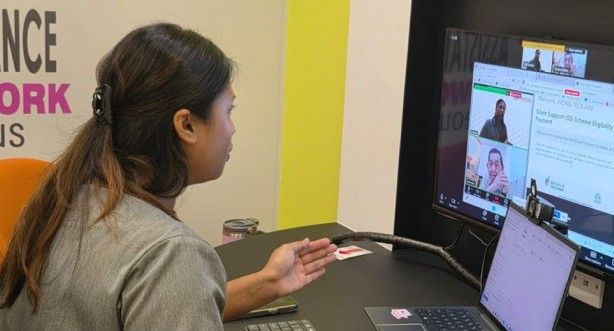
The initiative provides secure and user-friendly video conferencing for seniors to manage transactions, delivered through Active Ageing Centres (AACs) that seniors already know and trust within the community.
This is ServiceSG's multi-channel model in action: combining remote service delivery with a familiar physical setting, and pairing technology with the human relationships that AAC staff have already built with seniors.
The result is that technology becomes less intimidating, and seniors receive both practical assistance and emotional support in the same visit.
“The 96 per cent satisfaction rate for this initiative shows the impact of technology and genuine human care for digitally hesitant citizens,” adds Lee.
For this initiative, the AACs also helped to map senior journeys, test workflows, and refine processes based on feedback from seniors.
Lee highlights the value of collaboration across government and community partners to succeed and continuously improve based on partner insights.
“ServiceSG brings cross-agency expertise and systems integration, while community partners bring trust, local knowledge, and established relationships. Success comes from combining these strengths rather than trying to do everything ourselves,” she says.
Learning from the process
In this ongoing journey to respond to citizens’ evolving needs, the biggest surprise was how technology could help breach gaps even for those with limited digital skills, says Lee.
While they initially expected resistance to technology-mediated interactions, many seniors showed appreciation to the privacy and personal attention of video consultations and one-on-one time with officers without feeling rushed or observed by others.
“We even found that some of our most digitally hesitant seniors became advocates for these new service models once they experienced them. They started referring friends and family, becoming ambassadors for services they initially viewed with scepticism,” notes Lee.
The positive responses gathered by these innovative approaches signal that ServiceSG is doing the right work to adapt its service approach to different citizen needs, serving as an example for other agencies that seek to embrace agility.
When asked about her advice for other public servants to practice agility, Lee says that embracing “both/and” thinking rather than “either/or” helps — creating multiple pathways and providing different choices that citizens can select based on their preferences and capabilities.
She notes that investing in partnerships also helps to create more inclusive solutions and better outcomes when governments work with society to address more complex social challenges.
“And build learning into everything you do. Every citizen interaction is data about what's working and what isn't. Create systems to capture, analyse, and act on this feedback quickly,” she adds.
Lee gives a clear advice: “don’t wait for problems to become crises before acting”, adding that agility requires courage to acknowledge when current approaches don’t serve all citizens, even if they work well for the majority.
GovInsider previously shared how Armenia’s Information Systems Agency’s Head of UX & Digital Service Delivery noted a similar point: inclusiveness sometimes begins by looking for exceptions.
"The goal isn't just to serve citizens efficiently — it's to serve them wherever they are, in ways that strengthen their connection to government and community.
"When we get this right, we don't just deliver services; we build trust and social cohesion that benefits everyone,” concludes Lee.
For ServiceSG, agility is ultimately about closing the distance between government and citizens — not just in philosophy, but in practice, one community at a time.