
Uruguay’s Govtech working with neighbours to integrate digital IDs across the region
The case of Latin America shows the advantages that have accrued due to the linking up of digital ID systems of different countries and also the way forward.

A broker not only generates a national digital ID ecosystem but also ensures the standardisation of identification at the regional level. Image: Canva
This is the second of a two-part story on interoperable digital ID systems in Latin America. The first part of this story can be found here.
With the support of the e-Government Network in Latin America and the Caribbean Red Gealc, work began on the first pilot experiences for integrating digital IDs in the region.
In 2023, ID Uruguay was integrated with Autenticar, an Argentine digital ID broker developed for this purpose, at the testing level.
Work also immediately began with Brazil, which has a broker with the same standards as ID Uruguay called GOV.br. But Brazil has a higher volume of use, 4,500 integrated digital services and 300 million accesses per month.
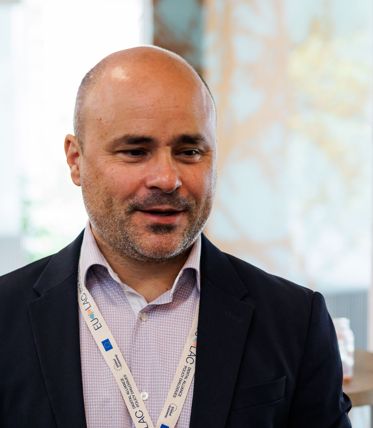
The writer’s team at AGESIC, the Govtech agency in Uruguay, experienced a process of collaboration, debate, and learning among the teams in the three countries.
The team concluded that if they integrated broker against broker, each broker would consider the other as a group of ID providers.
A broker not only generates a national digital ID ecosystem but is also a key element that ensures the standardisation of identification at the regional level.
In October 2024, a historic milestone was achieved: the first digital ID integration in Latin America and the Caribbean went into production with the integration of ID Uruguay with GOV.br.
This allowed Brazilians to access 40 digital services in Uruguay using their trusted Brazilian digital IDs.
This was already possible in the physical world for many decades when Brazilians came to Uruguay in person with their ID or passport to perform procedures or services, but taking advantage of all the benefits of the digital world.
Uruguay’s experience testing across the region with Argentina and Brazil has demonstrated that the digital ID broker is a fundamental element in enabling cross-border digital ID on digital government platforms.
This co-creation process between the countries allowed not only to achieve the first case of cross-border digital ID, but also to design and validate the standard to promote cross-border digital ID throughout the region.
The support of the organisations and the collaborative environment between the teams from different countries involved were very important.
Important advantages
In addition to enabling cross-border digital ID, the broker generates several important advantages by developing a national digital ID ecosystem:
Firstly, it enables the possibility of having multiple public and private digital ID providers in a country, fostering innovation and achieving greater coverage.
To subscribe to the GovInsider bulletin, click here.
Secondly, integrating the broker with intelligent cybersecurity services allows for strengthening all digital IDs across the entire ecosystem, reducing risks, increasing efficiency, and optimising investment in security.
Thirdly, it produces a large volume of reliable statistical information, which can be used for decision-making or the generation of open data.
It separates the national ecosystem from the international one and can perform the necessary data transformations and verifications between both worlds.
Enabling new innovative digital ID methods for use in digital services such as decentralised IDs or verifiable credentials through Open ID Connect for Verifiable Credentials (OIDC4VC) would simply require integrating them into the broker.
Model for scaling in a standardised, sustainable, and secure way towards the development of digital identification as a pillar of DPI
Based on this experience, the team worked with the member countries of the GEALC Network to specify a model broker.
With support from the Inter-American Development Bank (IDB) and the Organisation of American States (OAS) (since the network's inception), and recently from the World Bank and Co-Develop, a project was designed and funding secured for its development.
This initiative has sparked the interest of a broad community of leading global organisations involved in the development of DPIs, such as the Center for Digital Public Infrastructure (CDPI), the Digital Public Goods Alliance (which aims to accredit the model broker once developed), and 50 in 5, among others.
Minimum viable product by year-end
A minimum viable product (MVP) for a digital ID broker is currently being developed and is expected to launch by the end of the year.
These implementations represent a significant challenge in the countries in the region, including the regulatory framework, infrastructure, and governance.
In parallel, use cases are being agreed upon, i.e., services of interest to foreigners using foreign IDs in each country. In this regard, progress is being made to include different sectors such as foreign trade, tax administration, immigration, and tourism, among others.
We are aiming to achieve the implementation of the model broker in some countries by the end of this year and integrate it with ID Uruguay and GOV.br for some relevant use cases.
Future vision
Next year, the broker will seek to evolve and, above all, increase the number of countries using it, generating a national digital identification ecosystem and integrating it with the rest to enable cross-border digital identification.
The integration of more secure and easy-to-use identification methods will also be sought, such as the use of verifiable credentials through OIDC4VC, or password less methods (such as FIDO2), under the concept of "continuous authentication."
This is given that the "username and password" model created several decades ago is becoming obsolete and vulnerable to various types of attacks (phishing, leaks, brute force, dictionary, and malware among others).
From the GEALC Network as the coordinator, with all the involved actors, once the broker has been developed, work must begin on governance and continue integrating countries.
To scale more sustainably across all countries in Latin America and the Caribbean, it would be necessary to evolve toward a "broker hub," with each country joining the hub only once.
It is necessary to open spaces for technical and regulatory debate to determine the governance and architecture of the hub, as well as whether a distributed or centralised model is being sought.
The model broker was being approached as a digital public good (DPG) to be used by various countries.
This DPG, developed by the Gealc Network, can be used by countries wishing to develop a digital identification ecosystem and, through various organisations such as those mentioned above, can be taken to other continents to analyse the possibility of adopting similar ecosystems.
Impact
The most important aspect of this entire plan to achieve cross-border digital identification in Latin America and the Caribbean was to always keep in mind the desired impact.
It is important to keep in mind that what we want to achieve is what has already been happening with traditional identification for decades, but taking advantage of all the benefits offered by ICTs.
A person from any country should be able to access a digital service from another country using a reliable digital ID from their country of origin.
This simple act enables nothing more and nothing less than all digital services in the region to be provided remotely, from other countries, achieving considerable progress in the development of digital public infrastructure.
Sectors such as foreign trade, tourism, transportation, education, immigration, and tax administration would greatly facilitate access for foreigners securely and simply.
In turn, people could meet their needs with services from other countries from their homes at minimal cost, in a very simple and reliable way.
Progress towards sustainable and standardised digital ID in Latin America and the Caribbean is greatly aided by the collaboration of large, reputable organisations and diverse professionals from various countries.
This collective effort makes the journey toward this crucial DPI pillar easier, more enjoyable, and more appealing.
-------
The author is the Digital Identity Manager at AGESIC, the Govtech agency of Uruguay. He is responsible for developing the national digital identification and signature platforms in collaboration with the national ecosystem.