
Using a bus to deliver interactive STEM education to every child
By Yen Ocampo
The Philippines has strengthened science and technology education by combining digital tools with community engagement, enabling students to explore real-world applications and future opportunities.
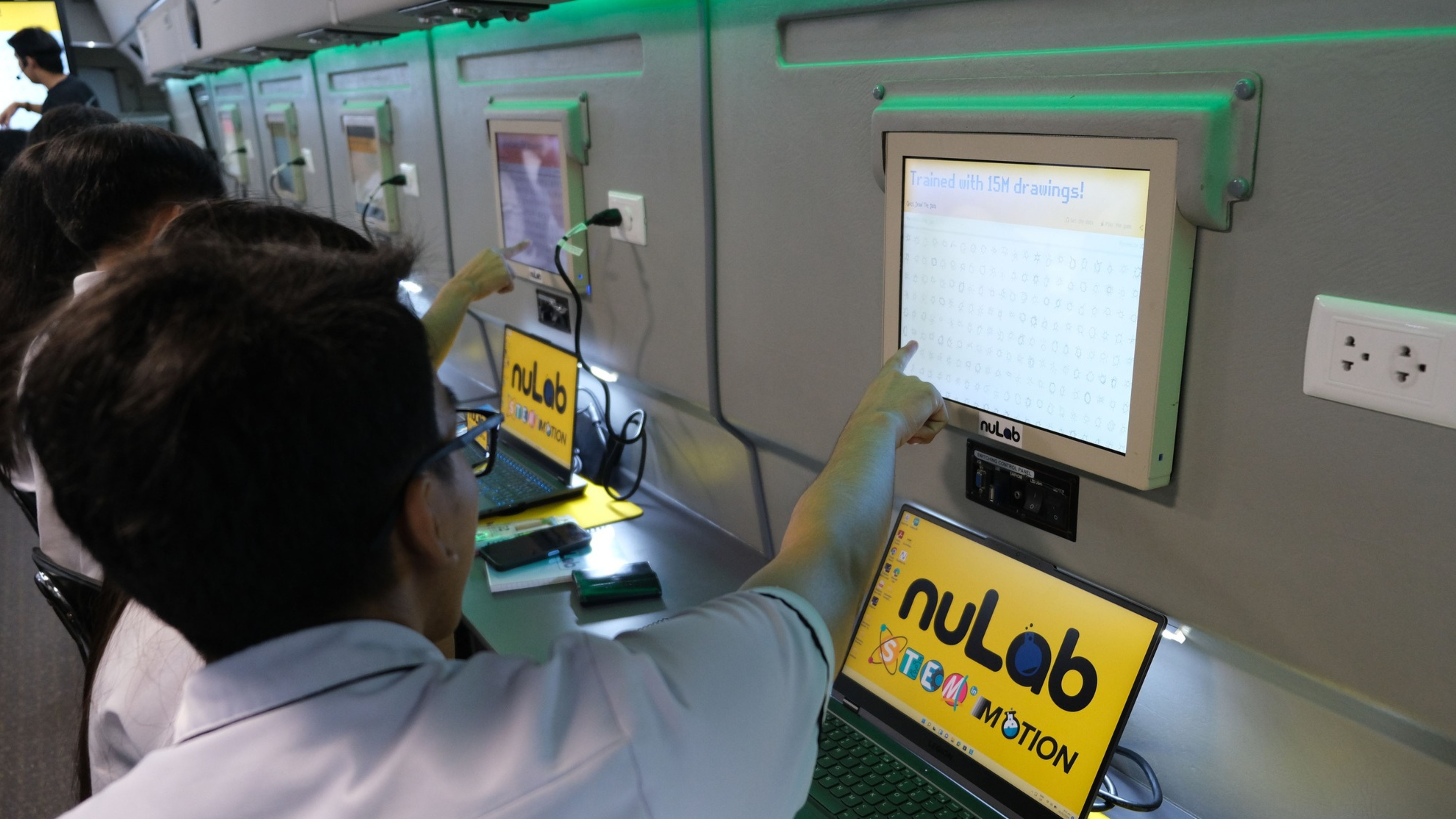
Students participate in hands-on learning on board the nuLab: STEM in Motion, a bus-based mobile science lab developed by DOST-SEI that offers interactive modules in marine science, data science, weather science, earth science, and IoT to communities nationwide. Image: DOST-SEI.
The Philippines’ Department of Science and Technology - Science Education Institute’s (DOST-SEI) has rolled out nuLab: STEM in Motion to strengthen Science, Technology, Engineering, and Mathematics (STEM) education in the country.
The nuLab: STEM in Motion is a mobile learning facility that delivers hands-on learning experiences, focusing on areas like marine science, data science, weather science, earth science, and the Internet of Things (IoT).
Speaking to GovInsider, DOST-SEI Research Supervisor Juan Antonio R Tuazon says nuLab: STEM in Motion brings these specialised topics directly to students, especially in remote and underserved areas.
Noting that the programme makes complex concepts more accessible and engaging, Tuazon adds that learners not only explore these disciplines in an interactive setting guided by scientists and experts, but also develop greater interest, confidence, and curiosity in pursuing STEM-related paths.
The nuLab has been recognised as a national priority programme in 2024 by the National Economic Development Authority (NEDA).
The programme is part of the government’s efforts to strengthen STEM education in the country.
Through initiatives like science camps, digital materials, competitions, and career guidance, the government aims to tackle gaps in facilities, support and training for educators, and encourage students to pursue science and technology careers.
Practical exposure to real-world applications of science and technology helps students better understand how these fields impact everyday life and future careers, Tuazon notes.
Building skills for innovation
He adds that his department continues to develop programmes aligned with emerging fields such as artificial intelligence (AI), robotics, climate science, and digital technologies to help build a future-ready workforce.
Tuazon, who was one of the speakers at GovInsider’s Festival of Innovation (FOI) 2026 in March, highlights that DOST-SEI’s upcoming projects target gaps in the Philippines’ science and technology workforce, with nuLab planning to introduce additional modules in future-critical fields as it expands following its successful launch in 2019.
“DOST-SEI integrates digital tools, simulation technologies, and emerging tech applications into its programmes to prepare the future STEM workforce by exposing students and educators to the tools and environments that increasingly shape scientific research and industry,” Tuazon explains.
Digital tools assist DOST-SEI in making its programmes more interactive and enrich learning by presenting simulations, expanding learning opportunities through virtual labs, AI software, data loggers and sensors that enhance the STEM learning of the students, says Tuazon.
With the integration of these tools into education and training, students develop digital literacy, critical thinking, and innovation skills that are essential in modern science and technology fields.
“nuLab demonstrates this integration clearly, helping students build early competencies aligned with AI-driven industries,” Tuazon says.
Empowering digital learners
DOST-SEI has a track record of developing alternative learning materials for students nationwide, particularly those in remote communities.
In 2020, during the Covid-19 pandemic, nuLab transformed its mobile bus-based learning curriculum into a radio and video format for elementary and high school students to supplement their learning during online classes.
According to Tuazon, pre- and post-evaluation surveys, monitoring systems, and analytics help DOST-SEI assess reach, effectiveness, and areas for programme enhancement.
He notes that nuLab contributes by generating localised data from road trips, including student feedback, engagement levels, and regional trends in STEM interests.
“These insights guide strategic improvements and ensure resources are directed to where they are most needed,” Tuazon says.
He highlights that DOST-SEI is strengthening its efforts to reach more students across the country, introducing them to digital tools and equipping them with future-ready skills needed in modern science and technology.
In delivering its programmes, the goal is to guide more students in the safe use of technology while building their skills, says Tuazon, adding: “nuLab’s current modules cover data science, IoT, and computer vision, helping students grasp real-world applications and their wider impacts.”