
Faith Vonnie Yim, Senior Assistant Manager, Innovation & Improvement Office, Khoo Teck Puat Hospital and Yishun Community Hospital, NHG Health, Singapore
Meet the young public sector officials in the inaugural Young & Official Report 2026.
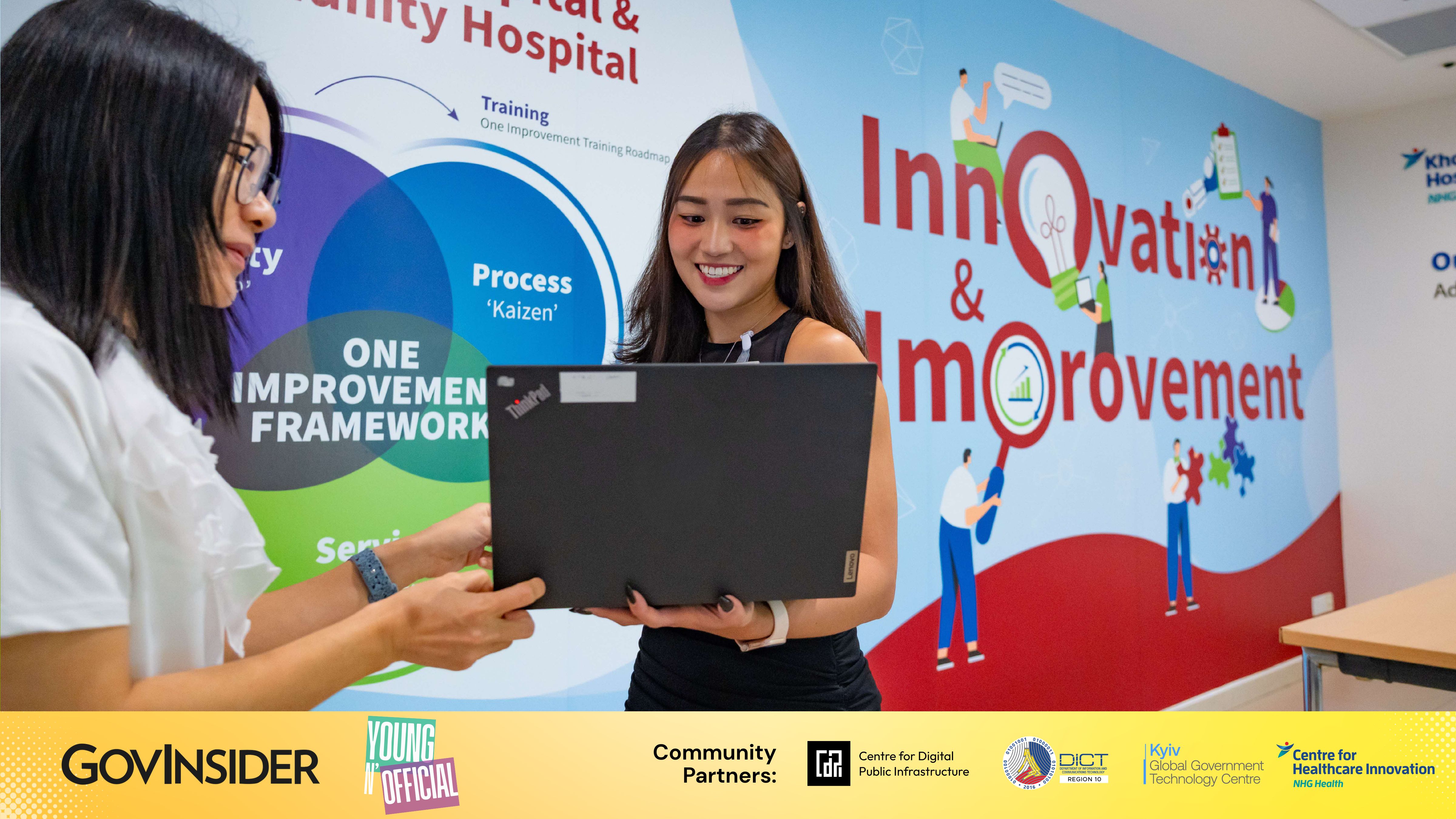
Faith Vonnie Yim, Senior Assistant Manager, Innovation & Improvement Office, Khoo Teck Puat Hospital and Yishun Community Hospital, NHG Health, Singapore. Image: NHG Health.
1) What does public service mean to you? Can you share more about your role in the public sector?
Public service, to me, means putting purpose before self, committing to the roles we play, whether on the front lines or behind the scenes, to improve lives and strengthen our community.
It’s about stewardship, being accountable for resources, upholding trust and making decisions that are fair, responsible and anchored in the public good. In healthcare, this translates into enabling meaningful care outcomes and experiences at scale.
I am a Senior Assistant Manager from the Innovation & Improvement Office at Khoo Teck Puat Hospital (KTPH) and Yishun Community Hospital (YCH), where I support the Facilitation Unit.
My role focuses on partnering teams across disciplines, improving systems, and using data and innovation thoughtfully so that services are safer, more accessible and more sustainable for patients and staff alike.
2) Tell us about a project you championed. What impact did it have on the community?
One project I championed was the development of KARINA, an artificial intelligence (AI)‑assisted scheduling solution for KTPH’s mobile inpatient at home programme, known as KTPH@Home. Previously, nurses spent up to three hours daily manually scheduling visits, managing complex constraints such as routing, time‑sensitive care, and care continuity.
Together with the nursing team and my Data & Analytics colleagues, I facilitated the end‑to‑end process review and co‑developed complex decision matrices and scheduling protocols aligned to real workflows. Through iterative pilots and feedback, we refined the system to provide accurate and reliable outcomes.
Since its inception, KARINA has reduced scheduling time by 33%, freeing up nursing capacity to allow patients timely access to acute care in the comfort of their homes!
3) As a young professional, how has your unique background or perspective allowed you to identify a solution that others in your organisation might have overlooked?
My career journey has spanned operations, financial advisory, personal training, and now facilitation. Through these experiences, I have learnt that meaningful innovation and improvement begin with deeply understanding systems, people, and processes.
This has shaped how I approach problem-solving today. I have come to realise that effective solutions are rarely about applying generic fixes, but about listening carefully, uncovering root causes, and grounding insights with data. In complex healthcare environments, this unique perspective allows me to identify innovative solutions others might overlook and co-design with diverse stakeholders what truly fits the context.
4) What is your personal strategy for maintaining your creative energy when faced with bureaucracy?
I personally view bureaucracy as an opportunity to refine ideas and ensure solutions remain both innovative and safe. In healthcare, regulations and policies serve as important guardrails that guide us towards more thoughtful and responsible design.
To maintain my creative energy, I choose to approach these positively, seeing them as a way to sharpen ideas rather than limit them. I also draw motivation from supportive leadership and stakeholders, who create an environment where ideas can continue to evolve and push boundaries.
This keeps me motivated, knowing that each step forward brings us closer to solutions that make a meaningful difference in care delivery.
5) If you had just one area to invest in to accelerate transformation in the public sector (regulation, technology, talent, etc.), which one would you choose and why?
Culture is definitely one area I would invest in. Without the right culture, even with abundant resources, it is difficult to build the momentum needed to drive and sustain meaningful change.
To me, culture is the heart of transformation. It fosters openness to improvement, encourages individuals to question existing processes, creates confidence in acknowledging gaps, and empowers them to step beyond their comfort zones to try novel approaches.
Ultimately, culture sets the foundation for an environment where everyone feels empowered to speak up, take ownership, and contribute to change. When this mindset is embedded, continuous innovation and improvement become not just a project but part of how we work every day.
6) What is your greatest ambition as you grow in your public service career?
My diverse experiences were shaped by a common purpose, a genuine desire to help improve the lives of others. This has always been something deeply rooted in me.
Over time, I realised that my greatest ambition goes beyond helping, and that is to create depth and quality of the impact in the help I provide. I hope not only to support others in their journeys, but also to inspire them to think differently, embrace change and become drivers themselves to spread the same ambition in their own work.
7) What is a “universal value” that connects everyone in your department – from interns to directors – and how do you use that to drive collaboration?
The universal value that connects everyone in the Innovation & Improvement Office is a shared commitment to continuous improvement, always staying curious, adaptable, and willing to learn.
Across our four pillars (Facilitation, Data & Analytics, Innovation, and AI), this common mindset helps us embrace challenges, stay open to change, and keep focus on better outcomes. We even have a butterfly mascot, Blixi, as a reminder of growth and positive change.
This shared value becomes our common ground when working with multidisciplinary teams across the organisation. Even when team members come from very different disciplines, it keeps us open, empathetic, and inclusive so we can align on the problem, use data to ground discussions, and co-design solutions that are practical to implement.
By drawing on all four pillars together, we help shift conversations from positions to possibilities and from ideas to measurable improvements.
8) What is the best piece of advice you’ve got for the next generation of public servants?
One of my biggest takeaways is the importance of staying open-minded and adaptable. I have learnt the value of resisting the urge to jump straight into the easiest solution or most trending technology and instead investing time in deeply understanding the problem and the people.
This is important because it determines how impactful and sustainable a solution will be. In complex environments like healthcare, solutions and technologies are rarely one-size-fits-all, and meaningful impact comes from tailoring approaches to specific needs.
I believe that as public servants, we also have a responsibility to inspire others to think differently, embrace change, and continue driving innovation and improvement in their own ways.
9) What is a myth you wish to debunk about young public servants?
A common myth is that young public servants lack experience of depth. While I understand that we may not have the wisdom from decades of experience, I believe this also presents an opportunity.
Entering with fresh perspectives allows us to reflect on existing systems and ways of working without preconceived assumptions. This enables us to challenge norms thoughtfully and explore how things could be done differently, creating a powerful balance. It encourages all of us, regardless of age or background, to stay open, continuously learn and improve together.
10) Write a letter to your future self in 2035. Please keep it within 200 words.
Dear future me,
I hope you have stayed true to your purpose of helping others and continue to find fulfilment in the impact you have created. Do not lose your sense of curiosity, empathy and openness, as these shape how you understand people and the work that you do.
Remember, beyond achievements, I hope you continue to find meaning in those moments when others see new possibilities and benefit from the work that you have done. As you continue to learn from people from all walks of life, keep inspiring those around you.