
Lau Zechariah Sean, Senior Assistant Manager, Specialist Outpatient Clinic, Khoo Teck Puat Hospital, NHG Health, Singapore
Meet the young public sector officials in the inaugural Young & Official Report 2026.
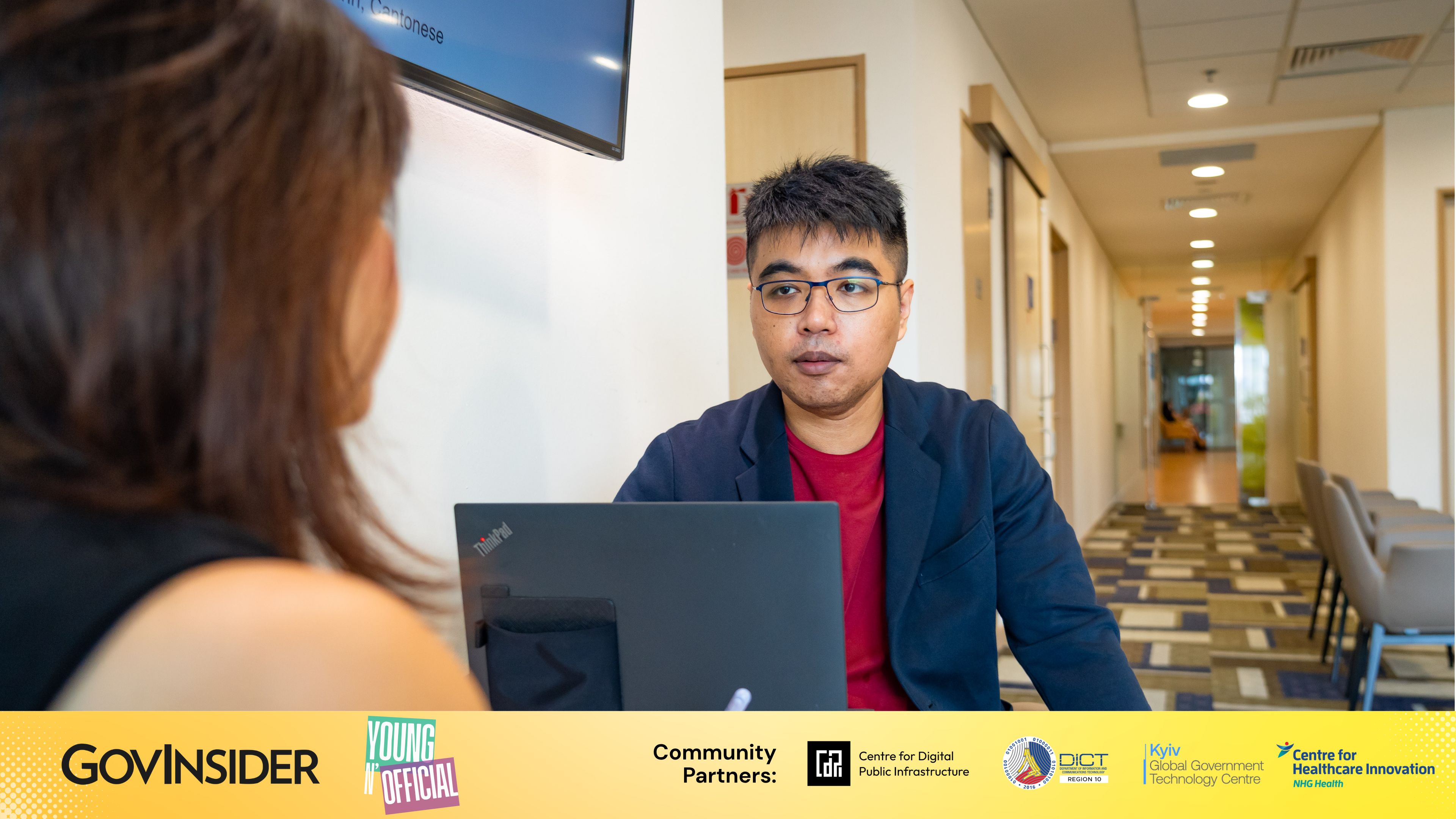
Lau Zechariah Sean, Senior Assistant Manager, Specialist Outpatient Clinic, Khoo Teck Puat Hospital, NHG Health, Singapore. Image: NHG Health
1) What does public service mean to you? Can you share more about your role in the public sector?
Public service, to me, means contributing to the betterment of society – serving with integrity and empathy towards fellow Singaporeans as we develop ways to support them in their daily lives and ensure their needs are met.
As a Senior Assistant Manager within the Specialist Outpatient Clinic (SOC) services at Khoo Teck Puat Hospital (KTPH), I lead the First Visit Resource Team (FVRT), a sub-unit responsible for triaging and booking all specialist referrals to ensure patients receive timely access to care.
My role spans several areas: leading a diverse group of ancillary staff to manage referrals efficiently, engaging clinical Heads of Department to optimise SOC resources, conducting data analysis to surface improvement opportunities, and collaborating with operations colleagues to develop new models of care within the SOC.
2) Tell us about a project you championed. What impact did it have on the community?
One of the key projects I championed was my first major initiative at SOC: consolidating the management of all referrals into a single department, the FVRT.
Previously, referral management at KTPH was fragmented across multiple departments, resulting in limited oversight and inefficiencies.
I led efforts to establish the FVRT and progressively centralise referral management from various departments.
This involved streamlining workflows, enhancing operational efficiency, and enabling more consistent oversight of referral processes.
Taken together, the consolidation of referral management resulted in shorter turnaround times for patients receiving their appointments, shorter appointment lead times, and better resource optimisation within the SOC.
3) As a young professional, how has your unique background or perspective allowed you to identify a solution that others in your organisations might have overlooked?
Having studied political science at both the undergraduate and postgraduate levels, I developed a habit of looking beyond what is happening to ask why - examining the underlying motivations, incentives, and behaviours at play rather than focusing purely on operational indicators and processes.
This perspective has been particularly valuable in my current role, where understanding why stakeholders are hesitant or how competing interests can be better aligned often matters as much as identifying what needs to change.
By addressing these root causes, I find that the solutions I arrive at tend to be more sustainable.
My background also sharpened my ability to interpret data and qualitative feedback in context.
Rather than treating feedback as isolated complaints or viewing metrics in a vacuum, I look for patterns that point to systemic gaps.
This has allowed me to contribute to solutions that address structural issues rather than applying short-term fixes - and to advocate for approaches that are both more inclusive and more lasting in their impact.
4) What is your personal strategy for maintaining your creative energy when faced with bureaucracy?
My personal strategy for maintaining creative energy when faced with bureaucracy is to consciously avoid taking things personally.
In bureaucratic environments, delays, constraints, and rigid processes are typically systemic in nature rather than a reflection of personal intent.
Keeping this in mind helps me stay emotionally grounded and focused on solutions rather than frustration. It also helps me maintain positive working relationships – keeping discussions objective, fostering collaborations, and sustaining goodwill across teams.
Beyond that, not taking things personally preserves the mental space I need for creativity.
Rather than reacting defensively to obstacles, I try to approach bureaucracy as a design challenge: understanding the constraints, working within them where necessary, and finding thoughtful ways to improve or navigate them.
This mindset keeps me curious, patient, and constructive, even when progress feels slow.
5) If you had just one area to invest in to accelerate transformation in the public sector (regulation, technology, talent, etc.), which one would you choose and why?
If I had to invest in just one area to accelerate public sector transformation, it would be in building effective leaders. Effective leadership is the single most powerful enabler of sustainable change.
While technology, regulation, and policy reforms are important, their impact ultimately depends on leaders who can set a clear vision, make sound decisions under uncertainty, and mobilise people across organisational and sectoral boundaries.
Investing in effective leaders strengthens integrity across the public sector as they set the tone at the top through their values, behaviours, and decision‑making.
This is especially critical in the public sector, where legitimacy and confidence in institutions are foundational to social cohesion and good governance.
Effective leadership also ensures organisational effectiveness, as capable leaders translate policy intent into action, align teams around shared outcomes, and make thoughtful trade‑offs in complex environments.
They enable collaboration across silos, use resources responsibly, and ensure that systems, technology, and talent are deployed in ways that deliver real value to citizens.
At the same time, investing in leaders creates a healthier and happier workplace.
Good leaders care about their people; they foster psychological safety, support professional growth, and give teams a sense of purpose beyond tasks and targets. When officers feel engaged, respected, and supported, morale improves, performance rises, and retention is strengthened.
6) What is your greatest ambition as you grow in your public service career?
My greatest ambition is to contribute to building a system that meaningfully narrows inequality and creates a more just society.
I believe the role of the public service extends beyond delivering services efficiently. It is to ensure that opportunities, protection, and dignity are accessible to all, especially those who are most vulnerable.
I hope to help design, implement and strengthen policies, institutions, and service delivery models that address structural inequities and ensure that no group is left behind, regardless of their starting point in life.
Ultimately, I want to be part of - and eventually help lead - a public service that reduces inequality not just through redistribution, but through empowerment.
This means creating pathways for social mobility, working towards greater equality of outcomes in areas like health and enabling every individual to participate meaningfully in society.
7) What is a “universal value” that connects everyone in your department – from interns to directors – and how do you use that to drive collaboration?
A core value we all share is a commitment to continuous improvement and a refusal to be complacent.
As a department, we have achieved many important milestones, but we do not allow past successes to define who we are today. Instead, we remain focused on refining our processes, pushing boundaries, and striving for even better outcomes for our patients.
8) What is the best piece of advice you’ve got for the next generation of public servants?
One piece of advice I would offer is to embrace taking risks and being comfortable with uncertainty - not having all the answers should not hold you back from moving forward.
While it is important to do your due diligence, such as planning and analysis, there comes a point where waiting for complete certainty can lead to missed opportunities.
Hence, having the courage to act on imperfect information is crucial, as growth often happens outside of our comfort zones.
Overall, we should be prepared and willing to take calculated risks, as it enables us to learn, adapt, and push ourselves to become better professionals.
9) What is a myth you wish to debunk about young public servants?
One myth I wish to debunk about young public servants is that they are overly idealistic and disconnected from operational realities.
While younger officers may begin with strong ideals, many are also deeply pragmatic.
They understand the constraints of policy, resources, and stakeholder needs. What sets them apart is their ability to balance aspiration with action.
Rather than being unrealistic, this blend of purpose and practicality is a strength, as it enables young public servants to question the status quo meaningfully, while still grounding their ideas in solutions that are implementable, sustainable, and impactful for the community.
While we may dream of castles in the sky, we are equally prepared to build the ladders needed to reach them.
10) Write a letter to your future self in 2035. Please keep it within 200 words.
Dear Zech (2035),
I’m writing this from an earlier chapter of your life, when things still feel uncertain, and the road ahead isn’t always clear. I hope that with time, you’ve grown not just in experience, but in perspective.
I hope that you’ve accomplished what you set out to do, helping to build a fairer and more just society, and that you did not lose your values along the way.
Hold on to them, because they are what guided you from the very beginning. Don’t forget that you were never meant to do this alone.
There are many others in public service who care deeply about making a difference. I hope you’ve found them – people who challenge you, support you, and create change alongside you.
Take care of yourself and don’t lose the drive that brought you here. I look forward to seeing the world that you’ve helped shape.
From
Zechariah (2026)