
Zoya Lytvyn, Head, Global Government Technology Centre, Ukraine
By James Yau
Meet the Women in GovTech 2025.
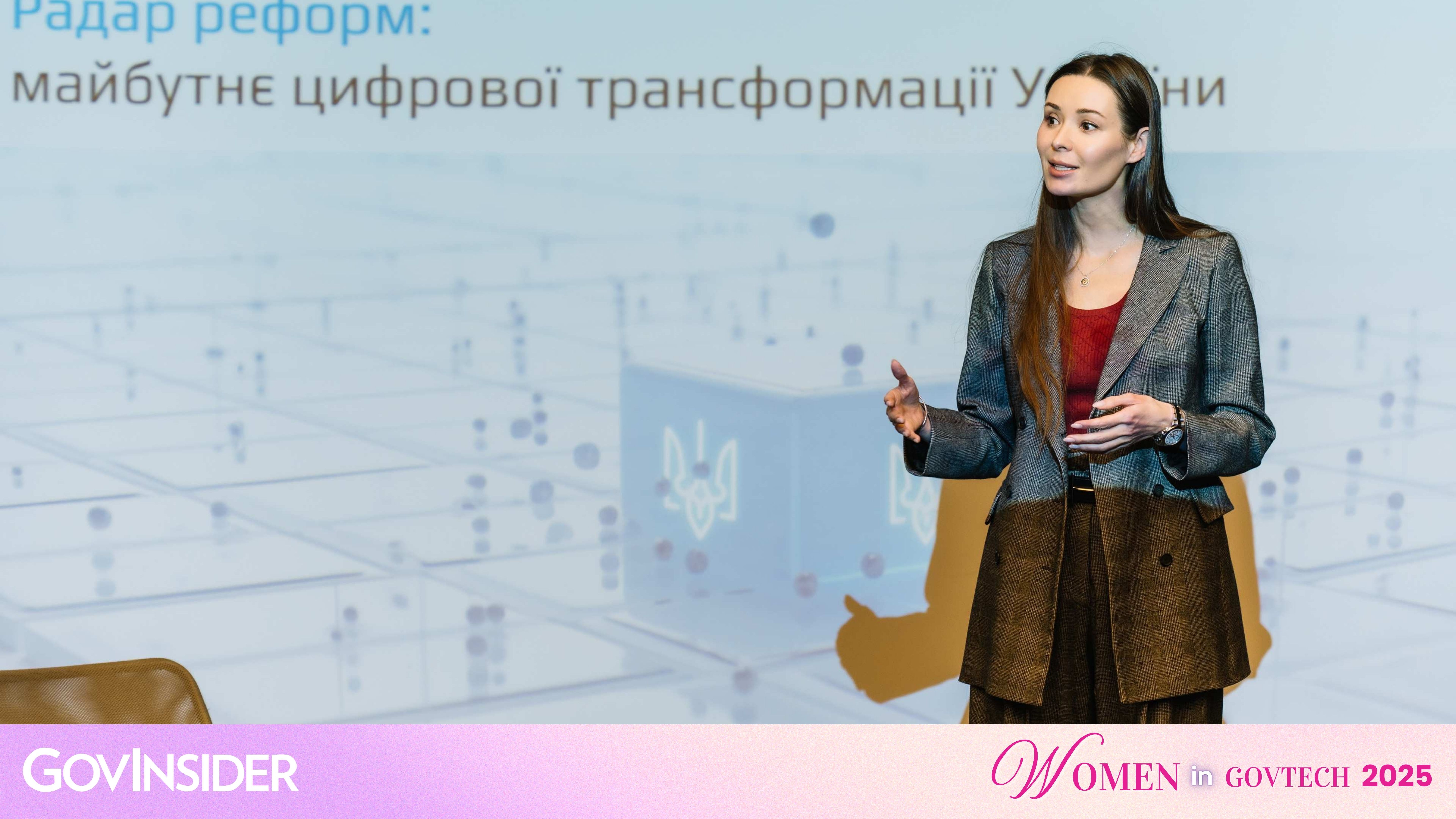
Zoya Lytvyn, Head, Global Government Technology Centre, shares about her journey. Image: Zoya Lytvyn
1) How do you use your role to ensure that technology and policy are truly inclusive?
In my role leading the Global Government Technology Centre in Kyiv I focus on ensuring we serve our primary goal: being a platform for dialogue and cooperation between governments, private sector entrepreneurs and academic circles.
From the beginning, we built GGTC Kyiv as an open, collaborative space where policymakers, civic tech leaders, innovators, and international partners come together to co-create by breaking the silos and isolation.
Through the Innovations Gateway programme for piloting innovations, to the GovTech Observatory, producing cutting-edge analytical tools, where we analyse policies and legislative framework to identify and eliminate policy gaps, we continuously ensure that real human needs are in the backbone of GovTech ecosystem.
2) What’s a moment in your career when you saw firsthand how technology or a new policy changed a citizen’s life for the better?
One of the most defining moments in my career came after the outbreak of the full‑scale war, when I saw technology not as an abstract signal of progress, but as a lifeline for children whose lives were torn apart by conflict.
At the beginning of the Covid pandemic, the Ukrainian Government engaged my team to create the Ukrainian Online School. It covers the entire secondary school curriculum and brings every child in front of the best teachers.
I never imagined our EdTech project would be needed in a situation even more terrible than Covid. But today more than 1 million kids are learning on the platform. They are connecting from within Ukraine and from 130 countries where they are refugees at the moment.
After the full‑scale war breakout, education in Ukraine is under existential threat: over 2,800 schools have been damaged or destroyed since February 2022.
As of this academic year, 4.6 million children face ongoing educational barriers because of the war, with nearly 1 million relying on online learning.
3) What was the most impactful project you worked on this year, and how did you measure its success in building trust and serving the needs of the public?
This year, one of the most impactful projects we led at GGTC Kyiv was the launch of GovTech Lab, Ukraine’s first open innovation programme for a public sector designed to prototype real-life solutions for government institutions, aligned with OECD frameworks and Interoperable Europe standards.
Through this initiative, we partnered with government entities in sectors such as tourism, legal assistance, and construction permits, and brought together startups from Ukraine and 17 other countries, including United Kingdom, Lithuania, Germany, Romania, Argentina, Nepal, Netherlands, Ghana, India, Spain, Brazil, Estonia, USA, Indonesia, Norway, Denmark.
In the first stage alone, 69 startups applied, and 7 teams will advance to testing their solutions within our Innovation Bootcamp and to presenting them at the Demo Day.
Alongside the Lab, our GovTech Ocean project mapped over 150 digital innovations across public sector areas including healthcare, environment, energy, education, and social protection, making it easier for ministries, donors, and innovators to identify gaps in solutions and collaborate more effectively.
We measured success through concrete indicators: the number of startups applying and advancing, the volume of digital innovations we mapped openly, and the direct engagement of ministries with new solutions.
Ultimately, success is seen in faster, more responsive services for citizens and in visible, accountable collaboration between government, innovators, and the public.
4) What was one unexpected lesson you learned this year about designing for real people? This can be about a specific project or a broader lesson about your work.
This year gave me a valuable insight that people do not think in terms of “digital transformation”. They think in terms of what matters most to each of us - life milestones.
Moments that truly matter: registering their new born child, receiving a benefit their life depends on, replacing a lost document, getting their first driving license, or, if your digital services provision system is innovative enough like in Ukraine - the day they concluded a marriage with a loved one.
Real innovation is often invisible - when it works well, people don’t notice the technology, they just notice that life is easier. This is the insight at the heart of Ukraine’s digital success story, at the heart of our innovative Diia ecosystem with over 150 services online.
5) We hear a lot about AI. What's a practical example of how AI can be used to make government services more inclusive and trustworthy?
A practical example of AI making government services more inclusive and trustworthy is Ukraine’s Diia.AI - the world’s first national AI assistant, actually.
Launched in 2025 in partnership with Google, it is a national-level AI assistant that guides citizens through public services using natural language. Instead of navigating complex websites or standing in queues, people can type requests like “I need an income certificate” or “My house was damaged,” and the assistant directs them to the right service or generates the necessary documents.
Since its launch, over 35,000 Ukrainians have used Diia.AI to generate more than 1,000 official documents, demonstrating that AI can have tangible, everyday impact.
To subscribe to the GovInsider bulletin, click here.
6) How are you preparing for the next wave of change in the public sector? What new skill, approach, or technology are you most excited to explore in the coming year?
Preparing for the next wave of change in the public sector means building on what Ukraine has mastered over the past six years: digital resilience.
From crisis response to war and displacement, we’ve learned how to remain a citizens-oriented state under extreme pressure and conditions.
The next frontier, in my view, is AI literacy, especially for public servants. Tools like Diia.AI have shown that AI can make government services more inclusive, accessible, and trustworthy, but to harness this potential responsibly, officials need practical skills in designing, managing, and evaluating AI systems in real-world policy contexts.
7) What advice do you have for public sector innovators who want to build a career focused on serving all citizens?
Start with people. Build solutions that make daily life easier, especially for those who are on the margins of service delivery and have to be included first. Build prototypes, test ideas, learn from real users, and keep data security and privacy protection at the centre of it.
And don’t innovate alone. The best results come from synergies and collaborations - across agencies, across sectors, with tech communities, and with partners who share your mission.
Innovation grows when we work as one ecosystem.
8) Who inspires you to build a more inclusive and trustworthy public sector?
I am inspired by young people. They may be only 15 per cent of our population today, but they are 100 per cent of our future.
When young people are given equal access to opportunities through digital tools and inclusive public services, they become powerful agents of change, pushing us as policy-makers, as a society to build a more open, trustworthy, and inclusive public sector based on equity principles.
9) If you had an unlimited budget, what would your dream project be?
As someone from Ukraine, my dream project would be a large-scale reskilling and upskilling platform offering high-quality online learning. With millions of people internally displaced by the Russia’s full-scale war on Ukraine, access to new skills is essential for rebuilding lives.
This would go beyond employment, reskilling is about restoring dignity, purpose, and mental well-being, and enabling people to contribute meaningfully to their communities and the country’s recovery.
10) Outside tech, what excites you the most?
Education excites me the most, particularly school systems and how national transformation can be driven through education.
I am deeply interested in education reform and EdTech, as well as in literature, especially classic fiction, which continues to shape how we understand society, values, and human nature.