Joanna Tan, Deputy Director Nursing, Ng Teng Fong General Hospital, Singapore
By Amit Roy Choudhury
Meet the Women in GovTech 2025.
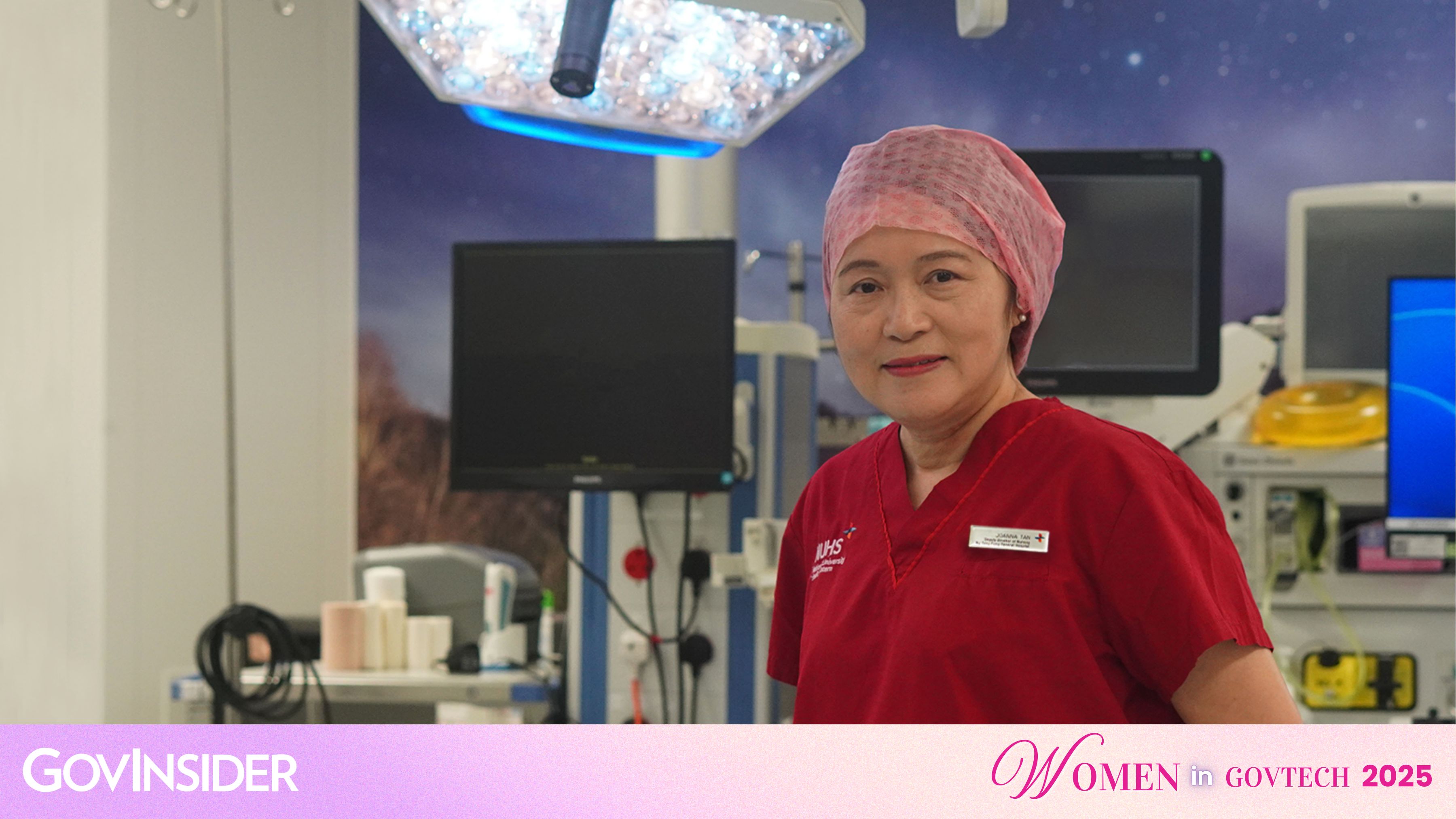
Joanna Tan, Deputy Director Nursing, Ng Teng Fong General Hospital, Singapore, shares her life's journey. Image: NUHS
1) How do you use your role to ensure that technology and policy are truly inclusive?
In my role as a senior nurse leader, I've learned that true inclusivity and innovation in healthcare stem from a blend of thoughtful planning, adaptability, and a deep understanding of diverse needs.
To ensure technology and policy are truly inclusive, I actively nominate staff from various backgrounds to participate in committees evaluating new technologies.
This approach ensures we consider perspectives from all departments and roles.
Within my sphere of influence, I advocate for accessibility features in new tech purchases and collaborate with IT to develop customizable interfaces that cater to different user needs.
We also provide training materials in multiple languages common in Singapore - English, Mandarin, Malay, and Tamil - to ensure our patients can access and understand crucial information.
2) What’s a moment in your career when you saw firsthand how a new policy changed a staff member’s life for the better?
One of the most impactful moments in my career involved adapting to a team member's changed circumstances after a car accident.
Instead of suggesting he find a new job, we reimagined his role to support nurses in managing surgical supplies.
This decision not only retained a valuable team member but also addressed an existing problem in our department.
It was a powerful reminder of how flexibility and inclusivity can lead to unexpected positive outcomes that benefit both individuals and the organisation.
3) What was the most impactful project you worked on this year, and how did you measure its success in building trust and serving the needs of the people that you lead?
The most significant project I worked on this year was introducing a new inventory management system in our operating rooms.
This complex undertaking involved inputting details for over 50,000 different items used during surgeries.
To ensure success and build trust, we held regular team meetings, encouraging open communication about challenges and adjusting our processes as needed.
This approach helped us successfully implement the system while keeping our team's needs at the forefront.
4) What was one unexpected lesson you learned this year about designing for real people? This can be about a specific project or a broader lesson about your work.
An unexpected lesson I learned this year was the importance of making time to talk with each team on the ground separately during the planning process.
This approach uncovers hidden differences in needs and workflows, leading to better solutions that work well for everyone.
For example, we discovered that staff from different surgical disciplines had varying needs for the inventory management system, and addressing these differences improved the overall effectiveness of the system.
5) We hear a lot about AI. What's a practical example of how AI can be used to make government services more inclusive and trustworthy?
When it comes to artificial intelligence (AI) in healthcare, there's enormous potential to make services more inclusive and trustworthy.
Practical applications include multilingual communication, personalised patient education, and accessibility features for patients with visual or auditory impairments.
AI can also ensure cultural sensitivity, consistent information delivery, and 24/7 availability through chatbots.
By analysing patient feedback and outcomes, AI can continuously improve communication strategies and content.
However, to maintain trustworthiness, it's crucial to implement strict data privacy measures, regular audits, clear policies on AI use, and ongoing evaluation of the system's impact on patient outcomes and satisfaction.
As we embrace these technologies, we must always prioritise patient safety and data security.
6) How are you preparing for the next wave of change in the public sector? What new skill, approach, or technology are you most excited to explore in the coming year?
To prepare for the next wave of change in the public sector, I'm focusing on staying up-to-date with the latest technological breakthroughs and exploring how they can improve healthcare for everyone.
I'm particularly excited about user-friendly technologies that benefit both patients and healthcare staff without requiring extensive technical knowledge.
7) What advice do you have for public sector innovators who want to build a career focused on serving the people within the healthcare sector?
For public sector innovators looking to build a career in healthcare, my advice is multifaceted.
Prioritise patient-centred care and develop deep domain expertise.
Cultivate empathy and embrace interdisciplinary collaboration. Stay current with technological trends but focus on practical applications that can make a real difference in people's lives.
Ensure your innovations are inclusive and accessible to all.
To subscribe to the GovInsider bulletin, click here.
Develop strong change management skills - they're essential when implementing new systems or processes. Use data analysis to measure the impact of your initiatives.
Remember, the goal is improving lives and transforming care delivery, not just implementing new technologies for the sake of innovation.
8) Who inspires you to build a more inclusive and trustworthy service in the sector that you are in?
When it comes to inspiration, I find it comes from many sources rather than a single individual.
I draw inspiration from interactions with people from various age groups and vocations.
This diverse exposure provides valuable insights into different perspectives, needs, and challenges across the healthcare spectrum.
Younger staff members often bring fresh ideas about leveraging technology, while experienced healthcare professionals provide wisdom on maintaining the human touch in our increasingly digital world.
Patients from different cultural backgrounds help me understand diverse healthcare needs, and colleagues from non-medical departments offer unique viewpoints on process improvement.
9) If you had an unlimited budget, what would your dream project be?
If I had an unlimited budget, my dream project would be to develop a comprehensive population health management system.
This system would proactively identify and address health trends while maintaining the human touch that's so crucial in healthcare.
It would integrate data from various sources to provide a holistic view of community health, allowing us to intervene early and prevent health issues before they become critical.
10) Outside tech, what excites you the most?
Outside of technology and healthcare, what excites me most is personal growth and development.
I'm passionate about connecting with people from all walks of life and at different stages in their journeys.
It's exciting to share experiences and learn from each other as we all work on becoming better versions of ourselves - whether that's in our relationships, careers, or as members of our communities.