Yeoh Ee-Wen, Director Simulation and Training Systems, Defence Science and Technology Agency (DSTA), Singapore
By Amit Roy Choudhury
Meet the Women in GovTech 2025.
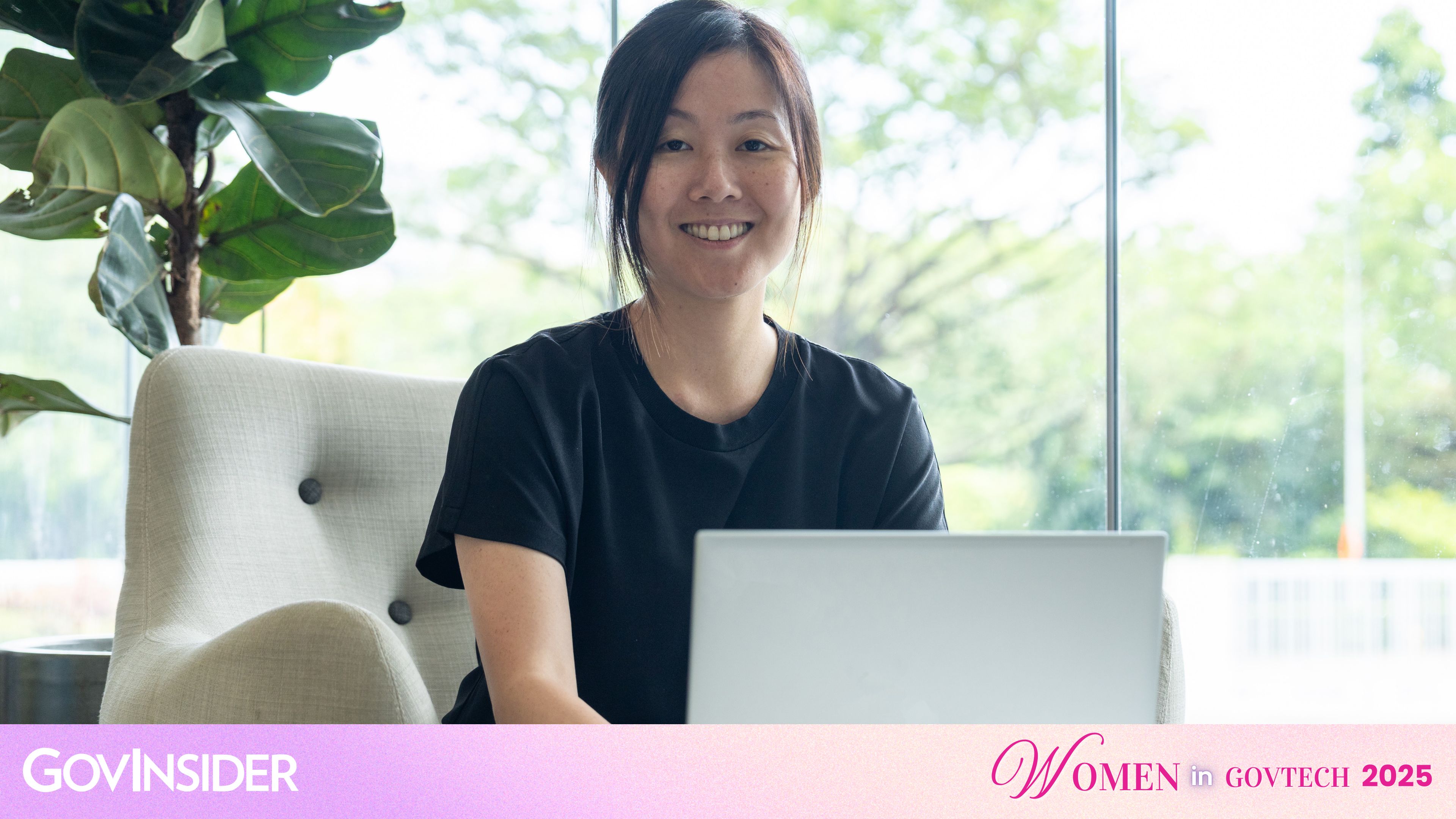
Yeoh Ee-Wen, Director Simulation and Training Systems, DSTA, shares her journey. Image: DSTA.
1) How do you use your role to drive the adoption of technologies in training?
I head the Simulation and Training Systems Hub in the Defence Science and Technology Agency (DSTA).
In this role, I guide the development and delivery of simulation capabilities to unlock our physical training constraints and transform training for our soldiers in the Singapore Armed Forces.
Simulation and instrumentation technologies enable us to create realistic and immersive battlespaces for our soldiers in a safe environment, and train for mission sets that are otherwise difficult to replicate in real life.
2) What’s a moment in your career when you saw firsthand how technology or a new policy changed a citizen’s life for the better?
I love seeing how simulation and gaming technologies “come to life” and transform the way our soldiers train.
Last year, we delivered state-of-the-art training facilities and systems in the expanded Shoalwater Bay Training Area, a joint collaboration programme with Australia, to enable training that is necessary to generate capabilities fit for the future battlefield.
This includes the Urban Operations Live-Firing Facility, which has 33 urbanised buildings that support up to battalion-level training and enable realistic urban live-firing exercises at a scale which cannot be performed in Singapore.
This year, my team also delivered SAFTI City, a first-of-its-kind instrumented urban training facility, equipped with smart systems and battlefield effects simulators.
This enabled us to create a realistic environment that is complex and able to challenge our soldiers, to support effective and safe training.
It is deeply meaningful to see how technology is able to enhance the realism and adaptability of training scenarios, empowering our soldiers to train with confidence and become ready for future operations.
At the same time, it also strengthens our soldiers’ trust in the tech systems that support them.
To me, this also reinforces the importance of DSTA’s role: bringing together technology, innovation and operational needs to design systems our soldiers can rely on.
It was truly heartening for DSTA to be conferred both the Defence Technology Prize 2025 Team (Engineering) and IES Prestigious Engineering Achievement Award for the design and development of SAFTI City! It reflects our engineers’ dedication to innovation and excellence.
3) What was the most impactful project you worked on this year?
I recently led a team in the organisation of the Singapore Defence Technology Summit 2025, where DSTA hosted technology luminaries and global thought leaders from across government, industry and academia to discuss how uncertainties brought about by shifts in the geopolitical landscape have impacted defence technology, and the partnerships and leadership needed to achieve agility in technology innovation.
Organising this international conference was especially meaningful as it coincided with DSTA’s silver jubilee – a milestone that celebrates our journey of innovation, collaboration and growth.
It was exciting to be able to connect with people and to have had a hand in shaping conversations during the summit.
We had a good turnout with more than a thousand delegates from 40 countries at the summit, with many partnerships forged, rich conversations, insights and global mindshare gained. I am really proud of our team that gamely took on this challenge and pulled off a successful summit!
4) How are you preparing for the next wave of change in the public sector? What new skill, approach, or technology are you most excited to explore in the coming year?
In the coming year, I will be focusing on how we can better harness emerging technologies such as artificial intelligence (AI) to enhance the dynamism of training scenarios, allowing soldiers to adapt to different challenges as they arise.
I’m also looking into the use of data and psychophysiological measures to infer a person’s cognitive load and stress levels so as to enhance screening and performance assessment for the Singapore Armed Forces (SAF).
These insights can help us design training that builds skill while also improving how we assess readiness.
I am excited to collaborate with industry leaders and experts in these fields to co-develop and experiment with these technologies. I believe that the smart application of these technologies in novel ways can help us to push our capability envelope, whilst minimising the manpower resources that are needed to support training.
5) What advice do you have for public sector innovators who want to build a career focused on serving all citizens?
The advice I would give is to focus on empathy and perseverance. Empathy, because technology innovation, be it in the form of an engineering solution or a policy tool, doesn’t exist in a vacuum, and it’s meant to serve a purpose.
I think that it’s really important to put ourselves in the shoes of those who are using our systems or policies and constantly challenge ourselves if the design is sensible and what the user experience would be like.
Perseverance, because innovation in the public sector can be complex, especially if it involves many different stakeholders.
It can feel like there are many hurdles to cross or a lot of resistance to change.
But don’t give up!
If we anchor ourselves back to what our mission is and persevere, I believe that we will be able to push through roadblocks and make a difference.
6) Who inspires you to build a more inclusive and trustworthy public sector?
I am most inspired by [Ms] Ngiam Le Na, who was a former Deputy Chief Executive in DSTA.
I had the privilege of working with Le Na during the height of the COVID-19 pandemic, where DSTA collaborated closely with SAF and public agencies to contribute our engineering expertise and solutions.
I saw firsthand how Le Na went above and beyond to proactively understand the diverse needs of different agencies involved, so that we could better develop fit-for-purpose technology solutions.
To subscribe to the GovInsider bulletin, click here.
The systems that were developed under her guidance, such as the Joint Task Force’s Command and Control systems, provided situational awareness of migrant workers' condition in facilities, coordinated conveyance ops, and facilitated swab ops to clear up infection in the dormitories systematically.
By ensuring these solutions met the needs of all stakeholders, she not only helped manage a crisis but also strengthened trust, collaboration and confidence across the public sector.
In a time of high anxiety and when we had to deal with many unknowns, Le Na was always clear and transparent about what could be achieved, and this really helped to build trust and confidence across different agencies.
To me, Le Na truly embodies what it means to have authentic leadership, and she inspires me to want to be a better leader!
7) Outside tech, what excites you the most?
What excites me the most is the opportunity to explore the world through travel.
Beyond taking in new sights, I find it enriching to be able to experience different ways of life – from trying out different cuisines to observing how people live.